
What to do and why your favorite apple tree isn't bearing fruit
Content
How to determine the cause
To understand why an apple tree isn't bearing fruit, you first need to understand the characteristics of the variety. Varieties can be early-bearing (bearing fruit in the 3rd or 4th year), but more often, the tree begins bearing fruit in the 5th or 6th year. In the latter case, you'll have to wait longer for apples, but these trees tend to live longer.
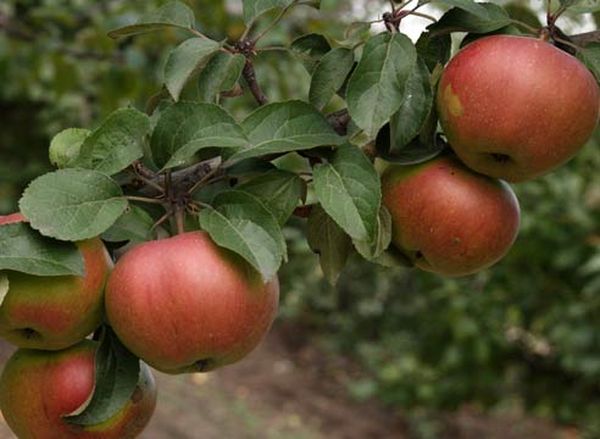
If you realize that it's time for your apple tree to produce a sweet harvest, but it's not happening, there are several other reasons why the tree isn't bearing fruit:
- age of the tree;
- landing errors;
- incorrect formation of the tree crown;
- diseases and pests.
There are also less common reasons:
- Incorrect selection of a variety for climate. This error means that a variety was chosen that is unsuitable for the weather conditions common in a given region, forcing the plant to expend all its energy adapting to the local climate;
- There is no comprehensive tree care program. This includes everything related to plant cultivation practices, from choosing a planting site to watering frequency and pollination;
- Lack of cross-pollination. Pollination causes fruit to form on the branches, but if pollination does not occur, there is no chance of a harvest.
Before deciding what to do if your apple tree isn't bearing fruit, let's look at the four main factors that can cause a lack of harvest.
Age of apple tree
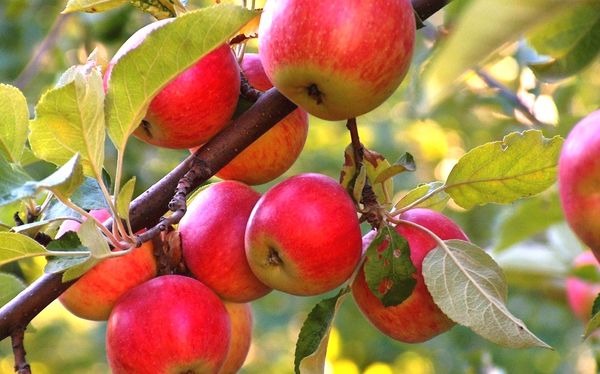
As mentioned above, all varieties of fruit trees have their own age at which they begin to bear fruit. Depending on the variety, the tree may not have reached the age of fruit formation or may be dormant. The latter means that some varieties, such as Grushovka or Antonovka, do not produce fruit every year. A tree that is too old will also not produce fruit. Some gardeners rejuvenate their trees by grafting new shoots, but in older apple trees, the nutrient supply system of the branches is weakened, and the tree will spend all its energy on maintaining stable life without producing a new crop.
Errors at the landing stage
There are many mistakes you can make during planting that will ultimately hinder the apple tree's fruiting. First, the planting site must be chosen correctly, meeting all the tree's heat and light requirements. Sunburn or excessive shade will prevent the tree from developing buds evenly. Second, the distance between the trees must be maintained. Some apple varieties can develop crowns up to 10 meters in diameter, so the distance between the holes should be at least five meters.
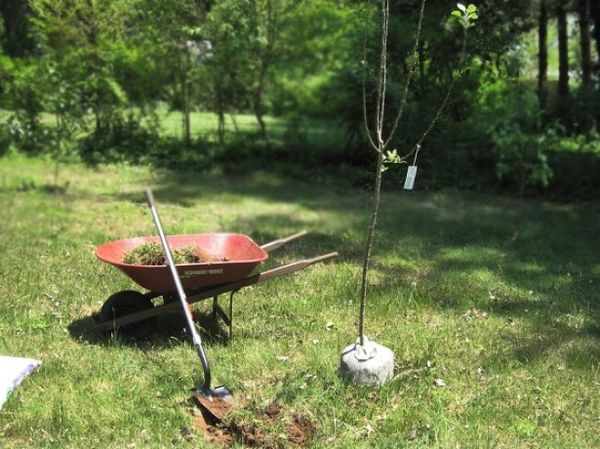
The holes themselves should be one meter by one meter. Seedlings planted too deeply will begin to bear fruit much later. The planting site shouldn't be near groundwater, as it will leach all the nutrients from the soil. Furthermore, constantly wet roots will rot. When choosing a planting site, also consider the soil's chemical composition, which should be suitable for the given variety. However, the basic rule for all varieties is soil rich in iron, the iron content that is so valuable for apple trees.
Incorrect tree formation
The second important factor is improper crown formation. The main rule for apple tree shaping is to create a horizontal crown. This means that fruit does not form on vertical branches, so pruning creates a rounded, sloping crown. To achieve the desired tree shape, the upper branches are pinched. This is done in the fourth year of the tree's life. Small branches that thicken the crown and grow inward are also pruned.
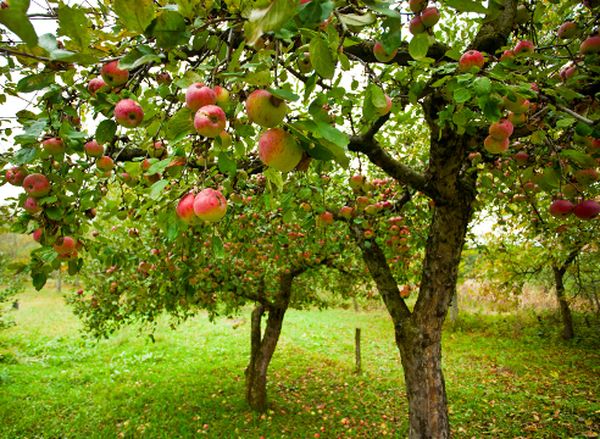
However, it's important to remember that not all small branches are harmful to the fruit's yield—some are actually young fruiting branches, such as buds, fruiting twigs, and spears with buds. These branches should not be removed. It's also important to make the cut correctly and treat the cut with garden pitch. The cut shouldn't be perpendicular to the branch, but at an angle of approximately 45 degrees.
Apple tree diseases
Naturally, if diseases and pests are present, trees will not begin to bear fruit, and those that have already begun may drop their unripe harvest prematurely. Before flowering, have you noticed that the buds are too dry and reluctant to open? Perhaps an infestation by weevil larvae, which feed on the petals of immature buds, has occurred.
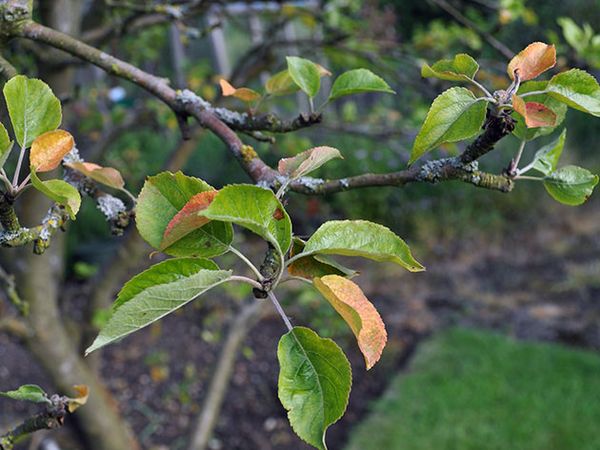
The appearance of black spots on leaves and large cracks resembling wounds on the bark may indicate apple tree canker. Rusty, rotting leaves are likely infected with scab, while leaves covered with a white coating and webbing may be attacked by spider mites, powdery mildew, or aphids. Mice are also a potential pest, as they can also damage the tree.
Solution and prevention
Based on all the above factors, it's easy to determine what to do if an apple tree isn't bearing fruit. Once the cause of the problem is identified, all that's left is to fix it. If the crown is improperly formed, pruning should be postponed for a couple of years, and only after two years should pinching be resumed. If the branches are still stretching excessively upward, they can be bent horizontally using ropes.
Pests and diseases that are noticed in time can be eliminated in various ways.
The easiest way is to use specialized mixtures and insecticides, which are available at the store. For prevention, you can plant pest-resistant plants around the tree. The easiest way is to wait until the apple tree is ready to bear fruit, but the most difficult is to eliminate the consequences that arise during planting. If you've already noticed mistakes during planting, you can transplant the small sapling to a new location. However, this option is ineffective for 7- to 8-year-old apple trees.
They benefit from the utmost care, including adequate fertilization and watering—these measures will compensate for the tree's poor position. If the trees are planted too close together, and the variety allows for this, a columnar apple tree can be formed. Groundwater can be diverted away from the site to prevent groundwater buildup.
Video: "How to make an apple tree bear fruit?"
This video will show you how to make an apple tree bear fruit.