
What are the different types of Vostorg grapes? 6 varieties with descriptions and photos.
Content
History of creation and general description of the Vostorg grape
Researchers at the Research Institute of Viticulture and Winemaking of the Russian Soviet Federative Socialist Republic (RSFSR) began developing the Vostorg variety half a century ago. Breeders crossed three varieties: Russkiy Ranniy, Zarya Severa, and Dolores. The resulting hybrid incorporated all the positive qualities of its parent varieties, and in 1992, it was added to the State Register of Breeding Achievements of the Russian Federation.
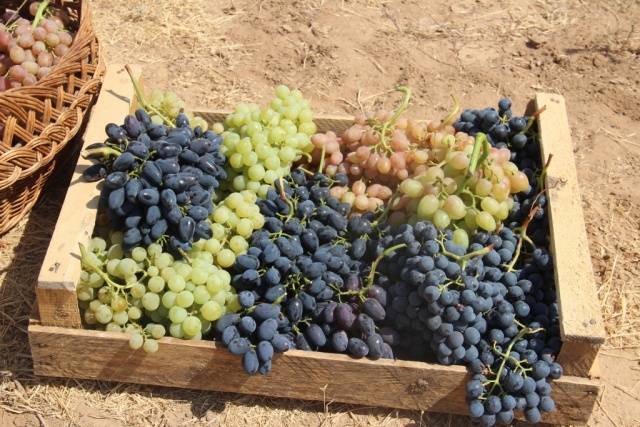
Vostorg is characterized by increased winter hardiness, disease immunity, and high productivity. The grape adapts well to any conditions, making it suitable for growing in regions with harsh climates.
This hybrid cannot be confused with other varieties. The medium-sized bush is characterized by a thick, robust trunk and strong shoots. The leaves are a bright grassy shade with serrated edges. The clusters are large, weighing from 0.5 to 2 kg. The fruits are round, weighing 6-12 g. The juicy, sweet flesh is covered with a dense skin, which allows the berries to better preserve during transportation.
Delight is an early-ripening variety with 100% ripening. Ripe bunches can hang on the bushes for up to two months without losing their marketable quality. The berries are used to make wine, juice, raisins, or are eaten fresh.
Video "Description of the Delight grape"
This video presents the botanical and varietal characteristics of the crop.
Varieties of Delight grapes
Over its half-century history, the hybrid has developed several subspecies. All varieties have similar characteristics, but each has its own unique characteristics.
White
A self-pollinating, universal variety with an early ripening period (115-120 days). The clusters are conical, very large, weighing from 0.8 to 1.5 kg. The fruits are oval, yellow-green with a golden hue, weighing 5-7 g. The flesh is sweet and crisp. Productivity per hectare is 100-120 centners. The crop is suitable for long-distance transportation and has high commercial quality.
White Delight is immune to fungal diseases but is susceptible to phylloxera. It can withstand temperatures down to -25°C.
Black
The variety's other name is Black Baron. This early-ripening female hybrid ripens in 109-125 days. The clusters, weighing 0.8-2.5 kg, are dense and cone-shaped. The berries are round, slightly elongated, weighing 7 to 12 g. The flesh is juicy, tart-sweet, and covered with a thick, dark purple skin. The yield is 200 centners per hectare.
The variety tolerates temperatures down to -26°C and has increased immunity to many diseases, except chlorosis, gray mold, rubella, bacterial wilt, and anthracnose. The harvested crop tolerates long transportation well and is suitable for general use.
Red
A versatile table grape variety with an early ripening period (120-130 days). The grapes are female-flowering and non-self-pollinating. The clusters are cone-shaped and dense, weighing 500-800 g. The berries are round, pointed at the tip, and covered with a thin pinkish-purple skin. The berries are sweet and juicy. The yield per hectare is 100-120 centners. The berries have good shelf life and are suitable for long-distance transportation. This hybrid is characterized by increased frost resistance (down to -25°C) and immunity to fungal diseases.
Numerous reviews from winegrowers indicate that Red Delight is practically not damaged by wasps and birds.
-
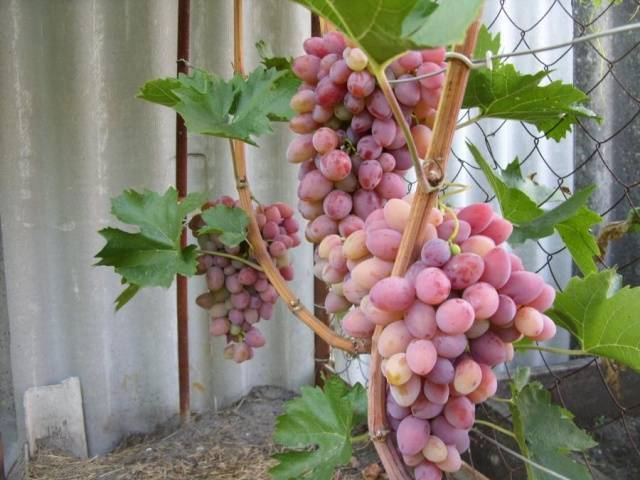
- Red
-
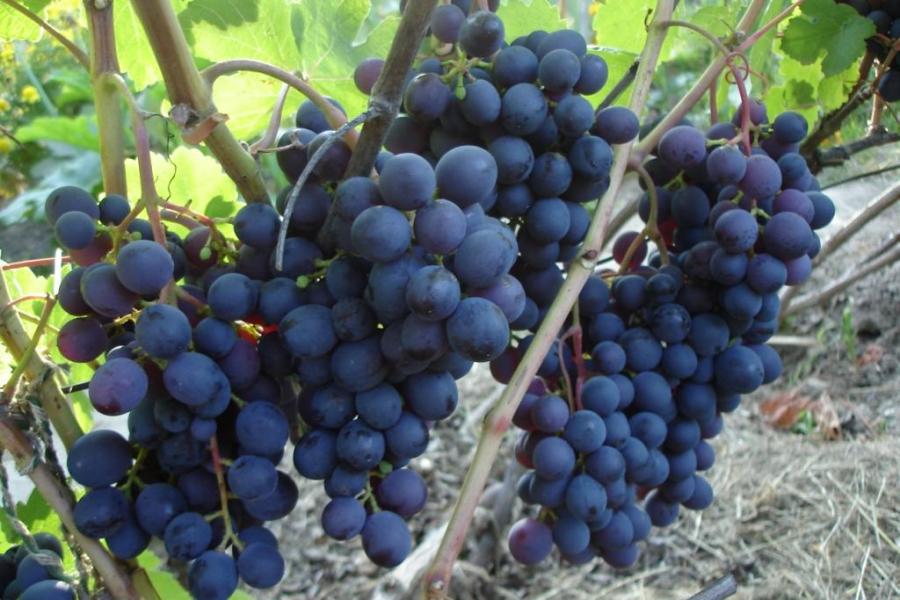
- Black
-
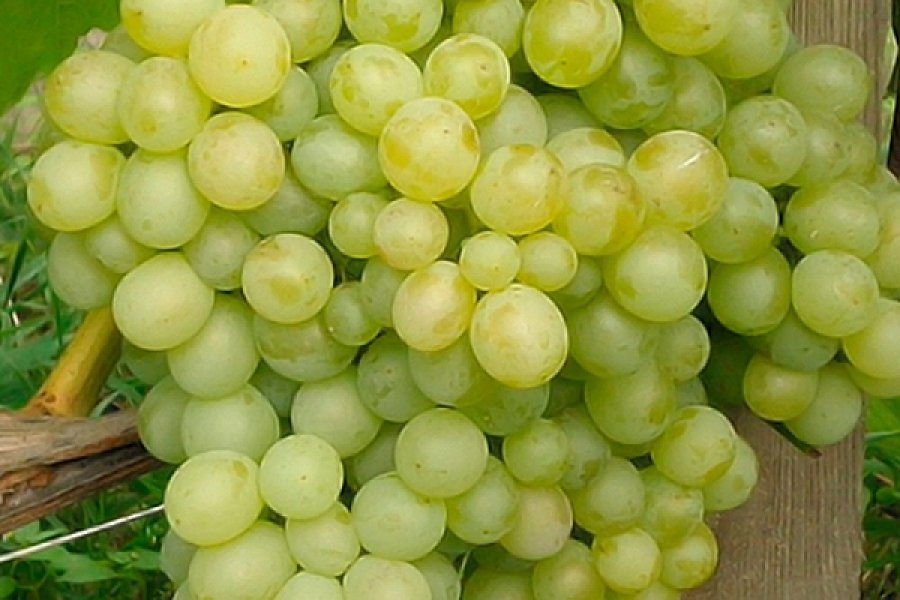
- White
Nutmeg
An extremely early grape variety, harvesting can begin as early as late July. Full ripening occurs after 105-110 days. Clusters are dense, averaging 0.5-1 kg. The fruits are round, weighing 6-8 g, and yellow-green in color. The variety is very similar in appearance to Bely Vostorg, but has a more dessert-like flavor with subtle Muscat notes. Productivity is 150-200 c/ha. This hybrid tolerates long-distance transportation well and maintains its commercial qualities for a long time.
The grape is resistant to fungal infections, but is susceptible to rubella, anthracnose, bacterial wilt, and chlorosis. It tolerates frosts down to -26°C and is suitable for general use.
Ideal
A versatile early-ripening variety (130 days). Depending on climate, the harvest can ripen from the second ten days of June to mid-August. The clusters are cone-shaped, dense, and weigh 0.6-1.5 kg. The berries weigh 8-10 g, are round, slightly elongated, and light green with a whitish bloom. The flesh is juicy, crisp, and sweet, covered with a thin, crack-resistant skin.
Ideal Delight has a high immunity to rot and fungal infections, and can also withstand temperatures down to -30°C.
Original
An ultra-early table hybrid, fully ripening in 105-110 days. This is a female variety, requiring pollination. The clusters are cone-shaped, large, and dense, weighing 1-1.5 kg. The fruits are round, light green with a pink blush, covered with a whitish bloom. The flesh is crisp, sweet, and juicy. A single bush yields 30-40 kg. The berries are suitable for juice, wine, or fresh consumption.
Original Delight is characterized by high immunity to various diseases, winter hardiness (up to -26°C) and quick adaptation.
-
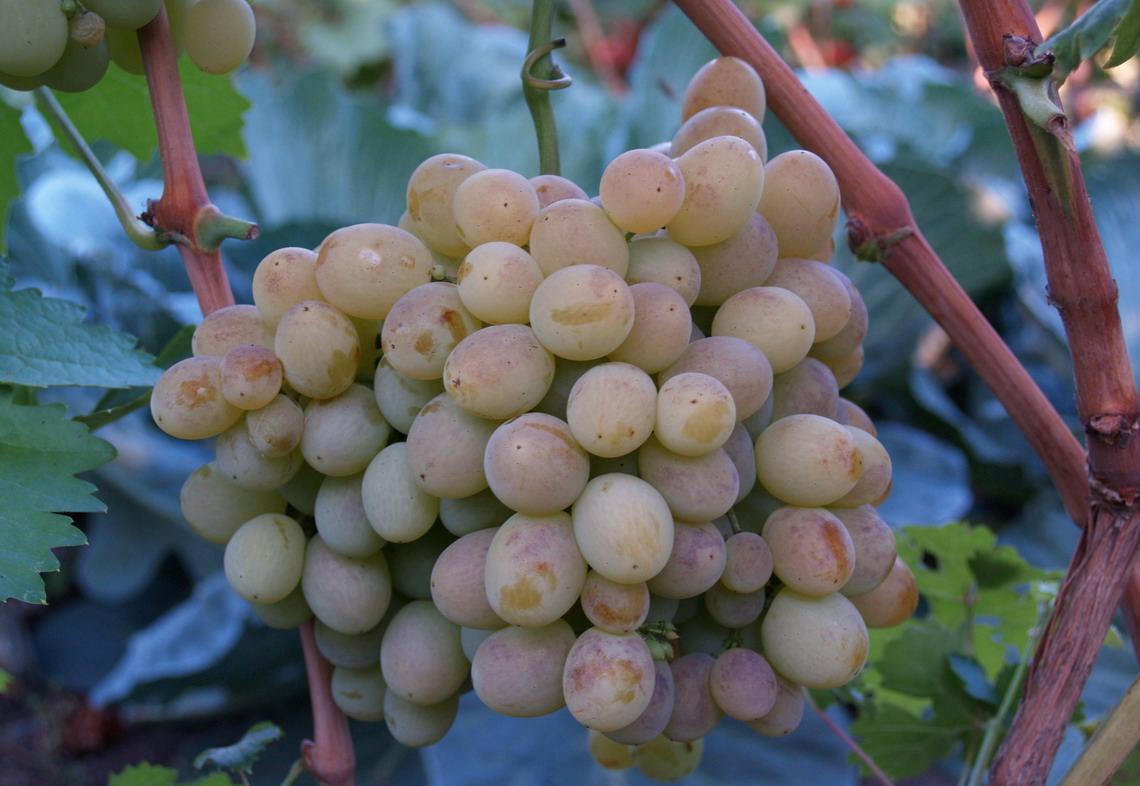
- Original
-
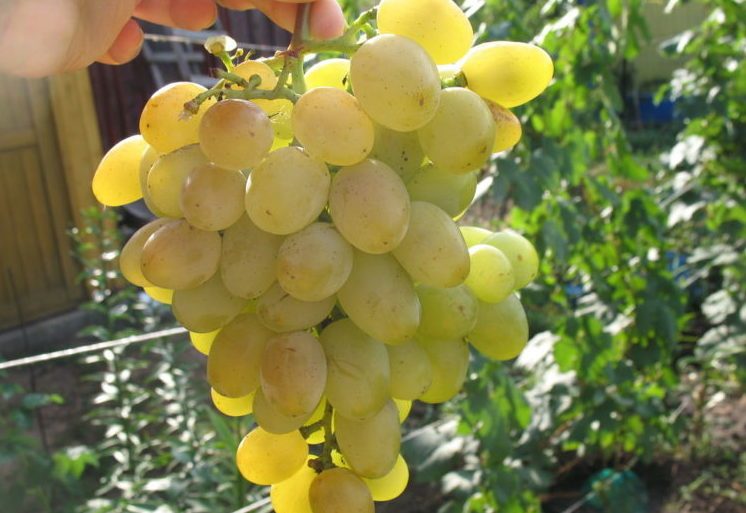
- Ideal
-
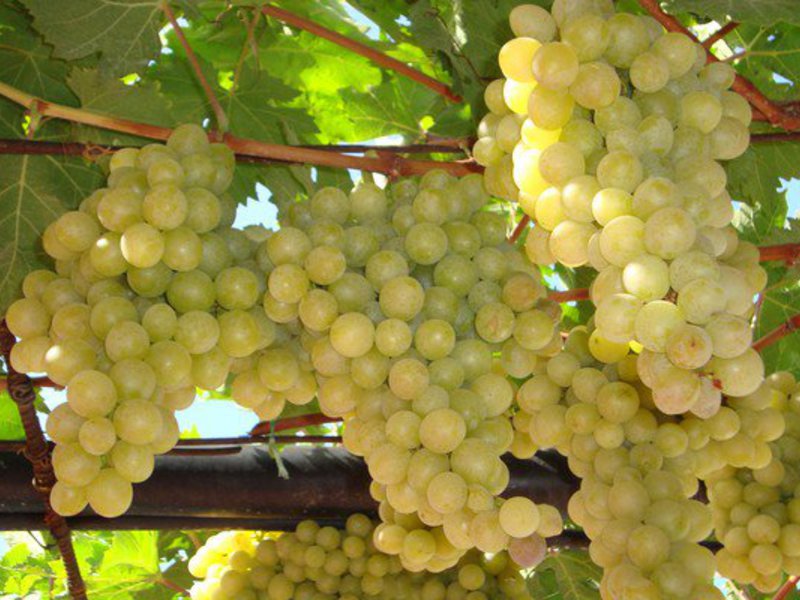
- Nutmeg
Secrets of successful cultivation
Delight is an easy-to-grow variety. It's grown in summer cottages, garden plots, and on a larger scale. However, to get a bountiful harvest, you need to know some farming secrets.
Place and time for landing
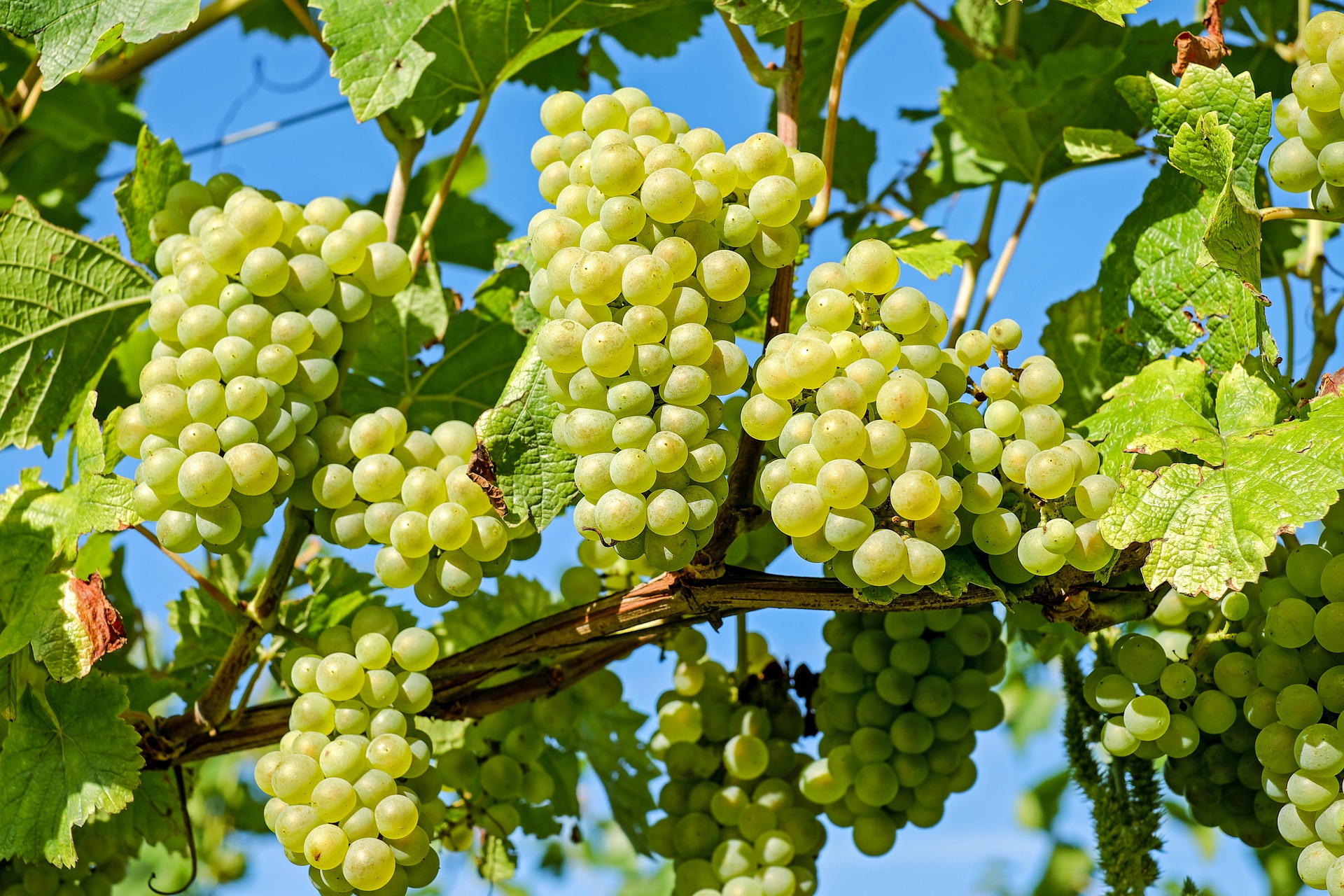
Experienced winegrowers recommend planting before the onset of frost. This allows the young plants to adapt more quickly, establish better roots, and also harden off and strengthen their immune system. Choose a site at an elevated location with a groundwater level no higher than 2.5 meters. A sunny, windless, south or southwest exposure is best. Grapes prefer fertile soil—black soil or loam.
Watering recommendations
Although the hybrid is drought-resistant, it still requires regular watering. The first watering is done immediately after planting. The procedure is then repeated in early spring, before the sap begins to flow. Subsequent watering is done during fruit set, and the final watering is done after harvest.
After each watering, the soil around the bush is thoroughly loosened and a mulched layer of dry grass, moss or wood shavings is laid.
Fertilizer application rules
It's best to combine grape fertilizing with watering, using a drainage system. Delight responds well to potassium-phosphorus fertilizers. This procedure is performed once a month, beginning with the formation of the grape clusters, diluting the fertilizer with water.
The need for pruning
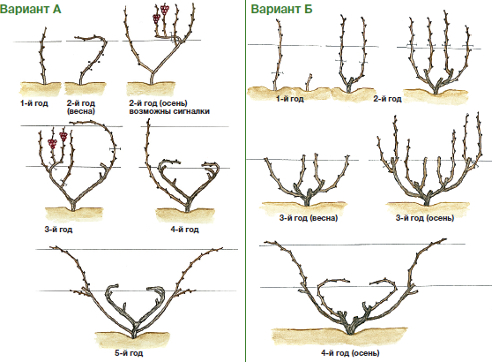
To maintain a high yield and preserve the quality of the grapes, Vostorg requires regular pruning. Experienced winegrowers recommend doing this in the fall. The vines are pruned very short, leaving 6-10 buds.
In spring, before flowering begins, it's recommended to pinch the shoots. This procedure prevents the bush from branching too much, and allows all its energy to be directed toward fruit formation.
Reviews from winegrowers
I grow Krasny Vostorg at my dacha, along with other varieties, such as Krasnoye Plamya and Vesta. It ripens early—I start harvesting in mid-July. The flavor is excellent, it has a long shelf life, and the grapes can remain on the vines until the end of summer without spoiling. And the main advantage is that the berries are not eaten by wasps, which is more than can be said about other hybrids.
A year ago, our Muscat Delight vine bore fruit for the first time. The seedlings took root perfectly and survived the winter without any cover. The clusters were large, and the berries were very sweet. I preserved the grape juice for the winter—I didn't even need sugar.
I've been growing grapes for sale for several years now. Among the various varieties, Black Baron is my favorite. Firstly, it has excellent taste and presentation. Secondly, the berries ripen early. Thirdly, it produces very high yields and has excellent disease resistance.
The Vostorg grape has rightfully earned its place among winegrowers in Russia and the former CIS. This hybrid easily adapts to any conditions, producing a rich, high-quality harvest.