
Large-fruited gooseberry variety Ural grapes
Content
Features of the variety
This variety was developed by breeders in Sverdlovsk in the mid-20th century. It belongs to the early-ripening group, characterized by large, uniform fruits and high winter hardiness.
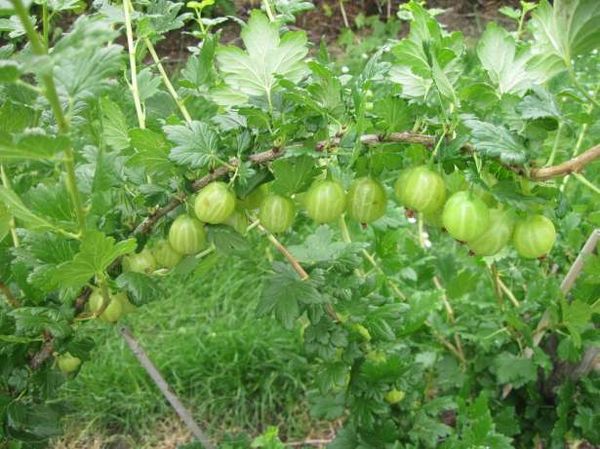
The tall bush consists of strong, upright shoots. Young, hairless shoots are green, but as they mature, they acquire a grayish-yellow color and become streaked. Thorns of varying lengths can be single or triple, more densely spaced in the center of the shoots and slightly more sparsely located at the base and at the very top. These thorns can be a nuisance to the owner and complicate plant care.
The bush is characterized as medium in terms of spreading, density, and branching of the shoots. The leaves are trilobed, leathery, glossy, and pubescent green. The delicate pink flowers bloom from raspberry-colored buds, no larger than 12 mm.
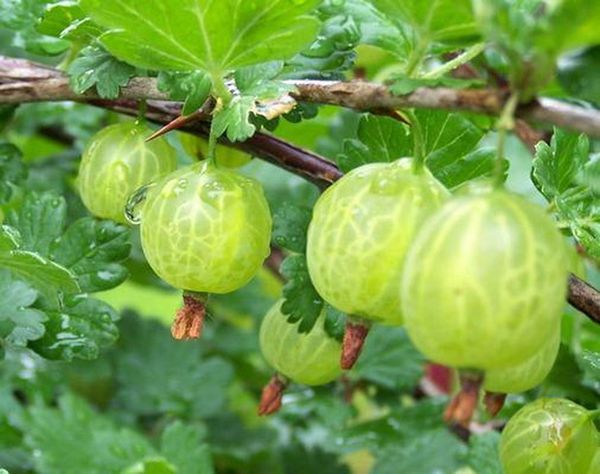
The berries ripen in early July, they are almost all uniform in size, with an average weight of 4 g, amber-green in color with lighter veins. The thick, smooth, pubescent skin has a distinct sour taste, and the entire berry has a pleasant, rich, sweet-sour taste, which is explained by the high content of sugars (9.9%) and ascorbic acid (23.5 mg).
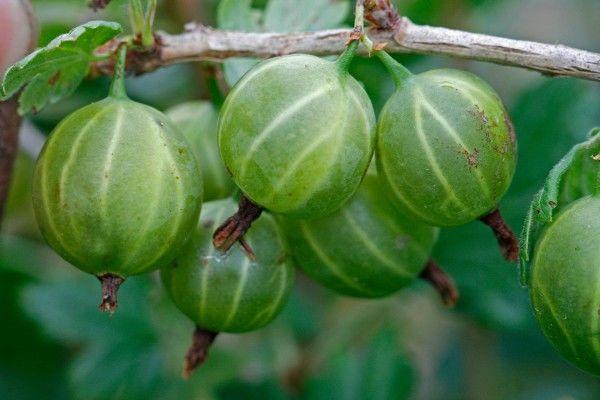
The berries easily fall off the shoots, along with the green stalk, and fall from the bush once fully ripe. They can be stored for several days at a low temperature. They are considered a dessert fruit; thanks to their pleasant flavor, they are often eaten fresh without processing. However, prepared dishes made from them are also delicious—juices, wines, emerald (or royal) jam, and preserves.
This winter-hardy bush doesn't require winter protection unless snowless conditions are expected. Self-fertility ensures a good harvest: from 3.5 kg for a young bush to 7 kg for a mature one, but if other varieties are nearby, it can produce a larger harvest. The "Ural Grape" gooseberry isn't particularly bothered by pests, but it can be susceptible to fungal diseases.
Growing and care
"Ural Grape," like most other varieties, thrives in full sun, moisture, and nutritious soil. Throughout the growing season, the soil under and around the bushes should be weeded, loosened, and fertilized. Fertilize thoroughly in the spring and fall, as rapid growth and abundant harvests force the plant to extract significant nutrients from the soil. Regular pruning will help shape the bush properly and maintain its productivity for many years to come.
The easiest way to propagate this variety of gooseberry is by cuttings or layering, but you can divide the bush (after 7-8 years of growth) and graft it onto other varieties.
Choosing a location
Choose an open, sunny location for gooseberries, protected from north winds. A raised site is much better than a low-lying one, as it should avoid stagnant water or waterlogging. If the groundwater level is closer than one and a half meters to the surface, a raised bed and special drainage should be installed. If planting more than one plant, leave 1 or 1.2 meters between bushes, and 1.5 to 2 meters between rows and between gooseberries and large trees.
It's a good idea to prepare the chosen spot in advance - clear it of weeds, and not just cut the grass, but remove all the perennial roots so that they don't grow into the center of the bush later. Pulling out grass from the middle of a thorny bush is unlikely to be pleasant.
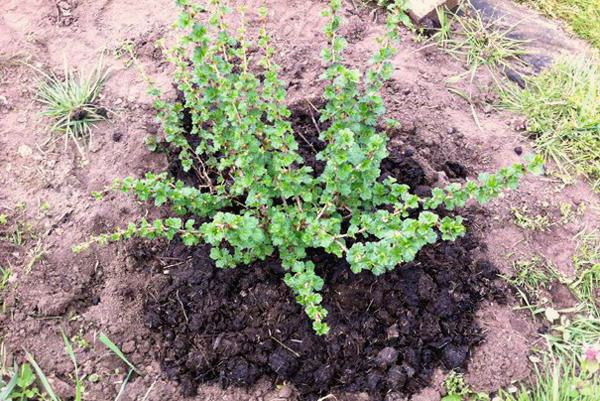
Gooseberries prefer nutritious, breathable soil, so you can adjust its pH and texture before planting. If the soil is too acidic, add lime or dolomite. If it's too alkaline, you can mix it with peat. Heavy clay soil can be mixed with sand or compost.
Many gardeners fertilize about one square meter of the plot before planting—this is the area from which the bush will receive its nutrients. They spread a bucket of compost and humus more or less evenly over the plot, along with a cup of wood ash, 50 grams of superphosphate, and 30 grams of potassium fertilizer. Then they dig, evenly mixing the fertilizer with the soil. Others prepare a large planting hole and fill it with soil mixed with fertilizer.
Landing
It's best to plant a two-year-old seedling with woody main roots, well-developed small rootlets, and strong shoots. If the roots have dried out, they can be soaked in water for a few hours to a day before planting. It's best to plant in the fall, a month to a month and a half before the onset of frost. This gives the plant time to establish itself in its new location, even grow new roots, and prevent the above-ground part from growing.
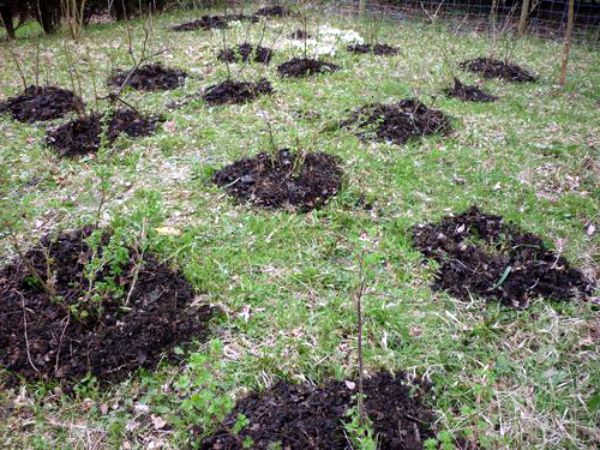
In spring, the reverse process occurs: buds on the shoots awaken very early and immediately begin rapid growth, but the roots don't have time to supply them with nutrients because they need time to adapt and establish roots. This is why experienced gardeners recommend planting gooseberries in the fall.
A hole is dug at least half a meter deep and wide, a third of it is filled with fertile, loose soil, the seedling is placed on top, and its roots are covered, constantly compacting the soil to ensure there are no air pockets around the roots. The planted bush is watered generously, its shoots are pruned back to 5-6 healthy buds, and the soil around it is mulched.
Watering
"Ural Grape" loves moisture, but it shouldn't be constantly watered. In spring, the meltwater that saturates the soil will be enough for it to develop. If dry weather sets in during flowering, provide the gooseberry with sufficient moisture, checking to make sure the soil doesn't dry out before the fruit sets. If June doesn't bring rain, you'll need to water the bush several times to ensure its juicy berries ripen.
After harvesting, the bushes are usually not watered, but in the fall, before the onset of cold weather, it is essential to carry out a moisture-recharging watering to make wintering easier for the gooseberries and prepare them for fruiting next year.
Excessive moisture can lead to the development of fungal diseases, and 'Ural Grape' is not resistant to them and periodically suffers from powdery mildew.
Trimming
Formative pruning is performed annually, and once the bush is fully formed, annual pruning maintains its proper shape and a stable number of shoots of varying ages. This is done in the fall, after the bush has shed its leaves. During the first few years, weak, broken, and diseased shoots are removed, leaving 4-5 healthy young branches each year.
After 6-7 years, they begin pruning old shoots, whose productivity declines after this age. This rejuvenates the bush and maintains its fertility. "Ural Grape" can bear fruit reliably for at least 20 years, and with proper agricultural practices, even longer.
Advantages of the variety
The main advantages of this variety are the quality, quantity, and size of its berries. This variety produces abundant harvests every year, and its berries captivate not only with their size but also with their rich, dessert-like flavor.
Video: How to Care for Gooseberries
This video will teach you how to choose the right gooseberry variety and how to care for the bush.