
Overview of 3 hedge design options
Content
Pros and cons
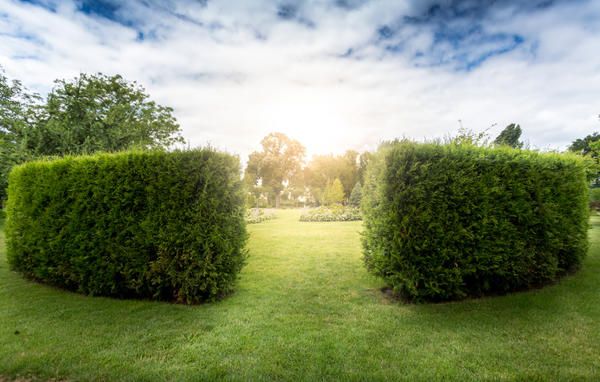
Unlike ready-made fences and protective structures, which are easy to build yourself, a hedge is part of the landscape design and adds aesthetic appeal to a garden plot. A hedge at a summer house can be used for external fencing, framing paths, flower beds, and lawns, and is often used to zone interior spaces according to their functional purpose.
Landscape design experts note that a hedge formed from plants is more aesthetically pleasing and conveys a sense of coziness and comfort. The property has a beautiful, well-maintained appearance.
Now let's find out what advantages and disadvantages a perennial hedge has.
Advantages:
- natural aesthetic appeal;
- protection of the soil on the site from erosion and crops grown in the country from drafts and gusty winds;
- soil moisture retention;
- preventing the leaching of useful and nutritious substances from the soil during floods and rains;
- protection from direct sunlight in summer;
- clean and oxygen-rich air.
Flaws:
- covering a significant area of the garden plot;
- a long period of implementation into reality and difficulties with the choice of vegetation;
- labor-intensive care and provision of appropriate growing conditions;
- difficulties with maintaining the appearance and “repairing” the hedge.
Video "Types of Hedges"
In this video, an expert will explain the different types of hedges.
Height of the fence
The history of evergreen hedges spans centuries. It's no surprise that today's landscape designers offer hedges made of evergreens in a variety of shapes and sizes. When landscaping your garden, it's important to carefully consider the height of your "living" fence.
High
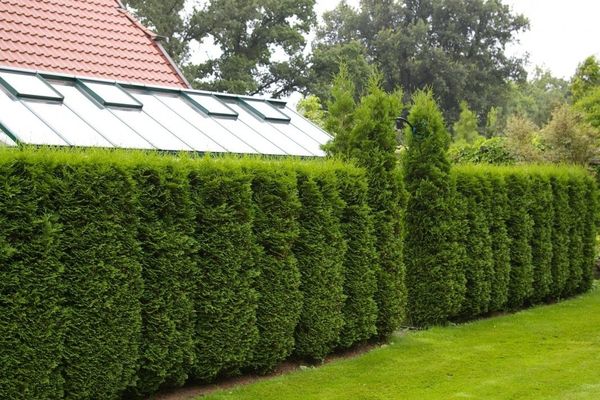
A living wall, 1.5 meters or more in height, is a true protective structure for your garden plot. Now your dacha is reliably hidden from prying eyes, as well as protected from gusts of wind, noise, dust, and exhaust fumes from passing vehicles.
When choosing shrubs and trees, it's recommended to consider those that tolerate pruning well with pruning shears or secateurs. Tall, fast-growing hedges are formed from deciduous, flowering, coniferous, and evergreen plants, as well as fruit trees and tall berry bushes. These include spruce, hornbeam, thuja, willow, maple, small-leaved linden, tall lilac, mock orange, honeysuckle, English oak, columnar or Chinese juniper, fir, cherry plum, apple, Tatarian serviceberry, viburnum, elderberry, and others.
Average
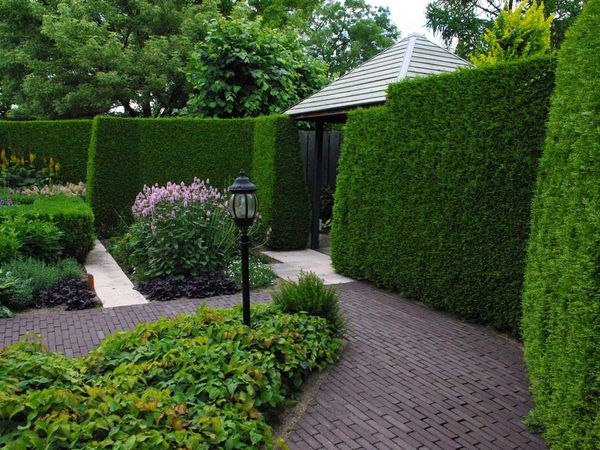
A medium-height hedge (1 to 1.5 m) can be used both to protect a garden plot and to delineate the area. Not sure which plants to choose? In this case, you can use flowering, coniferous, fruiting, and deciduous trees. Popular choices include western arborvitaes, lilacs, yellow locusts, hawthorn, barberry, rose hips, tall garden roses, honeysuckle, dogwood, hazel, juniper, euonymus, blue fir, evergreen Canadian spruce, hydrangea, golden currant, and more.
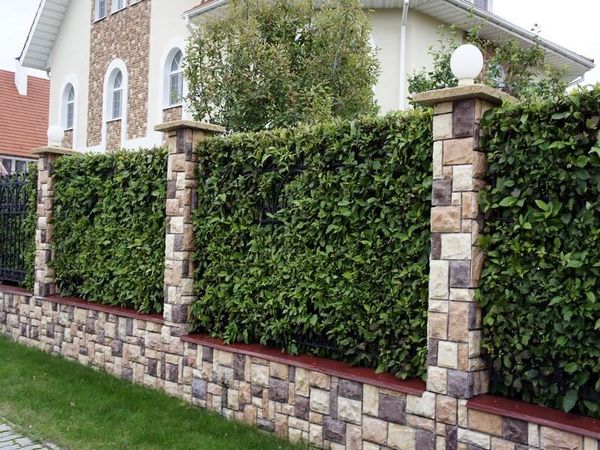
A fence made of shrubs and low-growing trees is often used to conceal or complement the main fence. In this case, the fence surface can serve as a support for most climbing and fruiting plants.
Low
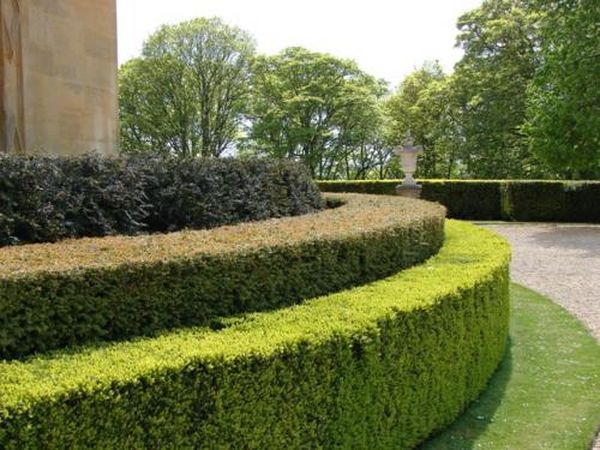
The height of a low hedge, also called a border, should not exceed 1 m. This option is not suitable for the external fencing of a garden plot; more often, such shrub borders serve as a unique frame for flowerbeds, paths, garden paths, and flower gardens.
A low hedge is formed from flowering or herbaceous perennial crops: rose hips, sea buckthorn, heather, cotoneaster, barberry, low-growing bushes of garden roses, alpine currants, Japanese quince, columnar juniper, dwarf varieties of garden jasmine, etc.
Which plants to choose
-
- izgorod_11
-
- izgorod_10
-
- izgorod_09
-
- izgorod_08
-
- izgorod_07
-
- izgorod_06
-
- izgorod_05
-
- izgorod_04
-
- izgorod_03
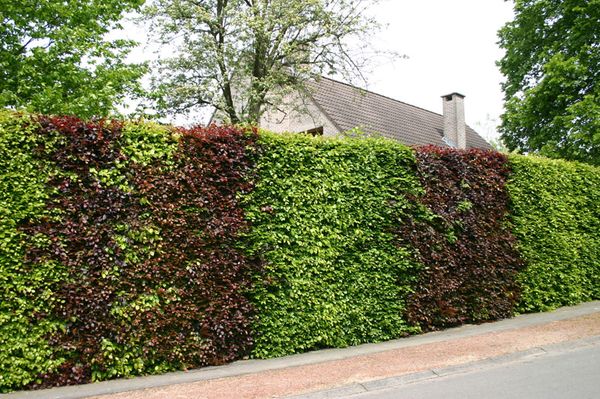
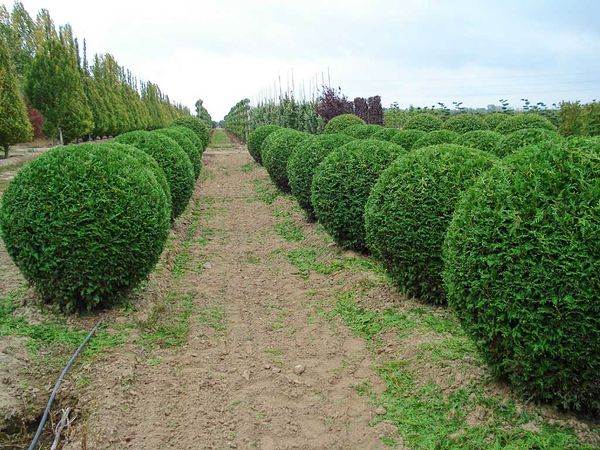
To ensure landscape design elements look aesthetically pleasing and natural, it's important to properly arrange herbaceous plants, trees, and shrubs for a hedge. Experienced gardeners recommend the following classification:
- monogenus – shrubs and trees of the same genus;
- combined – species and varieties of plants that harmoniously complement each other;
- trellis - intertwined branches of plants.
Many people think that building a hedge is easy and doesn't take much time. This is a misconception, as choosing the right plants for a living fence is crucial.
So, let's figure out which types of crops are most often used in landscape design to create protective structures or to zone the interior space of a garden plot.
Conifers
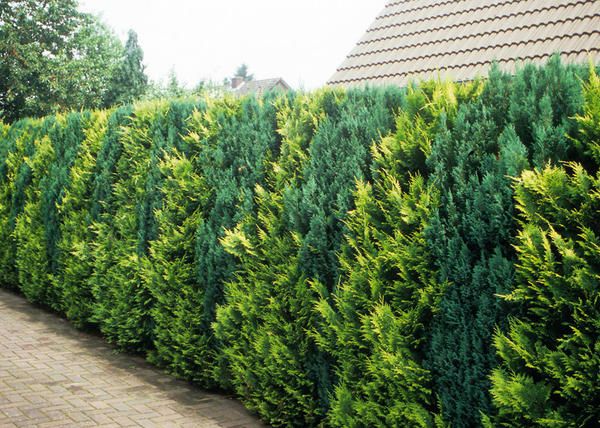
Coniferous fences are easy to maintain and undemanding of growing conditions. The plants are easy to shape, have a pleasant aroma, and a host of healing properties. For example, a fence made of coniferous plants helps combat various acute respiratory viral infections and also has a beneficial effect on the human respiratory and nervous systems.
If we talk about disadvantages, then coniferous plants are classified as slow-growing.
The following conifers have proven themselves to be the best: juniper, western arborvitaes, spruce, fir, mountain pine, yew and Lawson's cypress.
Deciduous
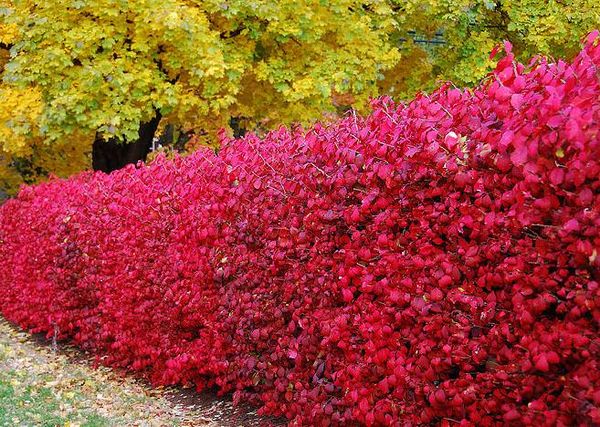
Deciduous hedges offer many advantages, including a wide selection of plant species and varieties, a wealth of colors, a wonderful aroma, and easy crown shaping. Unfortunately, most fast-growing deciduous trees are demanding in terms of soil composition, moisture levels, groundwater table, and light exposure.
To form a hedge, you can use barberry, hawthorn, lilac, viburnum, blackthorn, currant, willow, chokeberry, etc.
Curly
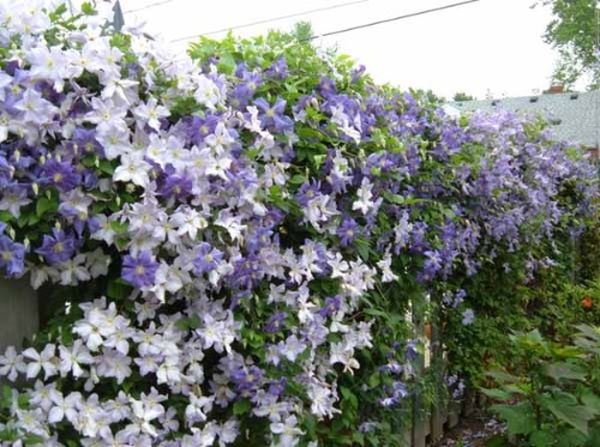
Climbing plants require additional support, which can be provided by a simple fence. Young bushes and trees grow quickly, intertwining with each other to form an impenetrable wall. By choosing plants that bloom at different times of the year for your hedge, your garden will look stunning year-round.
When choosing climbing plants, consider Chinese magnolia vine, clematis, climbing garden roses, hops, etc.
Depending on its intended use, hedges can be single-, double-, or multi-row. With the right approach, each of the above options can be enhanced with stones or wrought-iron decorative elements.