
Types and varieties of basil: characteristics of the herb
Content
Description
Basil is an annual herbaceous plant of the subfamily Nepetalaceae, family Lamiaceae. Its branching root is located shallowly. The stem is straight, tetrahedral, with numerous branches of oblong leaves, green or purple in color.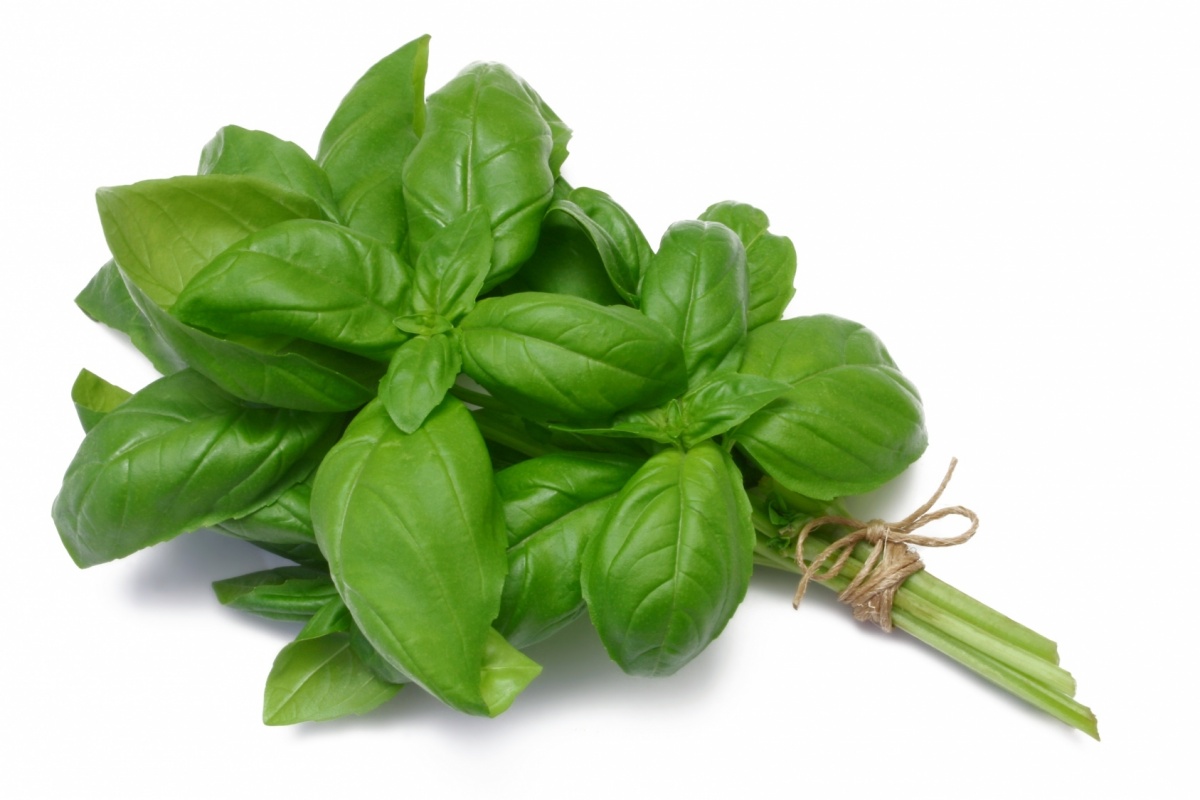
In June, it produces white or pinkish flowers, attracting a variety of pollinating insects. Later in the fall, the seeds—small black-brown nuts—can be harvested. All parts of the plant, except the root, are rich in essential oils, solanine, vitamin P, and camphor. The leaves are also rich in proteins, sugars, and fiber.
It is widely used in meat dishes, sauces, and winter preserves. The leaves are harvested for drying before flowering. At this time, they are especially rich in essential oils.
Video "Views"
From this video you will learn what types of basil there are.
Types
There are two varieties of basil: green and purple. However, only some varieties have a rich coloring of one of the colors. The purple group includes plants with all transitional colors from black to red. Green varieties can have a rich coloring of the entire plant or stems in all shades of purple, and leaves ranging from green to silvery due to numerous purple veins.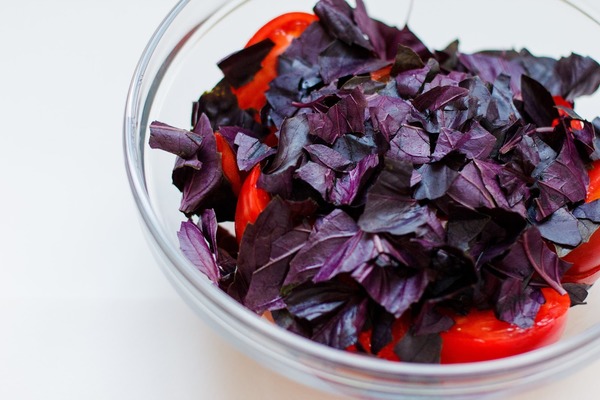
The aroma of some basil varieties contains hints of other herbs, such as allspice, clove, and lemon. Experts claim there are 40 different types of basil scents, masterfully used by perfumers. Those who use this spice more utilitarianly note the following notes: cinnamon, clove, pepper, lemon, and mint.
In Thailand, lemon-flavored basil is used to make curry pastes. Cinnamon-flavored varieties are more common in Mexico. Vibrant Georgian cuisine also utilizes purple basil, the pungent basil (regan), and the more delicate green basil (shashkalavi).
In terms of ripening time, it can be early (35-45 days after germination), mid-season (55-70 days), or late (75-90 days after germination). Sizes include low-growing (15 to 30 cm), medium-growing (30 to 60 cm), and tall (60 to 85 cm).
There is also the following classification: large, spoon-shaped, small-leaved and bunch-shaped.
Large
A plant with a highly branched stem, growing up to 40 cm tall. The leaves are large, finely toothed, green, and have a pungent, peppery aroma.
Spoon-shaped
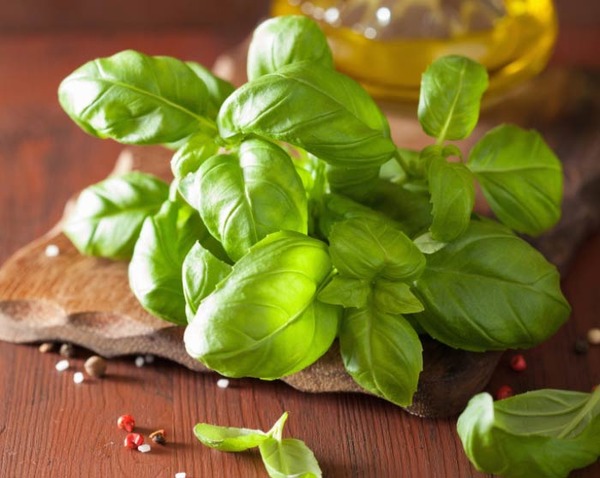
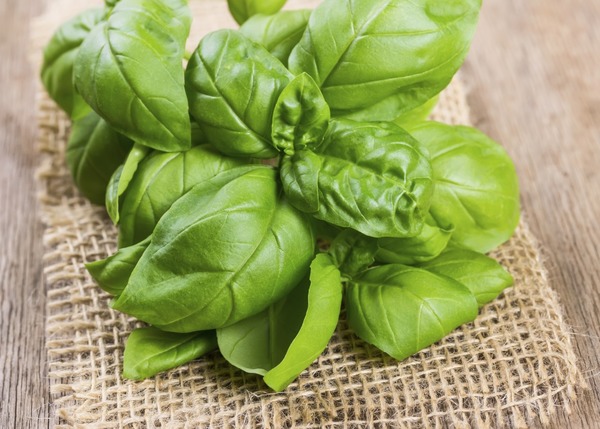
The term apparently comes from the shape of the leaves, which, with their concavity and oval shape, resemble this cutlery.
Small-leaved
This category includes small-leaved, low-growing varieties of basil, often used as a pot plant.
Puchkova
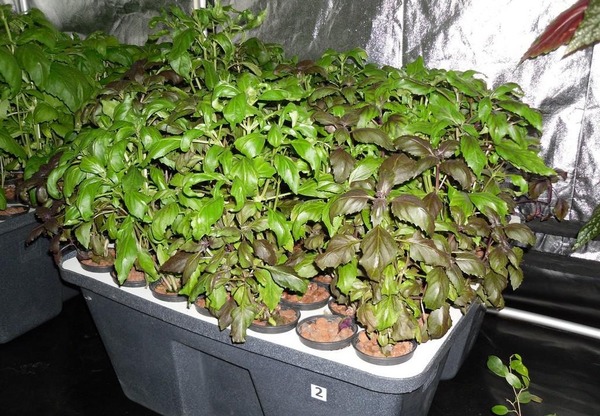
Varieties of this species are distinguished by their spherical shape, which develops on low plants—up to 15 cm tall—due to the abundance of small and wonderfully fragrant leaves. They grow both in pots and in the garden.
Planting and care
All basil varieties are heat-loving. Therefore, it can be planted outdoors only when the soil has warmed sufficiently and the risk of frost has passed. Seeds can also be sown outdoors, but for the fastest possible harvest, it's best to grow seedlings.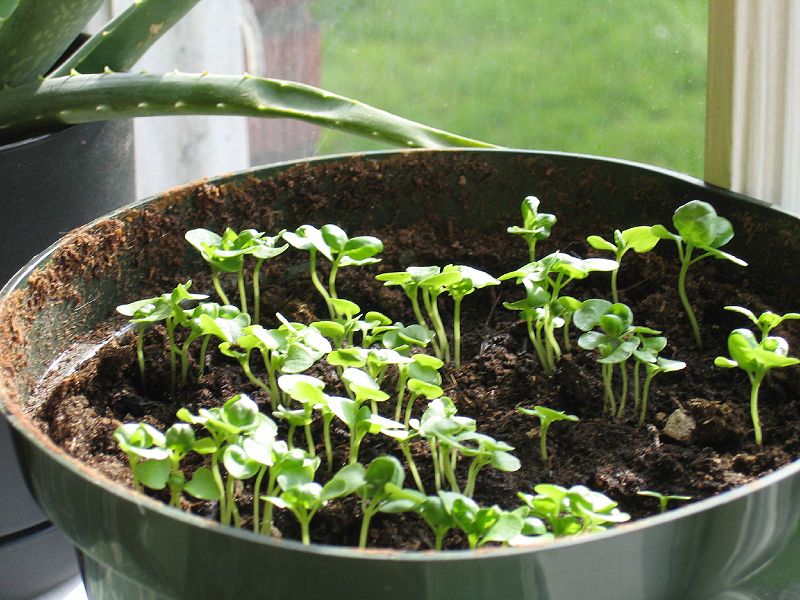
In the southern regions of the country, seeds for seedlings are sown in late March, while in the northern regions, they are sown in April. In both cases, the seeds must be soaked before planting. They are rich in essential oils and have a very fine particle size, which prevents rapid germination. First, the seeds, tied in a cotton cloth, are dipped twice in water at 30 degrees Celsius (86 degrees Fahrenheit) and kept there for 15 minutes.
The second soaking can be combined with disinfection by adding a few crystals of potassium permanganate to the container of water. Prepare a soil mixture in advance of compost, humus, and sand in a ratio of 4:2:1. To kill pathogens, place it in a preheated oven for 30 minutes. Choose a shallow container—5-7 cm. Make shallow furrows—1 cm, spaced every 4 cm.
The seeds are laid out, covered with soil, and watered using a spray bottle. The box is covered with something transparent, such as glass or film, and placed close to a heating element. The ideal temperature for seed germination is 24 degrees Celsius (75 degrees Fahrenheit). The glass should be lifted daily to allow air exchange. After two true leaves appear, the seedlings are transplanted into individual pots or a larger box, keeping a distance of 5 cm (2 inches) between them.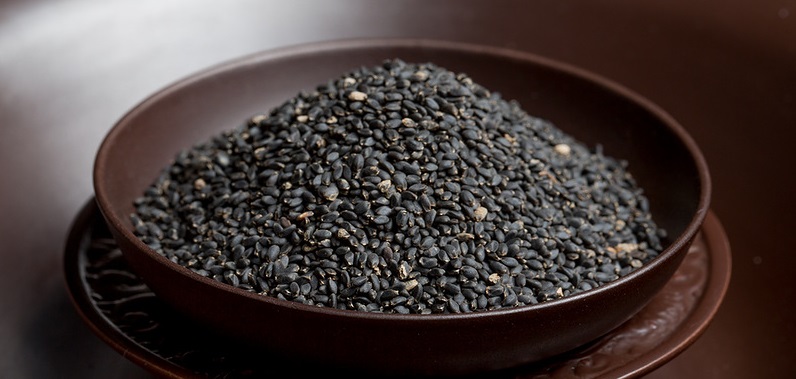
After five true leaves appear, the tops can be pinched to prevent the seedlings from stretching and accelerate the formation of lateral branches. A week before, harden the seedlings by placing them outdoors. Basil's weak, shallow root system explains its high demand for fertile and light soil. Therefore, the soil should be dug up beforehand and enriched with organic and mineral fertilizers.
They can be planted in separate rows or next to peppers and tomatoes. The distance between adjacent plants should be at least 20 cm, and between rows, 30 cm. Before planting, water the hole and deepen the seedlings by 7-10 cm. It's best to choose an overcast day or a time late in the evening. Further care consists of timely watering and loosening the soil. It's also important to remove flower stalks to encourage new shoots.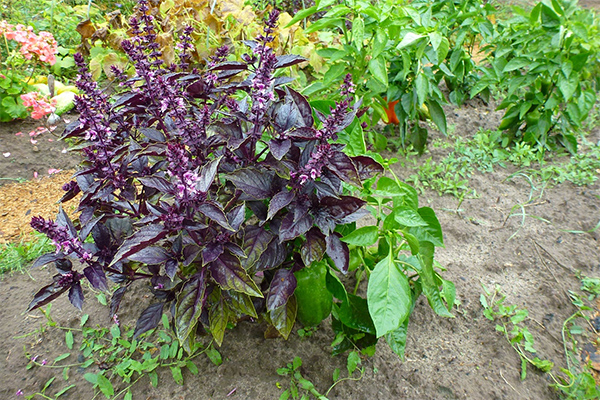
In open ground, seeds are sown at the same depth as for seedlings. The bed is moistened and covered with plastic. The main goal is to maintain soil moisture.
Diseases and pests
Basil is mainly affected by fungal diseases:
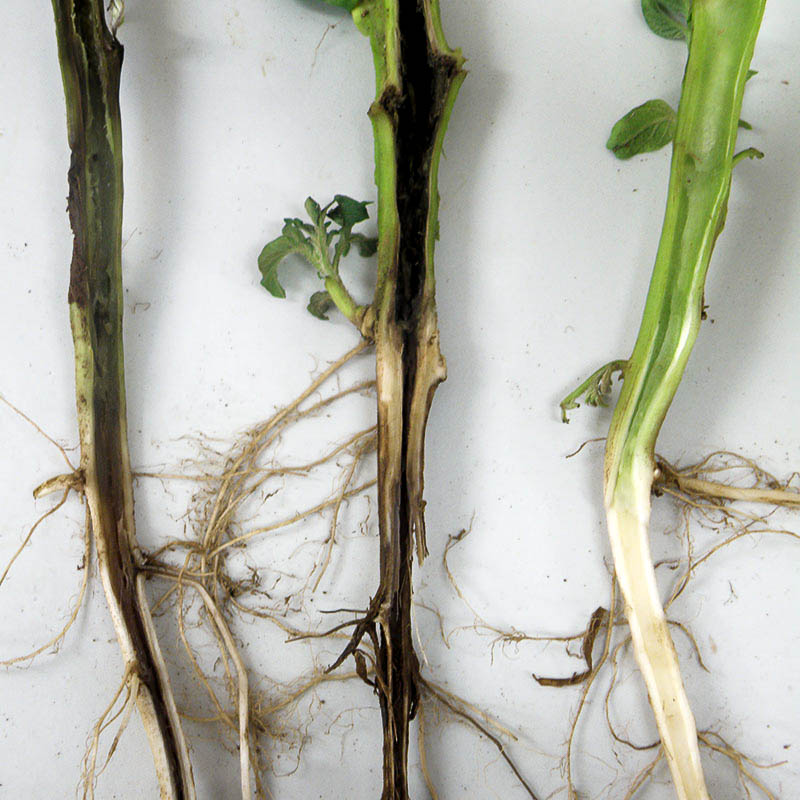
- Fusarium wilt. Fungi attack the plant's blood vessels, poisoning it with their toxins. Young basil stems turn brown and become thinner. In mature plants, the upper part is affected first, followed by the lower, more mature leaves that gradually wilt and dry out. The plant dies. The disease occurs in hot, damp weather.
- Gray mold forms dried, pale brown lesions, initially on the lower leaves, gradually progressing to the top. Affected leaves become unsightly translucent and covered with a gray fluff. The disease thrives in high humidity conditions.
- Blackleg attacks seedlings. The fungi colonize the root collar, clogging the vessels and cutting off nutrient supply. The roots become soft and black. The disease develops if the soil for seedlings was improperly prepared, with a pH below 6, a dense structure, and excessive moisture.
Treating basil with fungicides is not recommended. This will make it unfit for human consumption. Therefore, it's important to focus on preventative measures:
- do not grow the crop for more than 2-3 years in one place;
- do not thicken the planting;
- dust basil with deciduous tree ash from time to time;
- water moderately;
- After rain and watering, loosen the soil, preventing crust formation;
- At the first signs of infection, remove the diseased plant along with the root ball.
Basil isn't particularly susceptible to pests. Aphids and field bugs occasionally appear on young plants, but they don't cause much damage.
Video "Growing"
This video will show you how to grow basil properly.