
Rules for planting and caring for parsley in open ground
Content
Preparing seeds for sowing
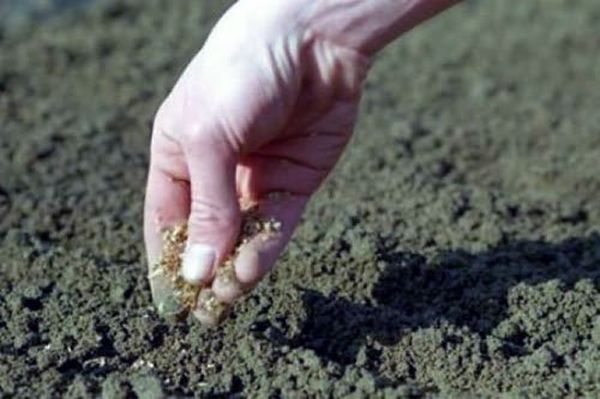
Parsley seeds, like all herbs, germinate extremely slowly. This is due to the high amount of essential oils contained in the seed coat. If sown directly into the soil without pre-soaking, the first shoots will appear no sooner than 15–20 days later, and if the soil is dry, it will take 3–4 weeks. This process can be accelerated by sprouting the seeds:
- To soften the shell, the seeds are poured into a thermos with hot (45–55°C) water and kept for at least a day – instead of water, you can use
- vodka (alcohol also dissolves esters well), the seeds are kept in it for 15 minutes;
- then the material is placed in a growth stimulator (Heteroauxin, aloe juice) or a light solution of potassium permanganate for 12–18 hours;
- After this, the seeds are laid out on gauze and allowed to dry (so that they do not stick to your hands when sowing).
After these manipulations, seedlings appear within a week. If the seeds are planted before winter, there's no need to germinate them. They'll have plenty of time to germinate and even undergo natural stratification before spring.
Preparing the site
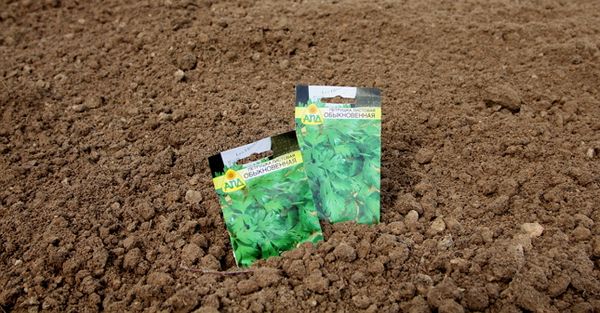
It's best to prepare a bed for growing parsley in advance. If sowing is planned for spring, the area should be dug and fertilized with organic matter in the fall. For winter sowing, you can use a bed that has been previously planted with tomatoes, zucchini, or cucumbers; prepare it a month before planting. When reusing the same bed, carefully dig the soil and remove all plant debris from previous crops.
The soil should be loose and moderately fertile. Dense soil makes it difficult for seeds to germinate and leads to deformed roots (when planting root parsley). To make the soil looser, add sand and dry humus. When digging the soil in the fall, be sure to add organic matter at a rate of 3–4 kg/m². In early spring, apply a complex fertilizer: 15 g/m² of superphosphate, 10 g of potassium chloride, and 20 g of saltpeter. Once the soil has completely thawed, loosen it to a depth of 10–15 cm.
What you need to know about growing
To ensure successful greenery growing, you should know some subtleties that affect the crop's yield:
- The best germination rate is shown by seeds collected less than 1 year ago - old seeds dry out very quickly due to the ester content;
- parsley grows better in loose soils with neutral or slightly increased acidity;
- it loves sunny areas, but also feels comfortable in partial shade (here it blooms later);
- the crop loves watering, but does not tolerate over-watering - if the groundwater in the area is close, a raised bed should be built;
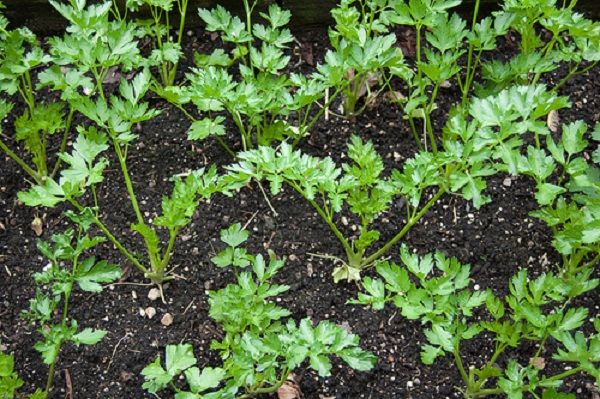
- To have fresh greens all year round, you can sow seeds from April to August at intervals of 2 weeks - for winter growing you need a greenhouse;
- Parsley can be grown by sowing seeds and through seedlings - the seedling method is used for regions with late and cold springs;
- If you let the bushes grow too big (produce flower stalks), the greenery will become coarse and tasteless;
- Parsley is considered a biennial crop, but if it is well cared for and covered for the winter, the bed will produce a harvest for 4-5 years.
Planting diagram and rules
Once you've decided when to sow parsley, it's worth considering the process and planting pattern. Approximately 1 gram of seed is needed for each square meter of garden bed. Parsley is a tillering plant, so the seeds should be planted loosely, 4–12 cm apart (depending on the variety). For leaf parsley, a spacing of 10–12 cm is considered optimal. Root parsley is planted 4–5 cm apart.

For planting, make shallow (2–3 cm) furrows 15–20 cm apart. Seeds are sown loosely or arranged in nests approximately 10 cm apart. Nesting allows for more vigorous and lush foliage, which is why it is used more often. The seeds are then covered with soil, and the rows are thoroughly watered. For winter sowing, double the furrow depth, and mulch the top of the rows.
Further care
Before the seedlings emerge, parsley care consists of gentle watering and ventilation of the bed if it's under plastic. When seeding freely, the emerging seedlings should be thinned. Once the greens have sprouted, they need to be watered regularly, weeded, the spaces between the rows loosened, fertilized periodically, and pruned promptly. Water with warm, settled water in the morning (avoid overwatering).
To form lush greenery, parsley is fed with organic matter twice.
Fertilizer composition: 1 kg of organic matter, 15 g each of superphosphate and potassium. Foliage varieties can be fed with saltpeter (50–60 g/10 l of water). To keep the foliage young, trim it regularly. If the bushes have aged and begun to turn yellow, they can be restored with a thorough pruning. The plants overwinter in the ground, so in the fall, hill up the bed and cover it with mulch.
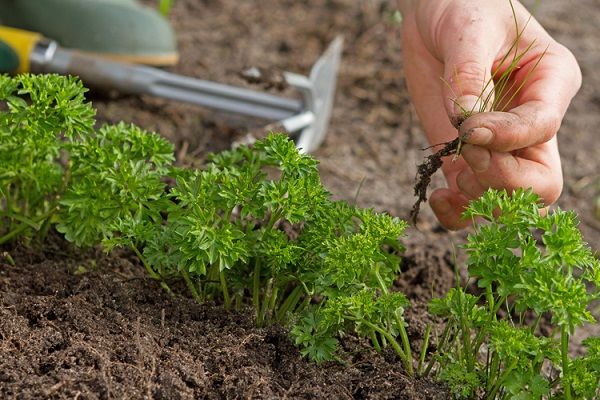
Protection from diseases and pests
Since growing parsley without pests and diseases is unlikely, it's important to take preventative measures in advance. To prevent cicadas, aphids, carrot flea beetles, and flies from damaging the crop, spray the parsley periodically with Fitoverm and Iskra Bio.
Any fungal disease of parsley (powdery mildew, rust, white spot) can be successfully treated with copper-containing products (copper sulfate, copper oxychloride) and biological products (Fitosporin). Always keep the garden bed clean, as weeds are carriers of fungal spores, and insects find refuge and lay eggs in them.
Video: How to sow parsley
In this video, a specialist will explain how to properly sow parsley in open ground.