
Peculiarities of picking celery
Do you need to dive?
Celery seeds are extremely small and take a long time to germinate. The soil layer above the seeds is quite thin and must be kept moist until the sprouts emerge. Most often, a shallow box covered with glass is used for sowing the seeds to retain moisture.
The seedlings usually emerge very dense. If left untreated, they will stretch wildly, fighting for their place in the sun. At the same time, the growing root system requires ever more space and nutrients. The roots become crowded and intertwined. This fierce competition for nutrients leads to stunted seedling development. When transplanting, such seedlings are very difficult to separate. No matter how hard you try, the roots are still damaged, the plants take a long time to establish, and they don't produce a good harvest. If the seedlings become dense, thinning them out is essential. It's a different matter if you planted 3-5 seeds in individual cups. In this case, you can pruned out the extra sprouts, leaving the strongest one.
Video "Pick-up"
This video will show you how to properly transplant celery seedlings.
How to dive
Celery is pricked out when it has two true leaves. Make a shallow hole in the soil. The plant is buried deep enough to maintain the vertical root system. Water and cover with soil, ensuring the growing point of the seedling is above the soil surface.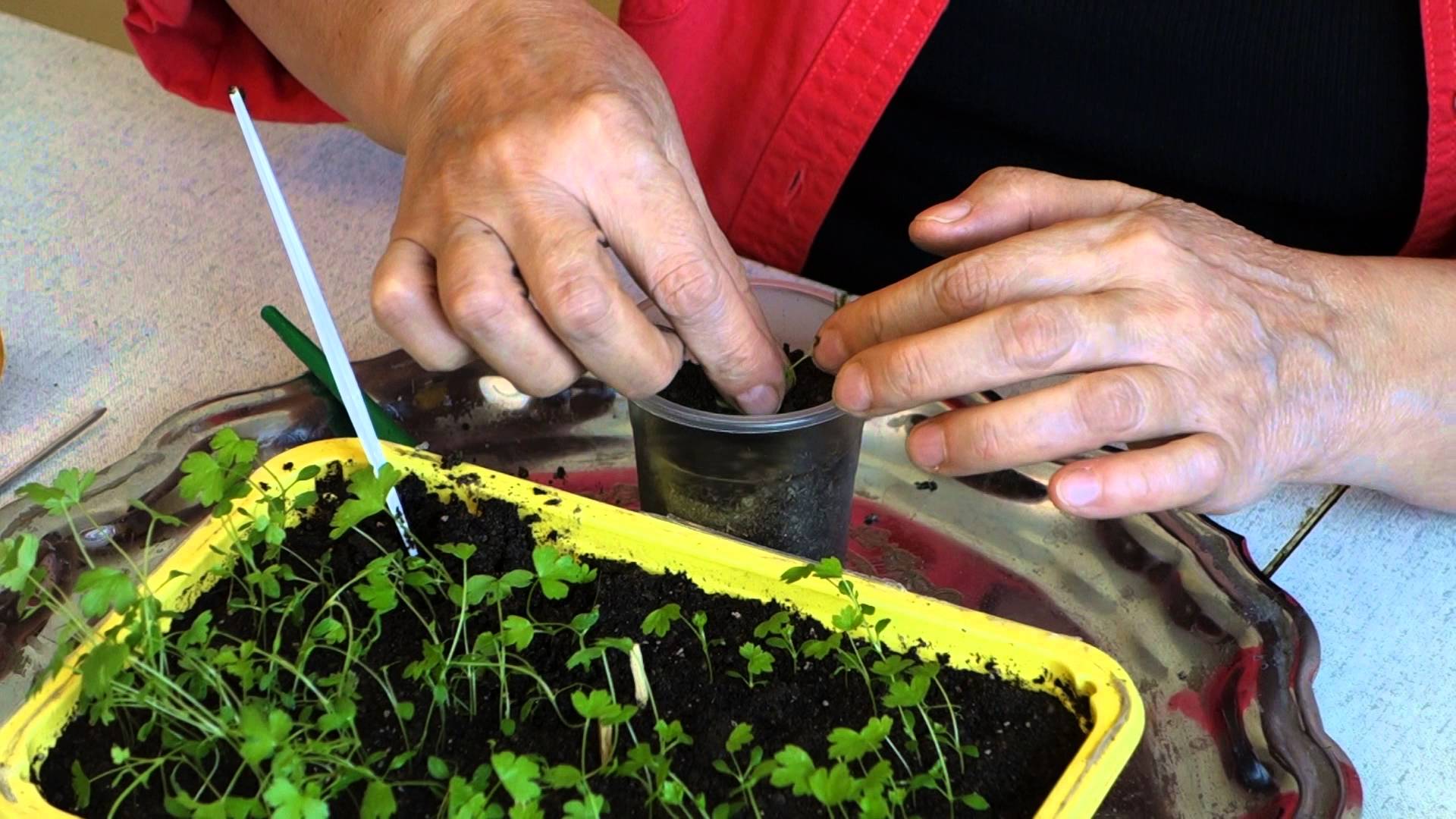
To stimulate the development of fibrous lateral roots, the central root is shortened by 1-0.5 cm. However, this technique is more relevant for leafy and petiolate varieties. For root varieties, shortening the taproot will result in smaller roots due to the growth of numerous small lateral shoots.
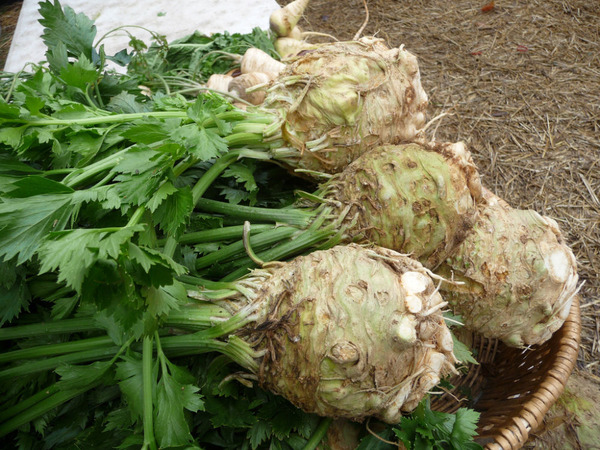
It's best to sow root celery directly into individual 6x6 cm containers and plant them in the beds along with the soil ball. If transplanting seedlings into a larger communal container, maintain a distance of 4-5 cm between adjacent plants. Rows should be spaced every 5-6 cm.
Caring for seedlings
The transplanted plants should be placed in a well-lit, warm location. For the first two days, they should be slightly shaded from midday rays. Water regularly, but avoid overwatering.
In addition to moisture, plant roots require a good supply of air, which is impeded by the dense, damp soil. It's recommended to apply the first fertilizer after 10 days. To do this, add 1 teaspoon of nitrophoska to 3 liters of water. Apply 2 tablespoons of this solution to each plant. Ready-made complex fertilizers can also be used.
Seedlings need to be fed regularly, every two weeks. Hardening off begins two weeks before planting outdoors. First, take the celery outside for a few hours, protecting it from the scorching sun. Gradually increase the time spent outside. Seedlings that have developed 4-6 leaves are transplanted to their permanent location.
Video "Growing"
From the video you will learn how to grow celery.