
Coriander plant: varieties, growing at home
Content
Description
Growing coriander has become especially popular since the spread of Korean cuisine in our country. Koreans have been cultivating the spice for over a thousand years and even today believe it can promote longevity.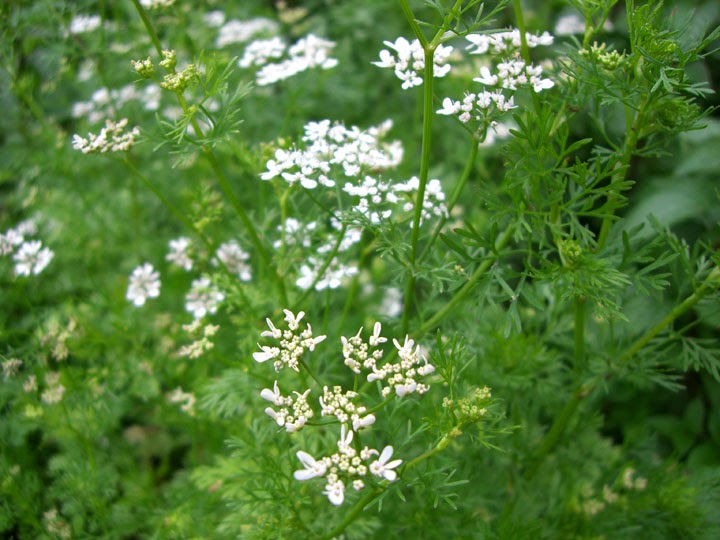
Coriander is a spice with a year-long growth cycle. The plant belongs to the Apiaceae family, which is easily noticed during flowering. Cilantro (also known as coriander), like its seeds, has a pleasant aroma due to its high essential oil content. The plant is typically used either fresh or dried.
This plant boasts not only a pleasant taste but also a number of beneficial properties. It's typically grown in garden plots, but some successfully cultivate the greens in greenhouses or even on apartment windowsills.
Cilantro grows as a herb until its seeds ripen. To obtain seeds, you need cut coriander. Care for both plants is virtually identical. Leaves with petioles form at the bottom of the stem, while the upper leaves are located on the stem itself.
Video "Features"
This video will tell you about the properties of coriander.
Varieties
Today, the most common varieties of the plant are: Avangard, Borodino, Borodinsky, Venus, Debut Karibe, Kindza-dza, King of the Market, Picnic, Prelest, Stimul, Taiga, Shiko and Yantar.
Growing
The crop can be successfully grown, subject to certain conditions, both in open ground and in greenhouse conditions, or even in an apartment.
In the greenhouse
When growing spice in a greenhouse, seeds should be planted in late winter or early spring. Results will appear within a couple of weeks, and flower stalks will take about 40 days to form. If planted in May or June, flowers will appear after 20 days.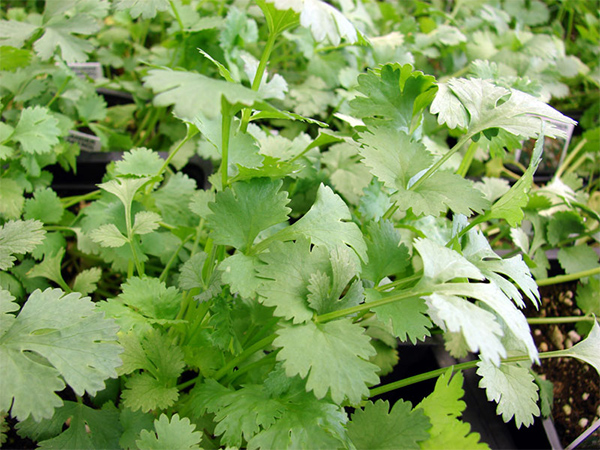
For greenhouse planting, it's best to follow this pattern: space plants 0.08–0.12 meters apart, with rows spaced 0.3–0.33 meters apart. This will simplify plant care and provide them with ample space for vigorous growth.
In open ground
How to grow cilantro outdoors? First, you need to choose the best planting location. A sunny or partially shaded area, but well protected from drafts, is ideal. It's best to plant the crop in the shade of fruit trees or other trees. A flat or elevated area is ideal. Growing cilantro in depressions in the soil can result in the plant becoming waterlogged before it even begins to ripen.
It's best if the soil under planting is rich in nutrients, loosened, and fertilized. Fertilizer is usually added when digging the soil. Half a bucket of compost and a small amount of wood ash are typically added per unit area.
If you prefer mineral nutrients, it's best to apply them in advance. Fertilizers are added to this type of soil before planting the seeds, at a rate of 0.02–0.03 kilograms per unit area.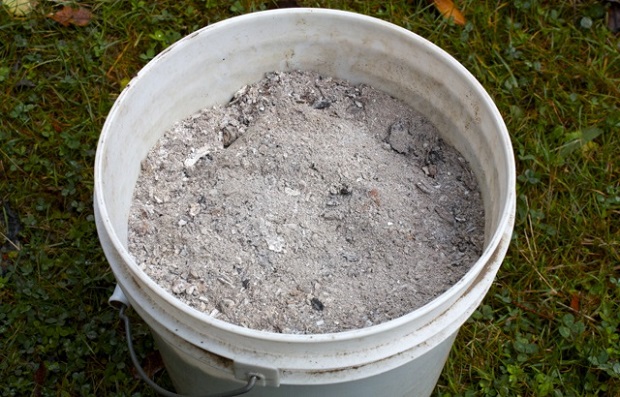
Planting any spice variety can be done throughout the warm season. This recommendation applies to crops grown in unprotected soil. There are simply no specific planting recommendations. The plant often reproduces on its own. Sowing can be done using any method. A pre-prepared plot should be moistened and the seeds sown either in rows or randomly. Afterward, the seeds should be covered with soil.
After the first shoots emerge, the plants need to be thinned. To ensure proper growth in the future, a distance of 0.06–0.07 meters is typically left between shoots.
At home
Coriander can be safely grown indoors on a windowsill. In this case, sow the seeds in large containers in early spring. In boxes, the crop can be sown at a distance of 0.06–0.07 meters. Prick out the seedlings, two young plants per cup. The growing process is significantly simplified by the large size of the coriander seeds. The seeds should be planted no more than 0.02 meters deep.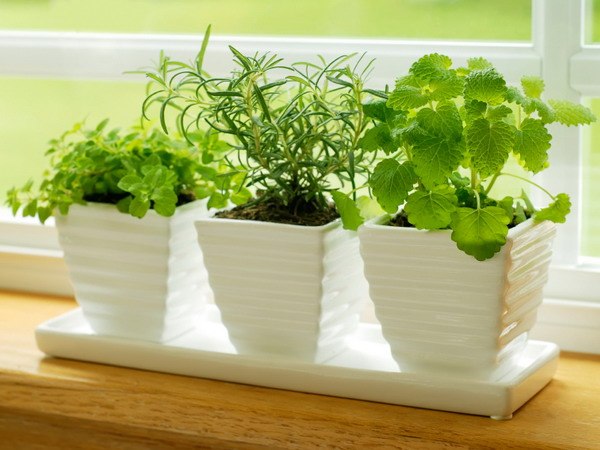
After sowing, cover the container with future seedlings with plastic wrap or place it in a plastic bag, which will create the illusion of a greenhouse for the seedlings. Remove the plastic wrap only after the cotyledon leaves emerge.
When grown indoors, kishnets (an obsolete name for a spice) requires constant supplemental lighting. A fluorescent lamp is often used for this purpose. Under the right conditions, the first harvest of greens can be obtained within a few weeks of sowing.
Care
Proper seedling care is the foundation of all plant cultivation practices. To harvest the spice as quickly as possible, the plants need to be constantly moistened. Ideally, water twice a week. Up to 5 liters of water per unit area is sufficient. It's especially important to moisten the plants before they begin to flower. This procedure promotes vigorous growth of green mass on the plant.
What should you do when the fruits begin to ripen? In this case, you need to reduce the watering volume to a couple of liters of liquid per unit area.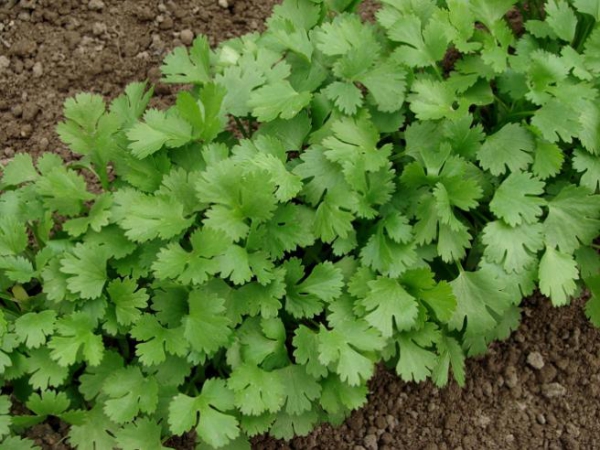
If you are unable to regularly water the plants, mulch them.
Mulching the soil around the bushes helps retain moisture. The plant is very sensitive to light. Therefore, to ensure a fragrant harvest and high-quality seed, cilantro should be planted in sunny areas.
If cilantro is grown indoors, care is even simpler. Regular, generous moisture and light are sufficient.
Harvesting
Coriander is a fragrant herb that is typically harvested after the plant has stopped growing. Harvesting should be done before the flowers appear. Harvesting on time is difficult. The leaves can be trimmed when the plant reaches a height of 0.0–0.22 meters.
It's best to cut cilantro in the morning. Use a sharp knife for this. Rinse the cut greens thoroughly with water and dry them. For example, you can form small bunches and hang them in a dry, dark place. Avoid drying in direct sunlight, as this can destroy all the beneficial properties of the plant. It's best to store the harvest dry.
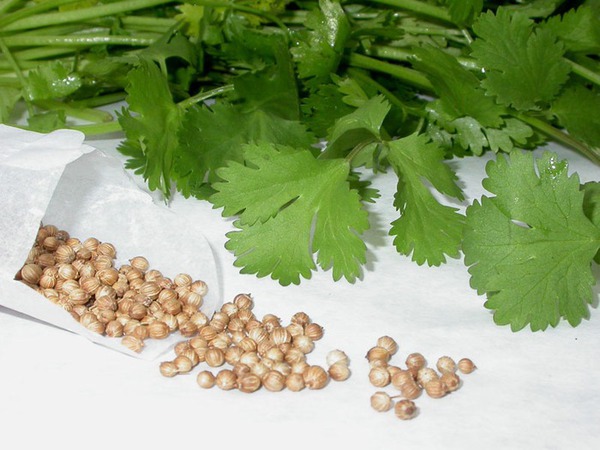
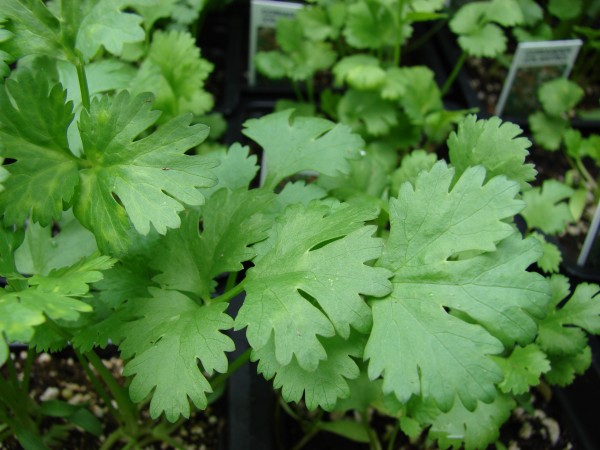
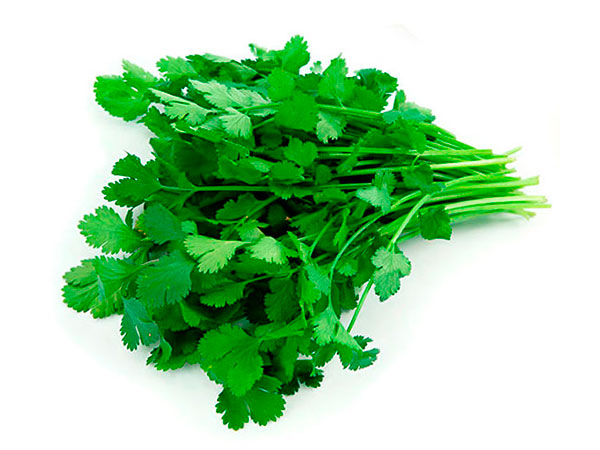
So, growing coriander is easy. If you love spicy and flavorful food, try growing your own cilantro.
Video "Growing"
From the video you will learn how to grow spices.