
Choosing a Palette and 6 Best Flower Garden Design Ideas
Content
Types of flower beds
Free or landscape
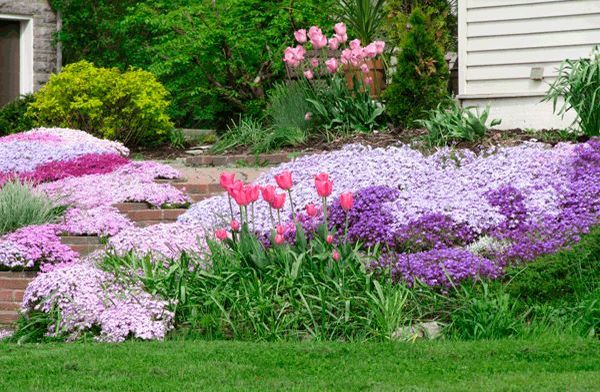
So, what is beauty without flowers? They energize, inspire, and delight the eye. Moreover, according to psychotherapists, caring for flowers helps combat depression and neuroses.
Let's start with free-standing flower beds. Their main characteristic is their flowing, natural form. For example, flowering plants of one variety flow seamlessly into another. They look simple and natural.
Landscape flower beds are very popular among gardeners. If one plant blooms or dies, it won't affect the decorative effect of the entire flower bed. They can be placed in almost any corner of the garden.
There's an interesting approach to landscape flowerbed design called the "random effect." Sand-covered areas are intentionally left in the flowerbed. Sooner or later, spreading by self-seeding with the help of the wind, these voids will eventually fill up.
Strict and symmetrical
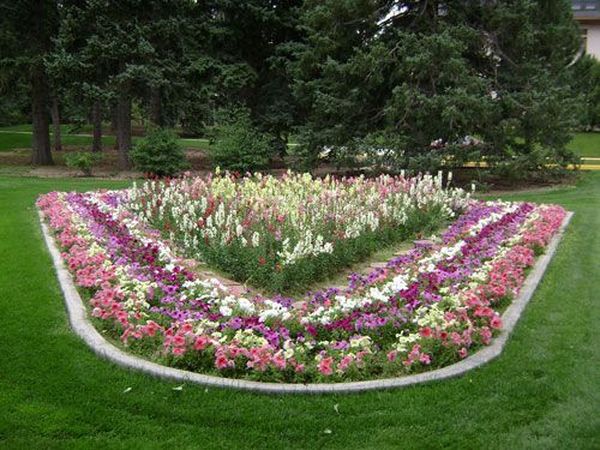
To create such flowerbeds, a site is selected and the plot is planned, taking into account the shape and size of the flowerbed. If the shape is rectangular or square, a border is added. A distinctive feature is the presence of borders. These also protect against weeds.
It's best to plant flowers as seedlings, as not all seeds may germinate, creating gaps that disrupt symmetry. Plants should be selected with a flowering period of 3-4 weeks.
Mixborder
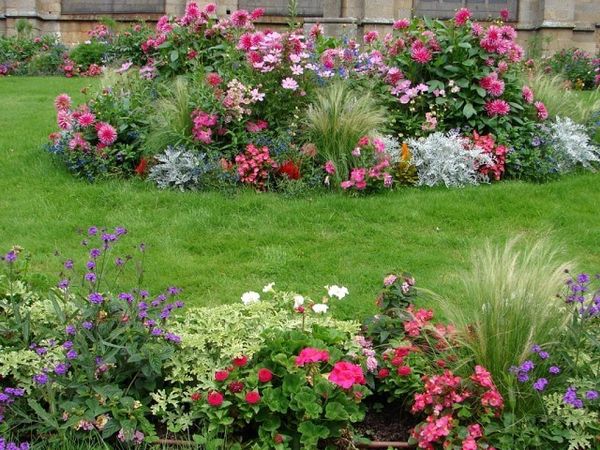
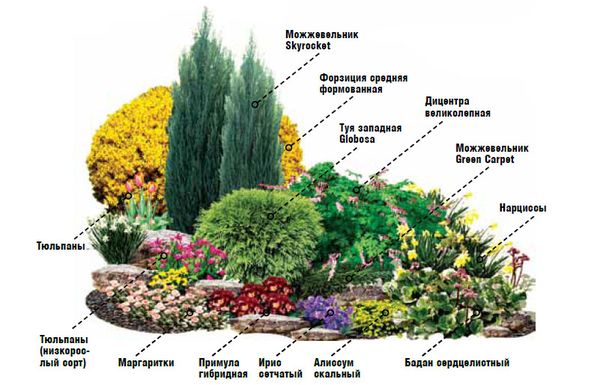
If you've decided to create a more complex flowerbed design, consider a mixed border. In this type of bed, laid out along walkways and fencing structures, plants are arranged in order of height from shortest to tallest.
By organically combining flowers and shrubs that complement each other, you'll create a masterpiece that will delight the eye from mid-spring until the first frost.
A unique feature of this type of flowerbed is that the plants bloom at different times, so the bed will look spectacular most of the time. If you add conifers to the composition, you'll enjoy its beauty year-round.
Typically, tall plants are planted at 1-3 per square meter, medium-height plants at 5-7, and short plants at 7-11 per square meter. Ground cover plants are often planted between plants. This simple technique will eliminate the need for frequent weeding. When laying out a flowerbed, consider the mature size of the plants.
Parterre
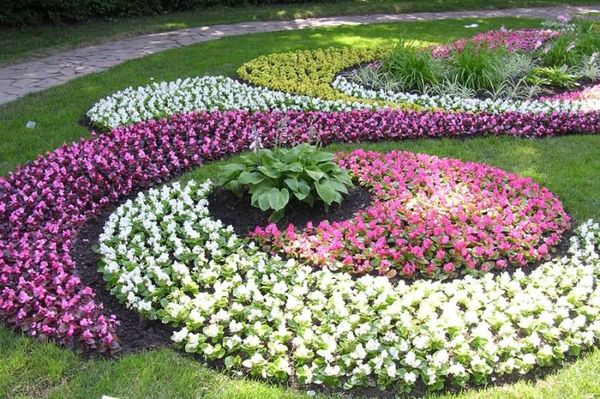
A parterre is a large, formally shaped flowerbed located in the center of a yard or garden. Plants are arranged in contrasting patterns. When designing such a flowerbed, consider all possible views. A circular shape will create a beautiful view from various angles. Flat flowerbeds look great in elevated areas.
Flowerbeds with plants of the same shape, such as standard roses and blue fescue, look great.
Flower bed
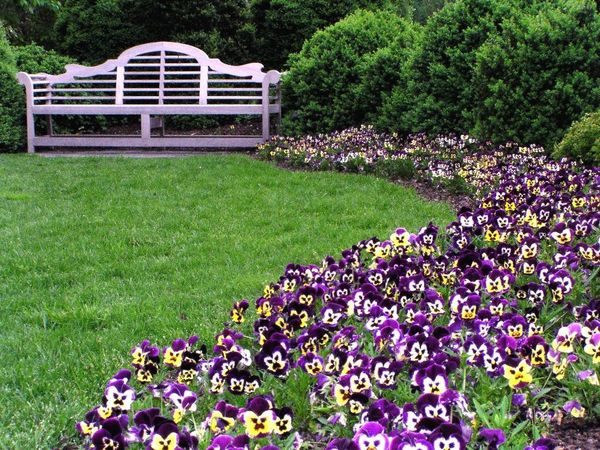
A flower bed is a long strip of mixed flowers bordering a path. The standard width is about 50 cm. However, some homeowners, depending on the size of their property, prefer to increase the width to 3 m. The length of flower beds is a personal choice.
Flower beds can be placed on one side of a path, along the side of the house, or on both sides, serving as dividing stripes along the path. With the right color scheme, this type of flower bed will become a highlight of the landscape.
Front garden design
Homeowners often create a small garden around any home. They plant a wide variety of plants, including ornamental shrubs and fir trees. This simple garden is also called a front garden. The design involves planning flowerbeds from the gate to the entrance. Solitaires—single plants that draw attention—are often planted throughout the garden.
Flowers decorate the entrance to cottages, and landscape design is also used to create a beautiful view of the house from the driveway. Dense planting is the most beautiful. However, it's still important to plan the space needed for each plant to grow and develop freely.
Video: "Rules for Selecting Flowers for a Flowerbed"
In this video, an expert will tell you how to choose the right flowers for your flowerbed.
Choice of colors
Landscape design of flower beds takes into account the flowering times of plants, so that the flowerbed doesn't remain empty for a period of time. Plants are selected based on their flowering times, so that they alternate with one another. The characteristics of each species must be taken into account. After all, each variety has cultivars that bloom a couple of weeks earlier or, conversely, later.
When creating a flowerbed, choose plants of varying heights. Tall plants should avoid casting shadows on their shorter counterparts. The most attractive and tall plants are planted in the center of the bed as accents. Sometimes shrubs or low-growing trees are appropriate. Shorter plants are usually placed along the edges.
The practical side of the issue is taking into account the flowering period, which should coincide. Before planting flowers, you should thoroughly study the growth and care characteristics of each species. The soil type should be suitable for all the plants you plan to place in the flowerbed.
Another practical tip to avoid the hassle of replanting: plant perennials. For example, peonies and clematis can grow for decades.
Make sure your plants are suited to the climate and can withstand winter well. Plant more undemanding plants so you can spend more time contemplating their beauty than caring for them.
A spring flowerbed can include tulips, hyacinths, daffodils, and snowdrops. The bed is lined with gravel. A perennial can be planted in the center as an accent. A summer flowerbed will delight its owners until fall. Both annuals and perennials can be planted. Irises, marigolds, pansies, and snapdragons work beautifully. Asters and chrysanthemums will decorate fall beds, blooming until the first frost.
How to choose a palette
When designing formal flowerbeds and flower gardens, it's important to choose the right plant colors. While you can choose just one plant variety, more often than not, several are chosen. To ensure a harmonious yet striking flowerbed, it's important to know a few color combination rules:
- There should be no more than five flowers in one flowerbed.
- For the accent part, the color should be unique.
- Cool colors are combined with cool colors, and warm colors with warm colors.
- The bright shade is harmoniously set off by softer colours of the same colour range.
Harmony and simplicity are in fashion today, so a single color scheme is perfectly acceptable. For example, green and pink (peonies, roses, clematis, chrysanthemums, bergenia). Contrasting solutions, such as blue and yellow (delphiniums, irises, violas, nasturtiums, marigolds), look original.