
Rules for preparing and storing apple tree cuttings for spring grafting
Content
When is the best time to prepare cuttings?
Cuttings for grafting are prepared in the fall or spring. In the fall, this should be done when the sap flow in the tree has stopped, that is, around the end of November. The question of whether it's worth taking cuttings in winter is a subject of much debate, so it's best for novice gardeners to avoid such experiments.
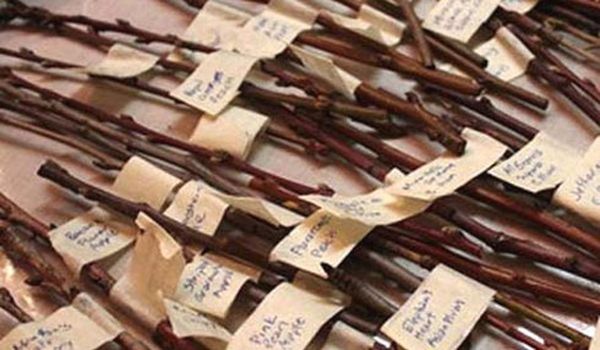
In spring, this should be done after the frosts have passed, when the sap begins to circulate. Cuttings for grafting apple trees can be taken during spring pruning, especially if the tree is a frost-hardy variety. On average, it is best to prepare apple tree cuttings for spring grafting in March, in the second half of the month, although this period may vary depending on the region and how long the winter was. Grafting material must be prepared before the buds open, otherwise there's almost no chance it will take root. Generally, it's recommended to prepare cuttings in the fall—this reduces the risk of the shoots freezing in the winter, making them unusable for grafting.
How to make the perfect cutting
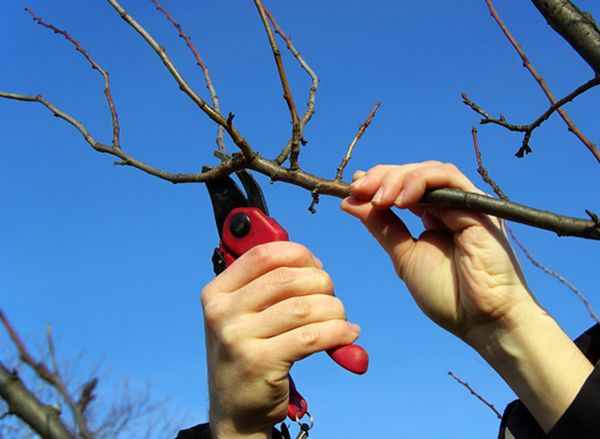
Let's look at how to properly prepare cuttings and which shoots to use to obtain a healthy graft. Cuttings should be taken from a young (3 to 10 years old), abundantly bearing tree on a well-lit side, preferably on the south side, where they have the shortest internodes. One-year-old shoots, preferably from the middle tier, are suitable for this purpose.
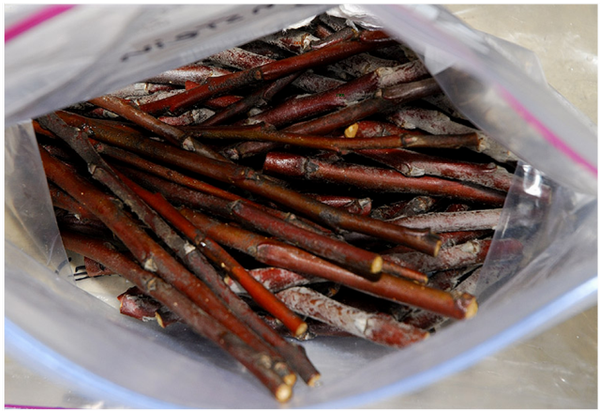
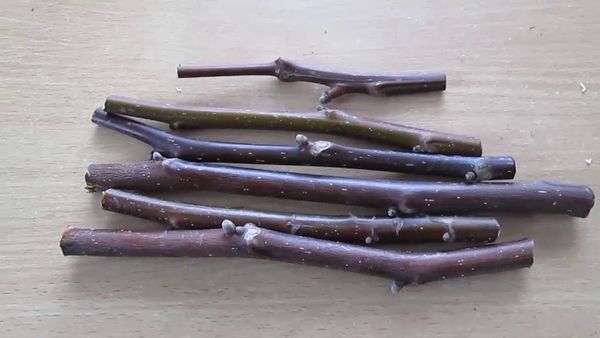
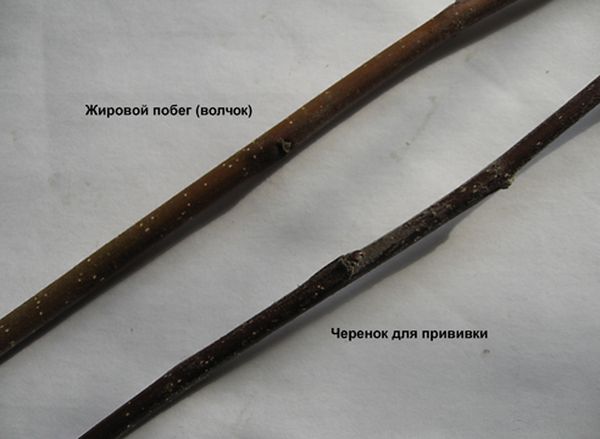
The buds in their leaf axils should be well-developed. It's important that the terminal bud is clearly visible. Choose shoots 30–40 cm long, about pencil-thick (about 7 mm in diameter), and with at least 4–5 developed buds. Avoid "suckers" (i.e., fat shoots perpendicular to the branch, even along their entire length, with barely noticeable buds) – they root quickly, but don't bear fruit for a long time. Also unsuitable are shoots with leaves and petioles remaining – if they have already fallen from most of the tree, this indicates poor ripening.
You can also take cuttings from older apple trees, although they are usually shorter than recommended. You should take a larger number, up to 15, so you can select the best ones in the spring. The prepared shoots should be smooth, with undamaged bark. Inspect the cut surface—there shouldn't be any brown spots in the center.
Where and how is it best preserved?
Now let's find out how to store cuttings for spring grafting, and where is the best place to do this.
On the street
Grafting material can also be stored outdoors, provided you live in areas with snowy winters that create snowdrifts at least half a meter high.
To do this, prepare a flood-proof spot near the north wall of a shed or house. Dig a trench about 30 cm deep and line the bottom with pine branches (this will also protect the plant from moles). Place the cuttings on top, cover again with spruce branches, and then sprinkle with leaves, straw, or sawdust.
If the snowdrift is half a meter or more thick, the cuttings don't even need to be buried, but the snowdrift itself should be covered with dry straw or sawdust—this reduces the risk of it melting. This naturally raises the question: how to protect the cuttings from pests? To achieve this, the cuttings can be wrapped in a layer of nylon, or fine-mesh metal or plastic mesh.
In regions with prolonged thaws, cuttings can be stored on the ground between two layers of damp sawdust until spring. Wait until this mound has survived one frost, then cover it with an additional 40 cm layer of dry sawdust, then cover it with plastic wrap. Instead of water, you can use carbolic acid (50 ml per 10 liters of water) to repel mice and other pests.
In the cellar
In a basement or cellar, cuttings are stored cut-side down in a slightly damp substrate such as sand, sphagnum moss, or sawdust. The substrate should be kept moist throughout the winter. The temperature should be between 0°C and 3°C.
In the refrigerator
In urban areas, storing cuttings in the refrigerator can be convenient. Bundle the cuttings together and wrap them in a damp cloth (preferably burlap), then in paper, and finally in plastic. Use a refrigerator that maintains a temperature between 0 and 2°C (for example, for fruit). Never store them in the freezer! To prolong the shelf life of the cuttings, ventilate them regularly and remember to dampen the cloth. Inspect the cuttings at this time to detect mold and prevent its spread.
Other suitable places
Grafting material is best stored hanging from a tree branch, balcony, or veranda. To do this, insulate it with a bag or place it in a plastic bottle. Air the grafting material periodically to prevent the cuttings from sprouting.
How to protect from damage
First, you need to store the cuttings within the recommended temperatures. If they freeze, they won't produce rootstock, so ensure they're adequately insulated. Excessive heat can lead to bacterial contamination or premature germination, which also makes them unsuitable for use. So, if the cuttings are stored in a cellar or refrigerator, monitor the temperature, raising or lowering it as needed.
Secondly, it's important to maintain optimal humidity: drying out will kill the future rootstock, and excess moisture will encourage mold. Before using any substrate or fabric, squeeze it in your hand—it should be visibly damp to the touch, but not dripping. If mold appears, the cuttings can be saved by dipping them in copper sulfate (3% solution) or alcohol-iodine (1%).
We check whether the cutting survived storage
Cuttings that have successfully survived the winter can be identified by their smooth, fresh bark, as well as tightly seated buds with smooth-looking scales. Gently bend the cutting—a living one will bend resiliently and elastically, while a dead one will snap immediately. A flexible cutting with wrinkled bark can be refreshed: cut 1–2 cm above the previous cut and place the cutting in clean water for three days.
If that doesn't work, it's dead. You can test for frostbite. To do this, make a new cut at the bottom of the cutting and place it in water. If the water comes out clear, everything is fine. A yellow or brown color indicates that the cutting has frozen. The cut itself can also help check the condition of the shoot: it should be fresh and light green. If the cut is brown, the cutting, unfortunately, can be discarded. How many days before grafting should apple tree cuttings be brought into a warm place? Usually it's one day, but if you used frozen sawdust, then 3-4 days.
Tips from an experienced gardener
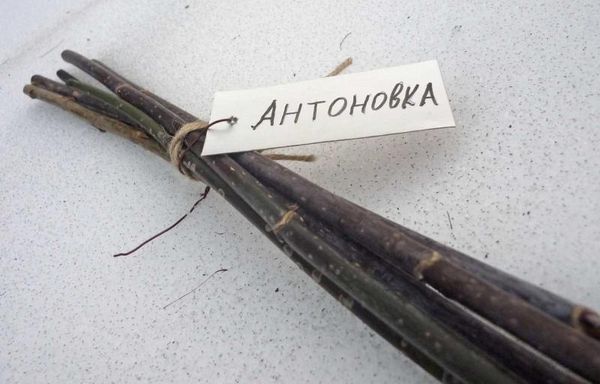
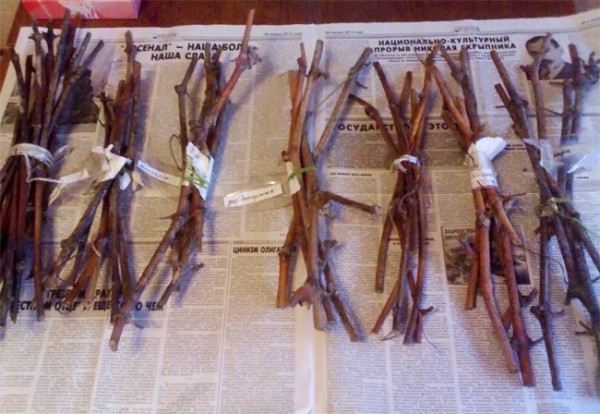
When taking cuttings, use sharp and well-disinfected tools to avoid introducing infection. For the same reason, avoid touching the cut surfaces with your hands. After you've collected cuttings of a particular variety, tie them together and label the bundle—this will prevent confusion in the spring. If you have cuttings from different trees of the same variety, you can also separate them (especially if you're trying your hand at breeding). You can label the variety on cardboard (then secure it with tape to protect it from moisture) or on a wooden sign.
It's best to gather extra grafting material and, if possible, store it in different locations. This will increase the chances of getting viable cuttings by spring if one storage method fails. This is especially true for beginning gardeners or if you plan to store the cuttings in a new location. Regular pruning will help the cuttings grow more resilient. Some experts recommend cutting a 1–2 cm section of two-year-old wood, which improves the chances of rooting.
Video: "Preparing cuttings for spring grafting"
This video will show you how to properly prepare cuttings for spring apple tree grafting.