
Characteristics of the columnar apple tree Amber Necklace
Content
Description of the variety
The Amber Necklace is a columnar apple tree, and descriptions of it always begin with the tree's compactness. Indeed, the tree grows up to 2.5 meters tall, with a crown only 40 cm in diameter. Each mature tree produces 15 kg of excellent-quality, appetizing fruit. The thick trunk with short, angled side branches is covered with smooth, grayish-brown bark. The dark green, elongated leaves with pointed tips have finely serrated edges. The tree blooms in May with large white flowers, producing an excessive number of ovaries, requiring manual management to increase the size of the fruit and allow them to ripen. However, this is only possible if other varieties that bloom at the same time are nearby, as this variety is self-sterile.
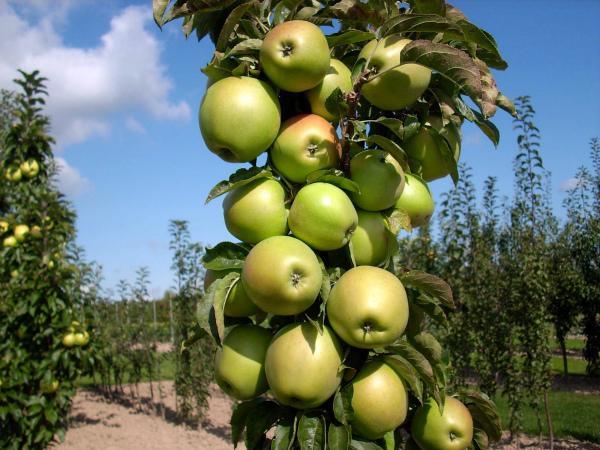
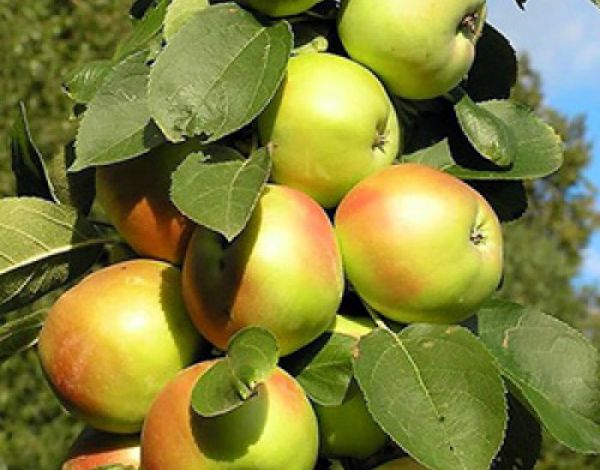
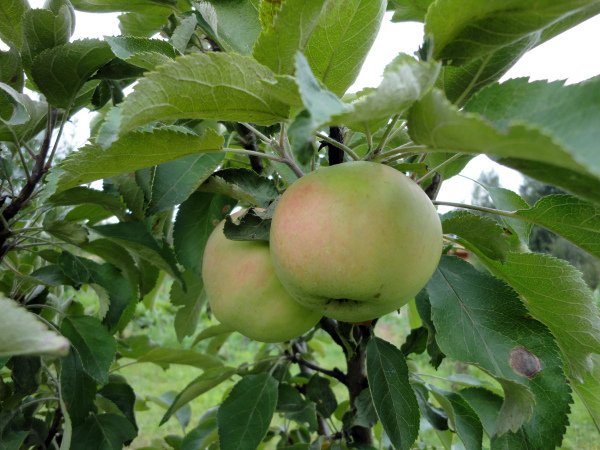
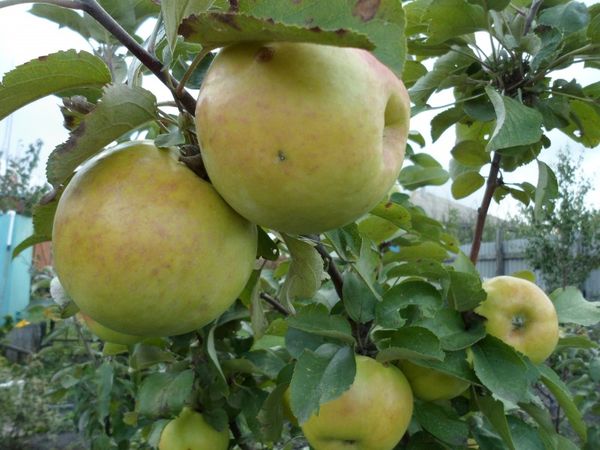
The apples reach technical maturity in September, and their flavor improves after 1–2 months. Their base color is yellowish-green with a delicate blush on one side or near the stem. As they ripen, the color increasingly resembles amber, revealing the meaning of their name.
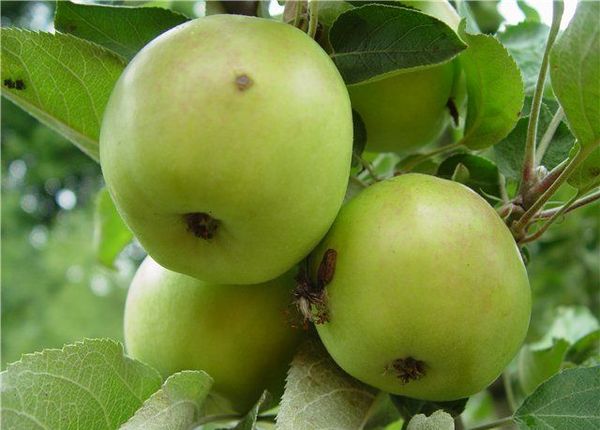
If you leave the apples on the tree, they, according to reviews, do not fall off, become sweeter in taste and transparent, glowing from the inside, like amber.
Main characteristics
The columnar apple tree variety "Yantarnoye Ozhelezhe" begins bearing fruit in the second year after planting, but it's best to pluck the flowers. Only after one to two years should you leave no more than 10 ovaries, allowing them to ripen to avoid weakening the plant. In the fifth year, you can harvest 10-12 kg from a single tree, and after a couple more years, a stable yield of 15-20 kg will be established. Only after 15 years will the yield begin to decline rapidly.
The apples are evenly and compactly arranged, with an average weight of 14–180 g. By removing the ovaries and reducing the overall production, you can grow large apples weighing 200–300 g each. The apples are attractive, round, and have a thick, thin skin, which helps them store and transport well. At lower temperatures, the harvest can be stored until late spring. Their flesh is white and very juicy, with a dessert-like, sweet-and-sour flavor that increases with storage. They are very pleasant to eat fresh, but desserts, jams, and juices made from these apples are also excellent.
Growing
Apple trees of this variety are typically planted along fences or buildings to ensure adequate sun exposure, protection from the wind, and to conserve space. In gardens, they are typically planted in rows spaced 50–70 cm apart, leaving at least 1 meter between rows. The soil should be well-drained, moist, and fertile. Before planting, it is advisable to fertilize the entire plot or fill a hole (at least 90 cm wide and deep) with a sufficient amount of humus, compost, wood ash, and mineral fertilizer. It is advisable to tie the seedlings to stakes, ensuring that the root collar remains exposed, and mulch the area around the trunk after watering.
Proper annual pruning and regulation of the number of ovaries are important care measures for columnar apple trees. In the first year, all branches are shortened to two buds. The following year, each bud will produce a new branch, and the top one is again pruned to two buds. In the third year, the unpruned branch will produce fruit, and the pruned one will produce two more branches, and the top one is pruned again. The following year, the fruit-bearing branch is removed, and the top one is pruned. This process continues annually.
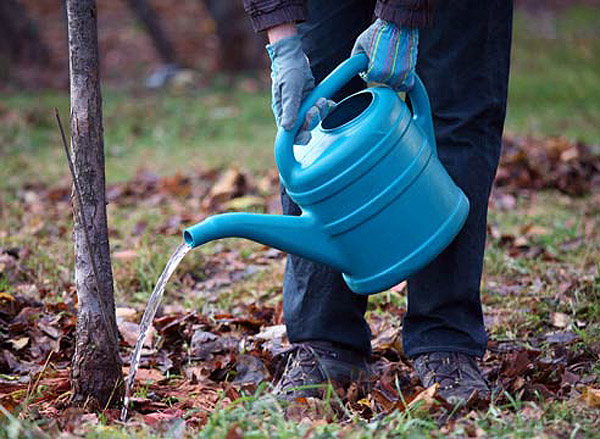
Trees should be watered every three days, preferably with drip irrigation, and watered deeply once or twice a month. Fertilizing is usually combined with watering: with nitrogen in the spring, ash sprinkled on the soil before watering in the summer, and phosphorus in the fall.
The tree's trunk area can be sown with cereals or grass to protect the roots, and mowed periodically. Protect the trunk from rodents during the winter.
Pests and diseases
The compact crown of columnar apple trees, simply by its shape, resists fungal diseases—they don't require overcrowding, shading, or excessive moisture. The "Amber Necklace" is almost never affected by scab, and rarely by powdery mildew. Other diseases are possible: apple trees can become infected with canker, spotting, mosaic, and rust. In these cases, it will be necessary to resort to special preparations (such as Nitrofen or copper sulfate). Gardeners who grow apples on a commercial scale prefer to spray the trees with Bordeaux mixture in early spring as a preventative measure. Of the many apple pests, this variety is particularly threatened by aphids; for some reason, other pests dislike columnar apple trees, and this variety in particular.
You can also get rid of them with specialized products such as Karbofos, Chlorophos, and Decis, but if the insects are detected early, you can resort to completely harmless yet effective folk remedies. Apple trees are typically sprayed with soap-ash, soap-tobacco solutions, or Bordeaux mixture; yarrow infusion also produces good results.
Pros and cons
Among the advantages of this variety are its compact size, early fruiting, high, consistent yields, excellent flavor, appetizing fruit appearance, and its ability to store and transport well. Its high frost resistance allows it to be grown in Moscow, the Urals, and Siberia, not just in the south. The trees exhibit excellent resistance to scab and moderate resistance to powdery mildew and other fungal diseases.
Gardeners consider the high cost of seedlings and the short fruiting period to be the main drawbacks of this variety. After the 10th year, the yield usually begins to decline, and after the 15th year, this decline occurs rapidly, requiring replacement trees.
Video: "Pruning a Columnar Apple Tree"
This video will show you how to properly prune the crown of a columnar apple tree.