
Main characteristics of the winter hybrid apple tree Vishnevoe
Content
Description of the variety
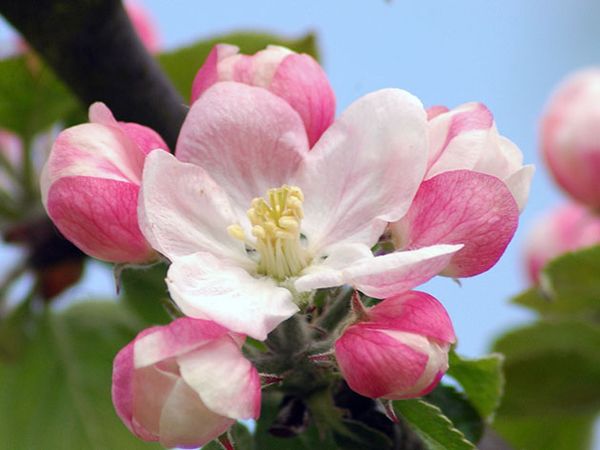
This apple tree is medium-sized, with a round or slightly flattened crown. The stems are slender, smooth, and reddish in color. The leaves are oval, with finely serrated edges. Their outer surfaces are glossy and flaky, while the inner surfaces are pubescent. This cultivar produces white buds that open in mid-May or a little later.
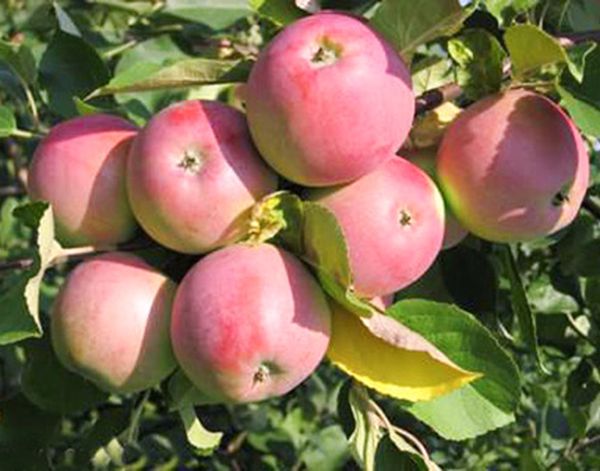
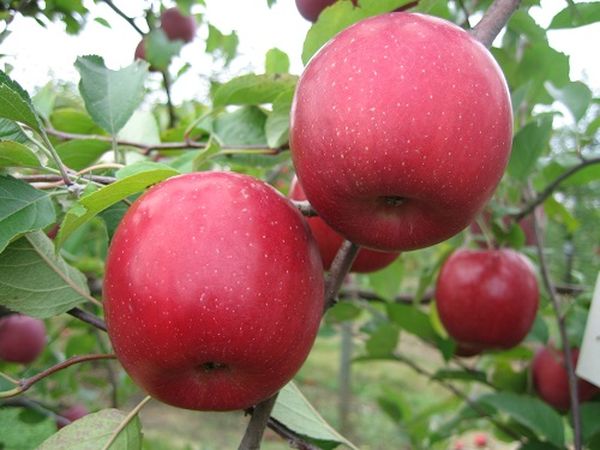
The description of the Vishnevoe variety describes its fruits as small, rounded cone-shaped. Each apple weighs no more than 0.135 kilograms. The apples' skin is yellow with a green tint, developing a bright blush as they ripen. A thin waxy coating can be seen on the surface of the skin. The spots located beneath the skin are light-colored.
The flesh of Vishnevoe apples is juicy, with a hint of tartness. Considered a dessert variety, it is characterized by a pleasant aroma. The fruits are attractive, making them often grown commercially. Furthermore, the harvest stores well and can be transported over long distances without losing its essential qualities.
Cherry has an excellent yield, which is characterized by regularity after the start of fruiting. The ripe fruit harvest period usually occurs in early autumn. Unripe fruits can be picked from the tree, as they ripen well in a cool place. Even refrigerated, these apples retain their essential qualities until the second half of February. Therefore, despite their early ripening, this hybrid is considered a winter apple. The apples can be used in a variety of ways. They are most often used to make jams, compotes, preserves, and juices. However, many also enjoy the fresh fruit.
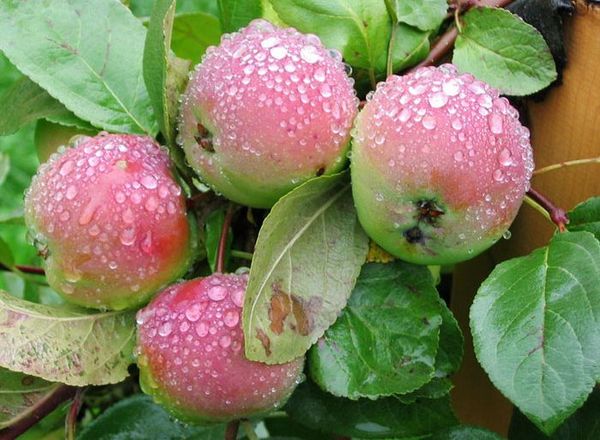
Main characteristics
The Vishnevoe apple tree is considered a winter variety. Its fruits are small but attractive. The excellent flavor of these apples is thanks to the breeders who created this hybrid variety at the Michurin Scientific Institute. The apple variety, with the unusual name Vishnevoe, was created by crossing the Saffron Pepin and the Antonovka apple.
The variety's fruits are designed for winter consumption. They are characterized by a regular shape and a unique dessert flavor. The crop is suitable for cultivation on black soil in temperate climates.
The hybrid has an average early maturity; the first apples on the tree will form no earlier than 5 years after planting the seedling.
Winter hardiness isn't the Vishnevoe's strong point. Even in the moderate climates suitable for growing this apple variety, young tree shoots can freeze in winter, and late spring frosts can damage the blossoms and, subsequently, the fruit. Therefore, it's advisable to protect the trunk and branches of young trees from frost during the winter. Spruce branches, agrofibre, kraft bags, and other suitable covering materials can be effectively used.
In years when the summer is rainy and cool, trees can be susceptible to fungal diseases.
Pollinators and care
Cherry trees are not self-fertile. Therefore, they require natural pollinators. Therefore, a tree with pollinating properties should be planted near the cherry tree. For example, an Antonovka, Pepin Saffron, or Severny Sinap apple tree.
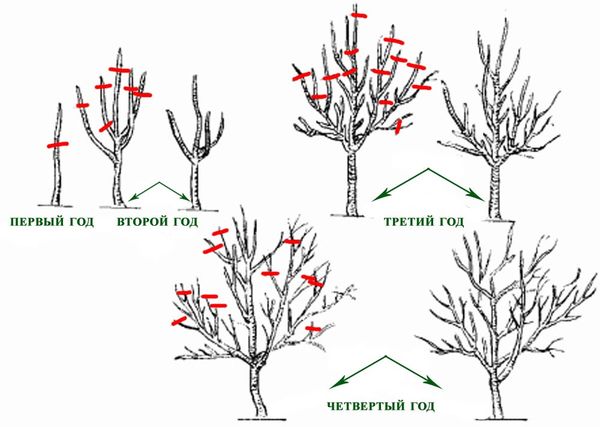
Caring for this variety involves standard care. After planting, young trees should be properly watered and treated with fungicides and insecticides against various diseases. Furthermore, the topsoil around the planted trees should be regularly loosened and weeded. In late fall and early spring, trunks and branch forks should be whitewashed to protect against pests and parasitic microorganisms. Mature apple trees need to be fed and pruned every year.
Pros and cons
The characteristics of Vishnevoe apples would be incomplete without considering the strengths and weaknesses of the variety.
The variety has many advantages. Breeders have strived to combine many of the positive traits of other apple varieties in the Vishnevoe. In particular, the variety is characterized by high and consistent yields. Its fruits are large, attractive in appearance and color. Furthermore, plant care is quite simple, involving standard care, watering, and fertilization.
However, the Vishnevoe variety cannot be considered ideal. It has several major drawbacks. For example, it is not self-fertile. Its harvest can only be achieved when planted near pollinating trees.
The downside of this variety is that its fruit's maximum shelf life is mid-February. After this period, the harvest loses its primary beneficial properties.
Furthermore, the winter hardiness of the vegetative part of the plant leaves much to be desired. The trunk and branches require winter protection.
So, Vishnevoe apples are grown by gardeners for their flavor and wide range of uses. The attractive appearance of the fruit makes them suitable for commercial cultivation. When cultivating this apple tree, it's important to remember that it requires plants of other varieties to act as natural pollinators. It's also crucial to follow all care recommendations. Only then will the crop yields be abundant and consistent.
Video: Apple Tree Care
This video will show you how to properly direct the growth of apple tree skeletal branches.