
Features of growing the winter apple tree Veteran
Content
Description of the variety
Taking a brief historical look, it's worth noting that the Veteran apple tree emerged as a distinct new winter variety thanks to specialists from the All-Russian Research Institute of Fruit Crop Breeding. They sowed seed from a high-quality American variety called King. The authors of this variety, which was considered elite in 1972 and entered state testing eight years later, were E.N. Sedova, M.V. Mikheeva, and N.G. Krasova.
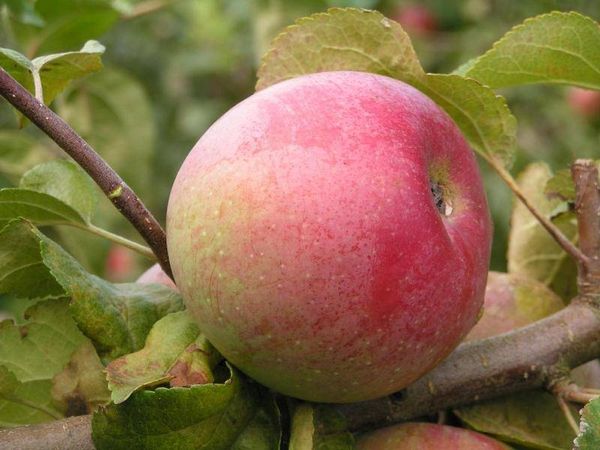
The tree has a moderately dense and compact crown, shaped like a ball. The tree itself isn't tall, but rather medium-sized. The bark on the main branches and trunk is brown. The shoots are naturally dark brown. They are almost medium-sized and located close to the shoots. The leaves are grayish and ovoid, slightly elongated. The flowers are soft pink and medium-sized.
The average weight of an apple is 100–140 grams. The fruits are a standard round shape, covered with a tough, waxy skin. When ripe, the fruit is golden-yellow or golden-orange. Inside, the flesh is brownish-yellow. It is tender and juicy. The apples have a sweet and sour taste. A few words about the chemical composition of apples are also worth mentioning. They contain up to 9.5% sugars, 0.64% titratable acids, 17.5 mg ascorbic acid per 100 grams, 1.9% pectin, and approximately 307 mg of P-active substances per 100 grams.
Main characteristics
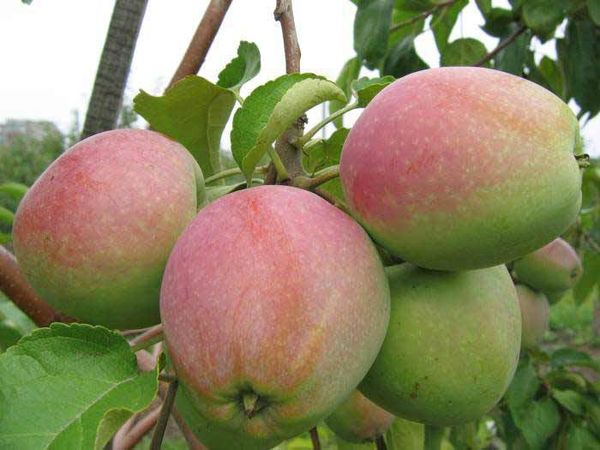
This variety has a mixed fruiting pattern. Flowering occurs in mid-May, and the harvest is usually in September, or more precisely in the second half of the month. It is a fast-growing variety with a high yield, which is a delight for both novice and experienced gardeners. Fruiting should be expected at least four years after planting.
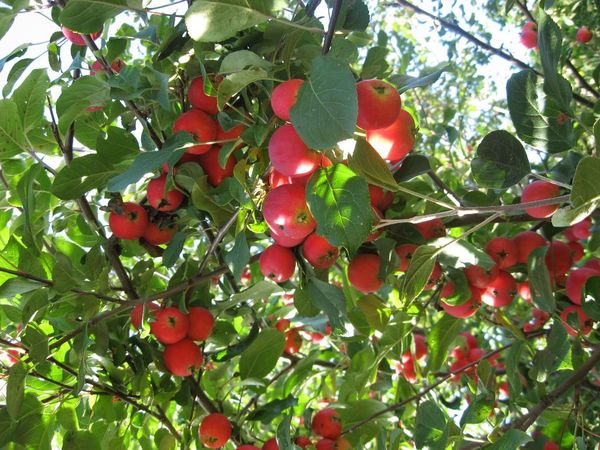
The yield of trees that are 8 years old ranges from 40 to 60 kg, while crops older than 13 years can yield up to 80 kg of fruit from each plant.
The variety has a fairly good shelf life. When refrigerated, the apples retain their marketable appearance and flavor until mid-March. Winter hardiness is average. When grown in temperate climates, protective measures should be taken to prevent shoot freezing. The variety also has a high immunity to fungal infections.
Experience has shown that during epiphytotic years, the foliage and fruit of the crop were affected by scab. This variety is versatile. The apples are good for fresh consumption, dried fruit, delicious vitamin-rich juices, canning, semi-finished products, and confectionery.
Features of cultivation
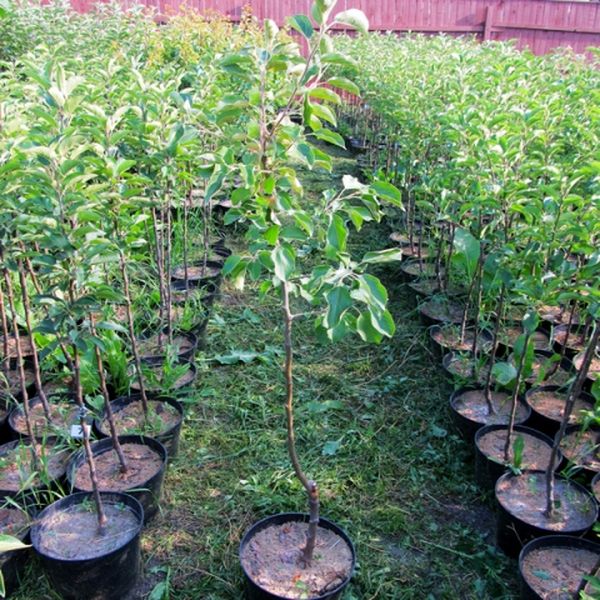
When choosing a site for seedlings, choose a well-lit spot. The soil should be loamy or sandy. Avoid planting where the groundwater is close to the surface. Planting is done in spring or fall. A hole should be prepared three weeks before planting. Add fresh soil, peat, and fertilizer. For the first two years, the seedling will need to be secured to a support to prevent damage from gusts of wind.
When caring for apple trees, abundant watering is essential. After planting, add 3 buckets of water under the seedling. Then, as the soil dries out, water the plants at intervals of 7-10 days.
Sprinkler irrigation has proven effective. Fertilizers are applied in several stages. High-nitrogen fertilizers are used in early spring. Complex fertilizers are applied shortly before flowering. After the buds have dropped, foliar spraying should be performed.
To prepare apple trees for winter, apply fertilizer containing phosphorus and potassium after the fall harvest. To prevent frost damage in the temperate climate, the area around the tree trunks should be covered with snow. It's recommended to lay brushwood nearby for support, but make sure it's small. When spring arrives, ensure branches don't break under the weight of the snow.
Pros and cons
Every apple variety has its advantages and disadvantages. The Veteran apple tree is no exception. Gardeners value it for its high rate of early fruiting, high yield, and excellent commercial and taste qualities of the fruit. Among the downsides is its average frost resistance when grown in central Russia. Fruits, as well as leaves, are often infected with scab.
For prevention, it's recommended to spray with Topaz in the spring, treat the crop with Hom in the summer, and use a solution of copper sulfate or Bordeaux mixture in the fall. It's also frustrating that in dry years, leaves often fall from beloved trees too early.
Video "Description of Autumn Apple Tree Varieties"
This video will tell you more about autumn apple tree varieties.