
Caring for columnar apple trees for a rich harvest
Content
Top dressing
To plant an apple tree, choose a fairly open site free of drafts, shade, and groundwater. Because apple trees tend to produce large quantities of fruit, they extract as many nutrients from the soil as possible. Therefore, fertilizing apple trees is an important part of their care and is carried out throughout the growing season. In the spring, it is recommended to apply high-quality organic fertilizers to the tree trunks. Pre-digested chicken manure and slurry have proven effective. Foliar nitrogen feeding is also necessary.
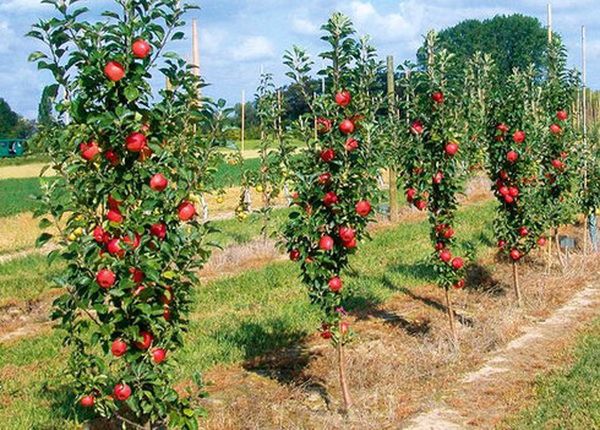
To achieve this, before the buds swell, the gardener should treat the trees with a 7% urea solution. This is recommended in early spring. In addition to this spring feeding, a couple more foliar feedings can be done in midsummer. These are done with a 0.1% urea solution. During the active growing season, namely the first half of June, the trees require complex fertilizers with a high mineral content. Organic fertilizers should be discontinued from August onward. During this time, apple trees only require potassium.
Watering
When discussing how to care for crops, it's worth describing the watering process in more detail. The root system of apple trees is located superficially, just 25 cm from the trunk, as the trees naturally lack a taproot. It is recommended to water young plants in summer no more than once every 3 days. If the weather is dry and the summer is hot, you may need to water the garden every other day or even daily.
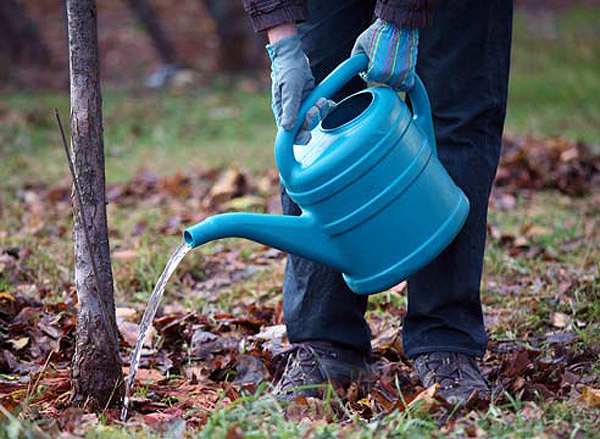
Mature fruit trees need to be watered once, or at most twice, per week. Starting in mid-June, watering frequency should be reduced. In August, watering is stopped. It is recommended to mulch the area around the tree trunk with straw or sow green manure.
This will help the soil retain moisture longer. Drip irrigation has proven effective in practice. However, when using it, a regular, deep watering should still be done once a month. Twice a month, after sunset, the tree crowns should be thoroughly watered with a hose.
Load regulation
Now, beginning gardeners already have a little understanding of what they look likeToOlony apple trees and their proper care. Too much early pressure can lead to complete weakening of a 1-2-year-old tree. It is recommended to remove no more than two ovaries during the first year of flowering and remove the rest.
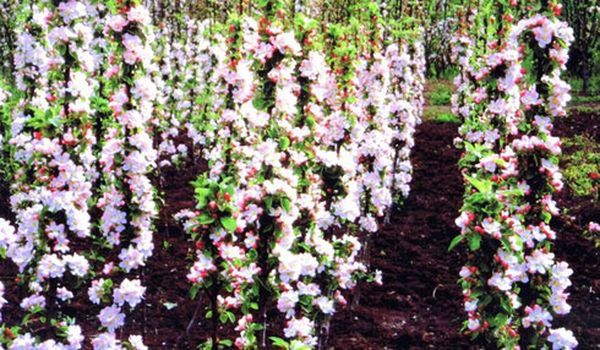
In the second year, half of the bunches should be removed, and those that haven't been pruned should have two ovaries left. In subsequent years, apple trees should be thinned twice. This is best done during flowering and ovary formation. Regulating the load ensures that the entire crop is not small, doesn't lose its unique flavor, and produces fruit regularly.
Trimming
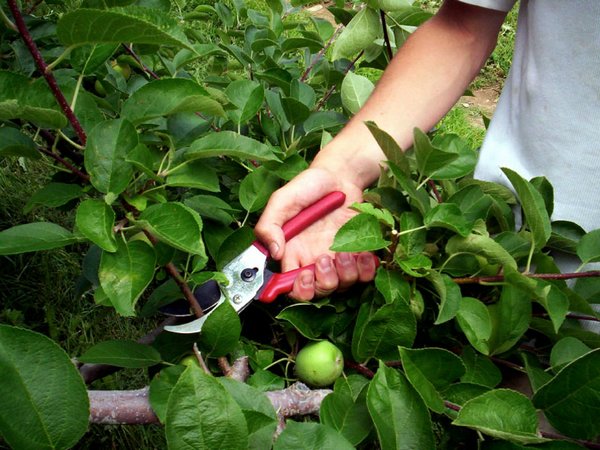
Since this apple tree variety does not form lateral shoots, it does not require pruning. However, if a genetic defect is present, pruning is still necessary to maintain the tree's shape. Two methods are recommended. The first involves removing lateral branches up to two buds. This procedure is performed starting in the second year after planting. Alternatively, the crown, initially growing as a single trunk, is shaped into two or three trunks. This will give the tree a candelabra-like shape.
Winter protection
To prevent damage to the apical buds on your fruit trees' central shoots during the coldest months of the year, cover them with insulating materials. This could include several layers of spunbond, burlap, or other protective material. Some gardeners create a secure shelter of spruce branches or wood shavings as autumn approaches.
It's best not to use straw. And if you used straw as mulch before winter, remove it in the fall. Otherwise, it may attract rats and mice. To prevent rodents like hares and mice from damaging the apple tree trunk in winter, wrap it with wire mesh. Be sure to dig the mesh a couple of centimeters into the ground. However, do this carefully to avoid damaging the tree's root system.
After each snowfall, compact the snow around the tree's trunk. This will make it inaccessible to rodents.
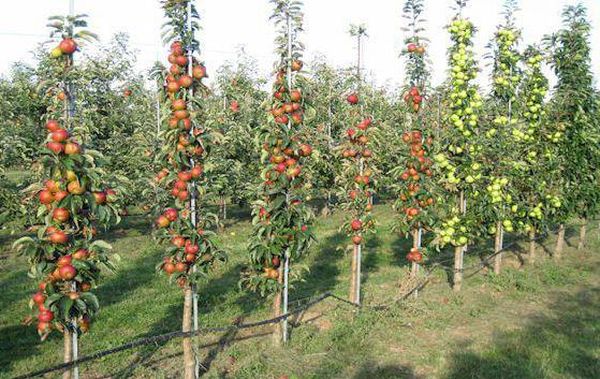
Snow should also be compacted carefully to avoid damaging the delicate roots of the apple trees. To prevent the growing point from freezing, it can be wrapped in a couple of layers of paper or fabric. It is recommended to tie the apple trees to supports to prevent gusts of wind from breaking them.
Video "Columnar Apple Tree"
In this video, you will hear useful tips on caring for columnar apple trees.