
Description and main characteristics of the winter apple tree Stroevskoe
Content
History and description of the variety
The Stroevskoye apple variety is an elite winter variety, and quickly gained popularity among gardeners after its development. It was developed at the All-Russian Research Institute of Fruit Crop Breeding. Its seeds were sown in 1981, planted a year later, and seedling selection took place in 1991. It has won several awards, including a Gold Medal at VDNKh-EXPO in 1999 and a diploma at the Revival of the Russian Village exhibition. In 2001, it was added to the State Register. One of the distinguishing features of this variety is its resistance to scab, which greatly aids in its cultivation.
Main characteristics
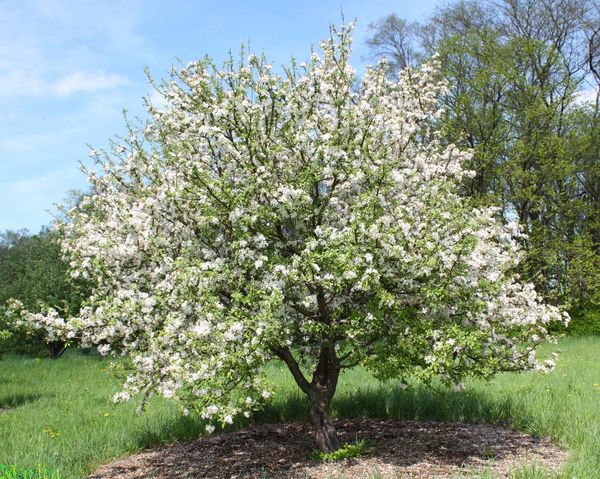
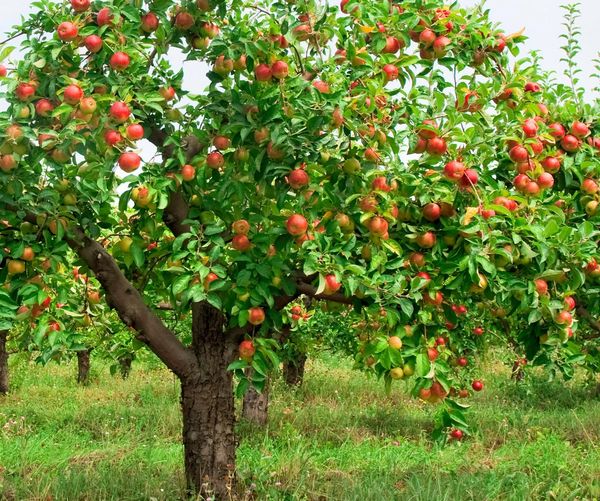
The Stroevskoye apple tree does not reach very large sizes (maximum – 3 m). The tree grows very actively and has a not very dense crown (which makes it possible to reduce the frequency of pruning branches). When relatively young, the tree's crown is more rounded, but as it grows, it gradually transforms into a broad pyramidal shape. The bark is smooth and dark gray. The skeletal branches are positioned at a nearly right angle to the trunk.
The shoots are not very wide, often noticeably curved and brownish in color. The plant's buds are small, appressed, conical in shape, and heavily pubescent. The apple tree's leaves are not very large, ovoid, and shortly pointed. They feel quite wrinkled. Young leaves have a noticeable sheen, which fades by mid-summer. The plant's flowers are small, neat, and a beautiful pale pink with rounded petals.
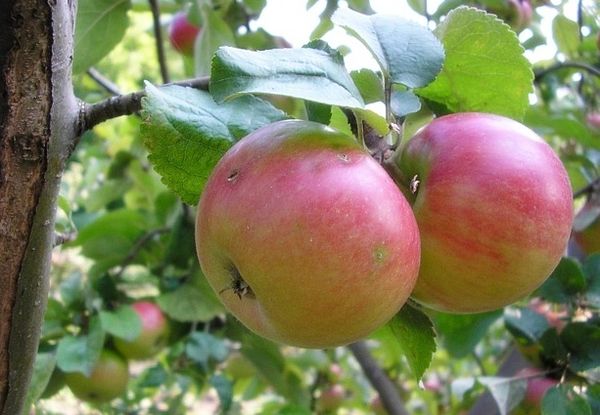
The apples of this variety are ribbed, conical, and have a short stalk. They are not very large—a single fruit can weigh between 100 and 200 grams (the record, according to gardeners, is 214 grams). The skin is smooth, has a noticeable glossy sheen, and is quite oily to the touch. When ripening, the fruits are greenish-yellow, and as they reach maturity, the greenish hue gives way to a golden hue. A beautiful crimson blush spreads across the entire surface of the apple.
The fruit's white flesh is very grainy and dense, and is also exceptionally juicy. The fruit's taste is sweet and sour, with tasters rating it a 4.5.
Preparing for winter
Before the winter season, it's essential to provide the tree with proper care to ensure it can easily survive frosts and low temperatures. This requires paying special attention to watering and fertilizing. After thoroughly watering the tree, loosen the soil around it and apply fertilizer—for example, 50 g of double superphosphate.
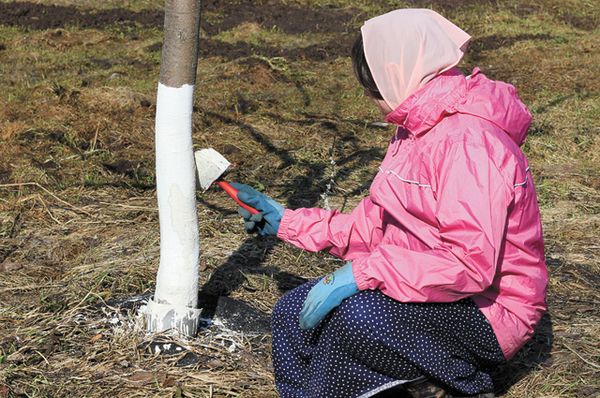
In fact, this variety has very high frost resistance, so additional actions before wintering are, in principle, not required.
Harvesting and storage
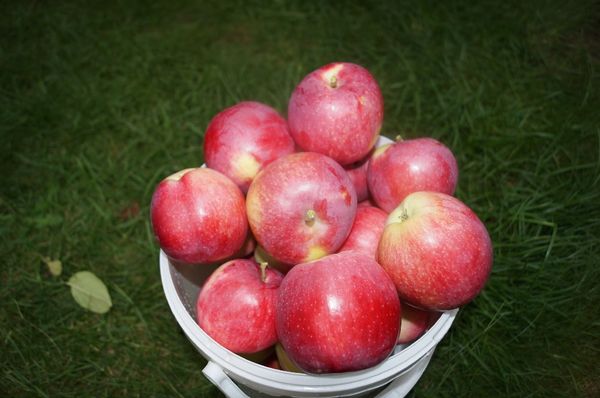
The Stroevskoye apple tree is characterized by a fairly high and stable yield (50–60 kg from one tree).
Typically, the fruits of this variety ripen by mid-September, but this timeframe may shift slightly depending on favorable or unfavorable conditions. They must be picked from the tree carefully, avoiding even the slightest damage, as apples with damaged skin have a significantly reduced shelf life. This is due to the incredible juiciness of the fruit, which immediately begins to ooze when the skin is damaged.
For storage, undamaged apples are placed in a cool room; to increase shelf life, it is recommended, among other things, to place them in closed boxes (this way they will be suitable for consumption until summer). Fruits can be consumed in various forms: fresh or dried, they retain their wonderful taste, and a variety of jams and compotes will delight you throughout the winter cold.
Pests and diseases
As mentioned earlier, one of the most significant features of the Stroevskoye apple tree was its incredibly high immunity, which helped it gain such fame among farmers. It is completely resistant to scab, the most common disease and a major nuisance for orchard owners. However, despite the plant's high immunity, it is still not recommended to neglect safety precautions.
First, preventative measures are recommended to protect the tree from powdery mildew, which appears as a white coating and attacks leaves and buds. A colloidal sulfur solution can help protect apple trees from this disease: 80 g of sulfur per 10 liters of water. Apply the solution when the leaves emerge, and then apply it again two weeks later.
Secondly, although extremely rare, the plant can be susceptible to fruit rot. If affected fruit is discovered, it should be removed from the tree immediately and burned. To prevent this disease, regular pruning and good ventilation are necessary. You can also treat the apple tree with Bordeaux mixture during the growing season as a preventative measure.
In principle, the plant is capable of coping with pests and their negative impacts on its own, so additional measures are not required.
Pros and cons
The advantages of this variety include excellent immunity and resistance to many diseases, consistently high yields, fruit preservation, and the ability to withstand even the most severe low temperatures.
Disadvantages include the inability of the variety to self-pollinate and late fruiting (to get the first harvest, you need to wait 8-11 years).
Video: "Spring Apple Tree Pruning"
This video will show you in detail how to properly prune an apple tree in the spring.