
Description of care for the summer-hardy apple tree Starkrimson
Content
History and description of the variety
In the first half of the 20th century, American breeders developed the Starkrimson apple variety, which was so beautiful that it immediately received positive reviews as a commercial product. In the description of this variety, you'll find information that the Starkrimson apple belongs to the Spur family. This group of plants is characterized by its smaller size compared to its "parents." They have a sparse crown and thick branches, on which the fruits are densely distributed. Overall, this fruit tree is noted to produce high-quality and abundant fruit.
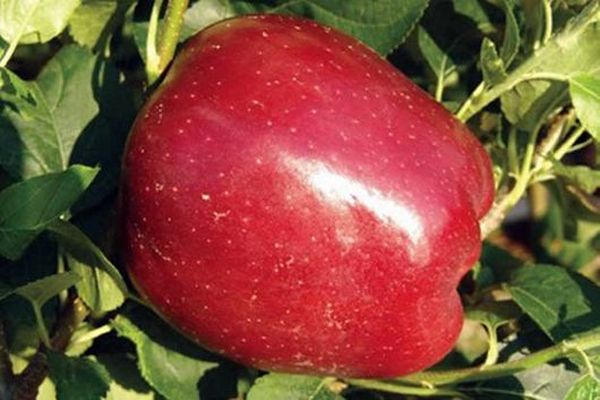
The trees of this apple tree are small. The branches grow at an acute angle to the pole. The leaves are oval, pointed at the ends, and have serrated edges. The flowers are initially pink, but turn white as they open.
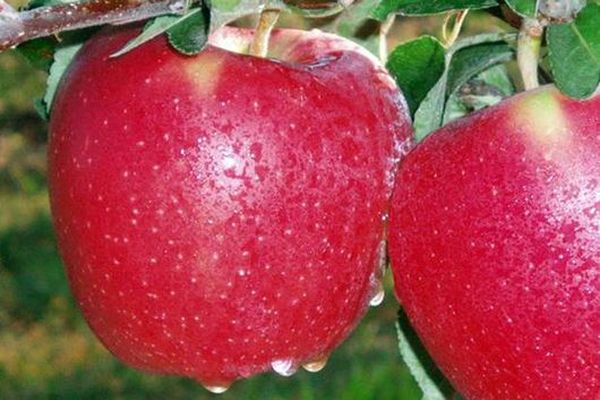
The fruits are bright, carmine or cherry-colored, often with a hint of purple. The fruits of this variety are covered in delicate pink "freckles" scattered across the entire surface. They are cone-shaped, with longitudinal ribbing, and vary in size. Smaller varieties are round. On average, the apples weigh approximately 180–200 g.
Their skin is thick and waxy, allowing them to keep for a long time. The flesh has a distinct sweet and sour flavor. The longer the fruit is stored, the more delicious it becomes.
Main characteristics
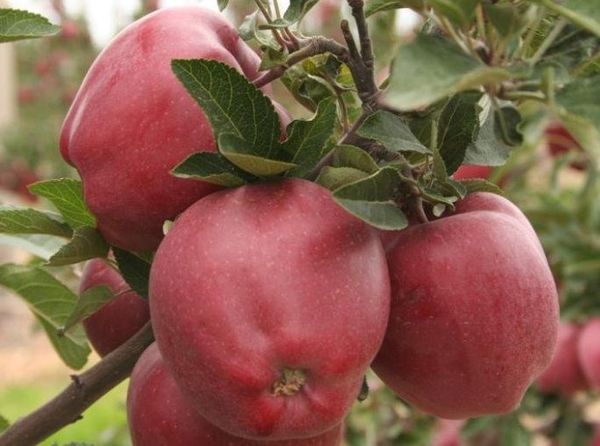
The main distinguishing feature of this variety is its early fruiting. Trees will begin bearing fruit as early as 2-3 years after planting. This has a positive impact on harvest yield, as this tree produces fruit well and regularly. Each year, you'll see an increase in the number of apples on the branches. It's worth noting that overloading the tree with fruit will negatively impact fruit production. The apples will decrease in size and their flavor will deteriorate. Therefore, it's worth paying more attention to this aspect.
Because the apples hold well on the branches, fruit drop from this variety is minimal. This tree thrives in warm climates and is frost-tolerant. It's also important to remember not to let the soil dry out too much; this species does not tolerate drought well.
Landing
The recommended planting time is spring. In the lead-up to autumn, prepare the soil. First, dig over the soil, removing all weeds. Then, add fertilizer: 5–6 kg of compost per square meter of soil; well-rotted manure will also work. Add 600 g of wood ash to this mixture, which will provide the seedlings with the necessary potassium. Additionally, add a tablespoon of nitroammophoska. Then, loosen the soil and level it.
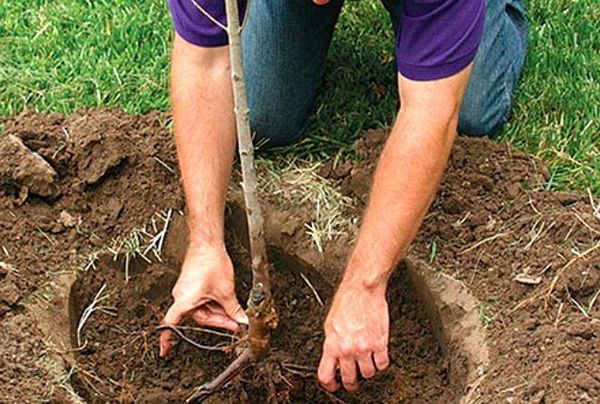
Before planting the seedlings, prepare a bucket of fertilizer for each hole: 2 kg of nutrient-rich soil, 2 kg of compost, and 15–20 g of nitroammophoska. Before adding the fertilizer, add drainage: two shovels of expanded clay, then add a bucket of nutrient-rich soil. Avoid planting the seedlings too deep, and provide additional support, as this tree variety's root system is not very extensive.
After planting the seedling, water the soil and apply mulch with compost. The layer should be about a couple of centimeters thick.
Pollinators and care
To ensure pollination, it's important to know which variety to choose for a specific tree species. Starcrimson trees should be grown within a 2-km radius. Regular watering is essential during dry periods. Specifically, pour 2-3 buckets of water under the tree every 3-4 days.
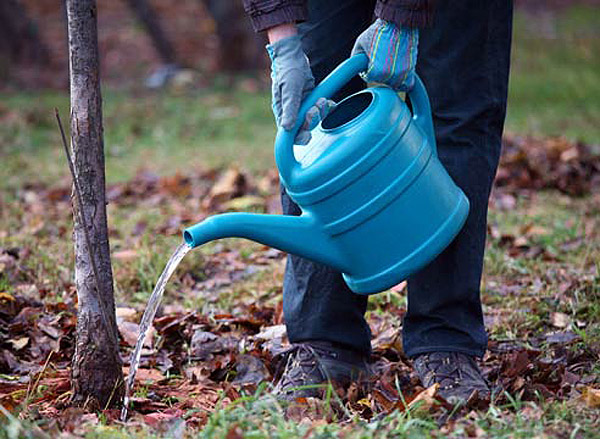
Initially, weeds need to be completely eradicated; in the third or fourth year, they can be simply mowed. Fertilizing is simple. In the spring, apply a tablespoon of nitroammophoska (NAP) to each tree. When the apple tree is in bloom, apply a teaspoon of superphosphate and potassium salt. In the fall, apply 0.5 kg of wood ash.
Thin out the fruit buds annually, otherwise the tree will become overloaded and the quality and size of the fruit will deteriorate. Remove wilted branches and those growing deep. Also, pull branches away from the trunk using guy wires; this will enhance fruiting. Prune branches back by 2-3 buds each year.
Harvesting and storage
The best time to harvest is late September or early October. Don't rush, nor should you delay harvesting. This will negatively impact storage. Store until April, but only indoors, in a properly refrigerated environment. Otherwise, the fruit will develop bitter pits and lose its flavor and marketability much more quickly.
Diseases and pests
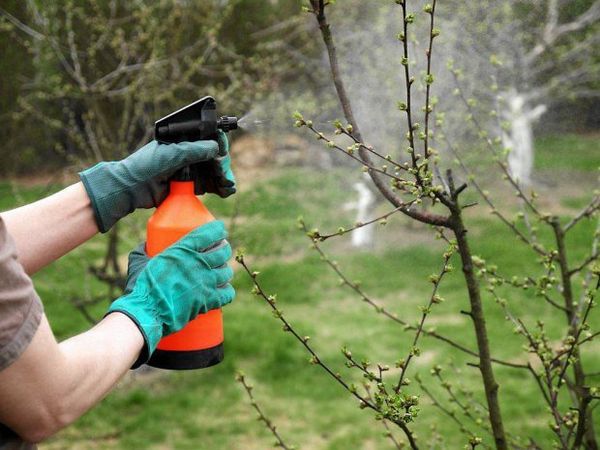
There is a predisposition to scab. To prevent this, regularly use Kuprosil, Strobi, HOM, and Bordeaux mixture. The soil around the trunk should be treated with a 10% ammonium nitrate solution or carbonate fungicides. Fallen leaves should be removed. Mice are also common attacks on trees. Therefore, the trunk should be protected by installing a plastic net up to a meter high.
Pros and cons
Among the negative qualities of the variety are:
- Poor frost resistance.
- Susceptible to scab and pests.
- The branches grow at an acute angle and need to be stretched.
- The size of the fruits varies greatly.
- Apples picked at the wrong time simply won't keep.
- Very demanding when it comes to watering.
Positive characteristics include:
- Resistance to powdery mildew
- Large, beautiful apples have a marketable appearance.
- Properly harvested crops can be stored and transported for a long time.
- Early fruit bearing of trees.
- They have a compact crown and are not tall.
- They are suitable for both raw consumption and drying.
Video: "Starkrimson Apple Tree Review"
In this video you will hear the characteristics of the Starcrimson apple tree.