
A review of the best apple varieties for Belarus
Content
Peculiarities of Belarusian selection
Extensive breeding work was carried out in Belarus back in Soviet times, and it continues to this day, making Belarusian varieties well-known to gardeners around the world. Among the new varieties, the following are worth mentioning: early or summer varieties: Kovalenkovskoye, Orlovim, and Mechta. They ripen in July and can be stored for only one month. Autumn varieties zoned for the Vitebsk region are well-known to professionals: Luchezarnoye, Orlik, and Auxis.
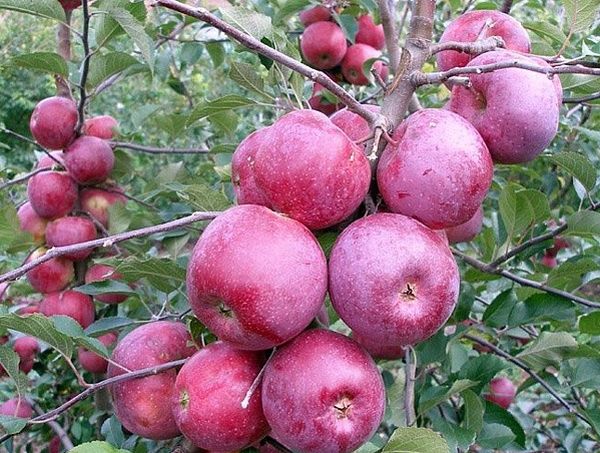
Autumn apples are good because they ripen at the beginning of autumn and can be eaten for up to three months without losing the quality of the fruit. But winter varieties are considered the true elite of apple culture; they yield fruit in early autumn and store for about five months. The latest varieties reach technical maturity in October and are best eaten a couple of months later, when their sweetness and aroma intensify. They can be stored until the next harvest.
Columnar apple trees occupy a prominent place among them, and among the local varieties, Alesya, Freedom, Pamyat Kovalenko, Verbnoye, Pospekh, Zaslavskoye, Antey, and Belorusskoye Malinovoye have received excellent reviews. Belarusian apple varieties are well known., For many of them, the Golden Delicious apple tree served as the breeding material. Before deciding which apple trees to plant in your garden, it's worth checking out reviews, reading descriptions, and studying the main characteristics of varieties, including columnar apple trees.
Belarusian sweets
The tree is medium-sized, with a rounded-conical crown. Fruiting begins 2-3 years after planting in its permanent location, producing a harvest every year. The tree tolerates cold winters well and is resistant to scab and other diseases common to this fruit crop.
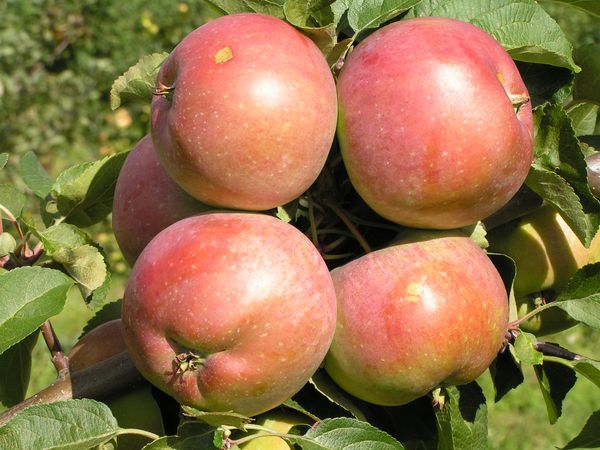
The round fruits are covered with a dense, smooth skin, weighing between 135 and 200 grams. Their primary color is green, with a bright blush covering almost the entire fruit. They are quite appetizing, with a pleasant aroma. The flesh, white and tender, has a pleasant flavor thanks to the high sugar and ascorbic acid content. After ripening, the fruits remain on the branches, but if picked late, they will have a shorter shelf life; they are eaten immediately after harvesting.
Palm Sunday
The tree is characterized as medium-sized and is prized for its resistance to frost and scab, as well as its abundant harvests. Its crown is shaped like an inverted pyramid, with branches arranged quite compactly. The first harvest can be reaped within a couple of years of planting.
The apples grow unevenly, weighing from 150 to 300 grams, with their firm green skin covered in a brownish-red blush. The fruits are flat-round, greenish inside, and so juicy they crunch. Sweet and sour with a subtle aroma, the fruits keep until May and transport well.
Darunak
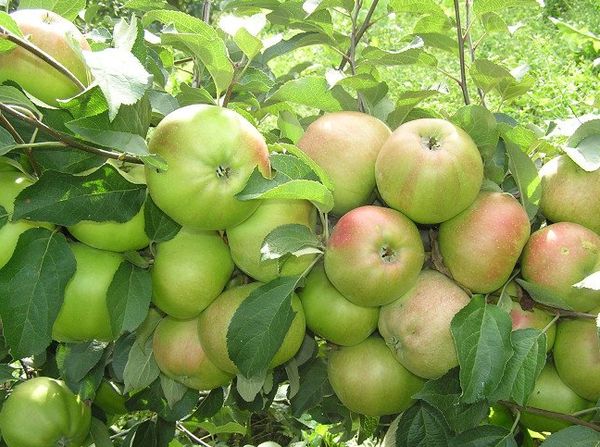
The tree grows to a medium height, like most apple trees, with a rounded crown and drooping branches. The Darunak variety is prized for its good yield, early fruiting, resistance to scab, and ability to survive frosty winters without damage. Its fruits are round, with ribs present but rather weakly defined. The apples are very large, weighing between 180 and 350 grams. The apples have firm green skins and are almost completely covered with a bluish-red blush by the time of harvest. The interior is tender, greenish, aromatic, with a sweet and tart flavor.
The fruits are picked after September 15th and are best consumed no earlier than November, when they become sweeter and more aromatic. They keep well until the spring of the following year.
Elena
Elena is a summer variety, so the apples ripen much earlier than all the others described. The tree is scab-resistant, tolerates winters well, and produces a bountiful harvest. The tree is also medium-sized, with an oval-shaped, slightly upturned crown.
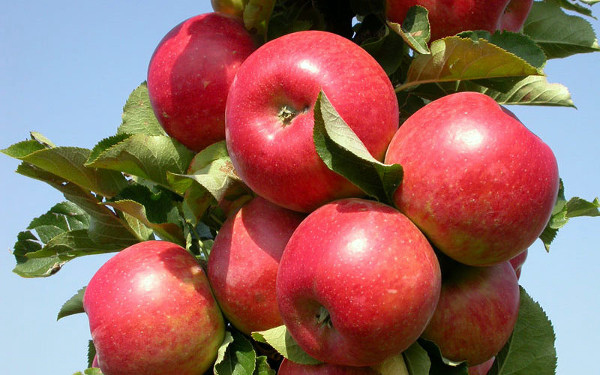
The apples are flat-round, green, and covered with a bright red-pink blush. Their average weight is around 120g. They are considered a dessert variety and enjoy high tasting scores. The flesh is very tender, unusually juicy, and slightly tart-sweet. Unfortunately, these delicious, aromatic apples don't keep for more than a month.
Imants
This medium-sized apple tree variety is resistant to severe frosts, cold winds, and scab. It has a compact, rounded crown and excellent yield and early maturity. The apples are slightly ribbed and conical in shape, and when ripe, they become completely covered with a purple-red blush. The firm, cream-colored flesh is juicy to the touch, with a sweet and tart flavor. The harvest begins in October and is ready to eat no earlier than December, by which time the sweetness and aroma will have intensified. The apples will keep well into the following summer.
Haste
The tree doesn't grow very tall, unlike most late-winter varieties. Its crown gradually takes on a rounded pyramidal shape, with drooping branches that grow longer and bend toward the ground. The Pospekh variety is characterized by its resistance to frost and scab, high yield, and early maturity.
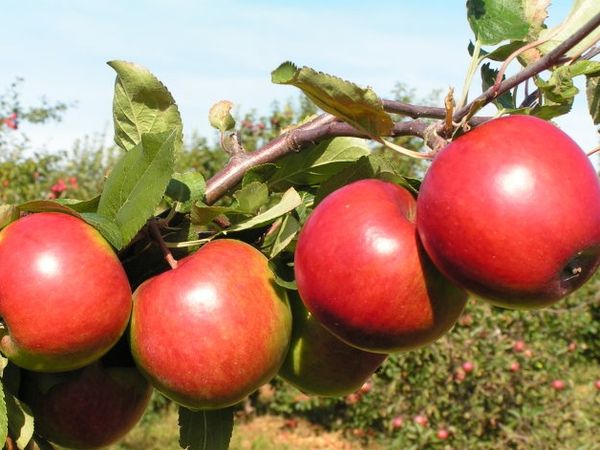
The round fruits grow from 140 to 240 grams in weight. Their base color is green, but almost the entire apple gradually develops a blurred, striped red blush. The fruit's skin is firm and elastic, the flesh is greenish, fine-grained, juicy, and sweet and sour. Technical maturity occurs by mid-October, but consumer maturity is considered to be December. After a couple of months of storage, the apples become sweeter and more aromatic. They transport well and can be stored until April or May of the following year.
Syabryna
The Syabryna variety is a winter-fruited variety. The tree is medium-tall, frost-resistant, scab-resistant, and indifferent to spring frosts. On clonal rootstock, fruiting begins as early as three years after planting. Fruiting is stable and regular, with no irregularities observed under normal conditions. The crown is round, with straight, upward-facing branches arranged compactly, and the apples do not fall off when ripe.
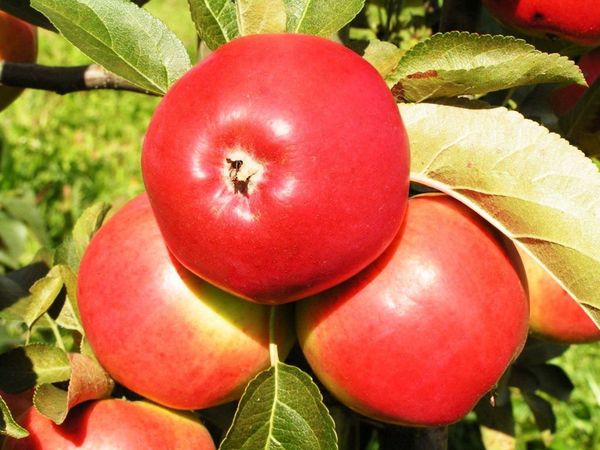
The fruits are nearly uniform in size, weighing an average of 130 grams. The apple's pale yellow color gradually develops a crimson blush over almost the entire surface. The flesh is greenish, fine-grained, and juicy, with a sweet-tart flavor, but is somewhat rough. The skin is quite dense, which helps preserve the fruit until late winter without losing quality. This variety produces a large harvest; it is recommended to manually adjust the number of ovaries to prevent the fruit from becoming small.
Video: "Overview of Winter Apple Varieties"
In this video, you will learn about the different types of winter apple trees.