
Characteristics of the summer apple tree variety Early Geneva
Content
Description of the variety
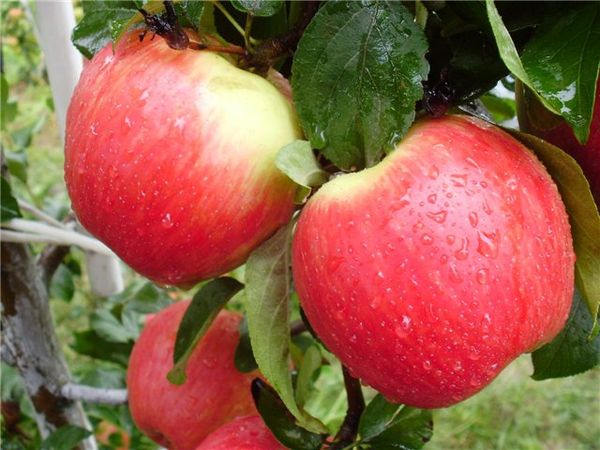
Geneva Early is a summer variety developed by American breeders in the last century. Its name comes from the Geneva Experimental Station, where it was first bred by crossing Julired and Quinti.
The following varieties should be used as pollinators for this variety:
- James Greaves;
- Discovery;
- Idared;
- Delicacy Idared.
The tree has the following description:
- vigorous growth. Can reach 5 meters in height;
- The crown is oval in shape and quite wide. It has a medium density;
- characterized by an average rate of shoot formation;
- poor cold resistance;
- High yield. Up to 130 kg of harvest can be collected in one season.
The fruits are characterized by the following parameters:
- peel color - yellow-green with a red blush;
- The flesh is cream-colored. It is aromatic and has an excellent taste;
- the weight of one apple is approximately 150 grams;
- Early ripening is typical. Apples can be picked as early as late July or mid-August. The fruit should be picked carefully, holding it by the stem. This procedure must be performed with gloves.
- Ripening does not occur simultaneously. As a result, 2–3 harvests can be collected during the growing season.
These characteristics of this apple tree have made it quite popular with gardeners worldwide. Growing this variety is possible in various regions of our country. However, to do so, you need to know the planting and care guidelines.
Planting and care
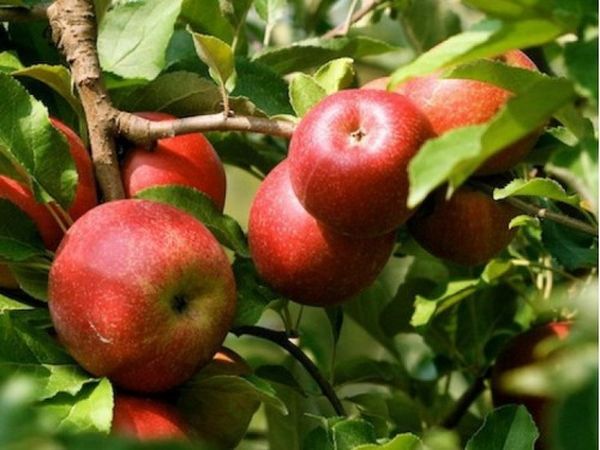
It is important to understand that the taste of the Early Geneva variety of fruits is determined by the planting location of the seedling. If the area receives good daylight, the fruits will have a sweet taste. Therefore, it is recommended to select well-lit areas of the garden for planting the seedling. When growing this variety, remember that it requires special pollinators for fruiting, which will take up additional space in the garden. For vigorous growth and fruiting, Early Geneva requires fertile soil. If the soil is acidic, add dolomite flour or wood ash to the planting hole when planting the seedling. Apply 200 grams of fertilizer per square meter.
Planting a seedling involves using the following tools:
- leg-split;
- shovel;
- peg;
- bucket for watering.
Before planting, the selected area should be dug over and cleared of weeds. Next, follow these steps:
- A hole is dug with a depth of 0.7 m and a width of 0.6 m. During the digging process, the top fertile soil layer must be removed to one side, and the bottom layer is completely removed from the hole;
- a drainage layer is placed at the bottom of the planting hole, which can be coarse-grained sand or ordinary pebbles;
- Add superphosphates, wood ash, humus, and urea to the soil removed during planting. Mix all ingredients thoroughly.
- On top of the drainage layer, it is necessary to add fertile soil;
- After this, we place the seedling of this variety in the hole. To do this, carefully spread the roots throughout the entire dug hole. Experts recommend planting seedlings with two people. This way, one person holds the seedling steady while the other fills it with soil.
After filling the hole, compact the soil around the rootstock. To do this, press the soil in a circular motion with the toe of your shoe. Then water the seedling generously. Water in three stages, waiting until the water has completely absorbed each time. Pour three buckets of water in succession.
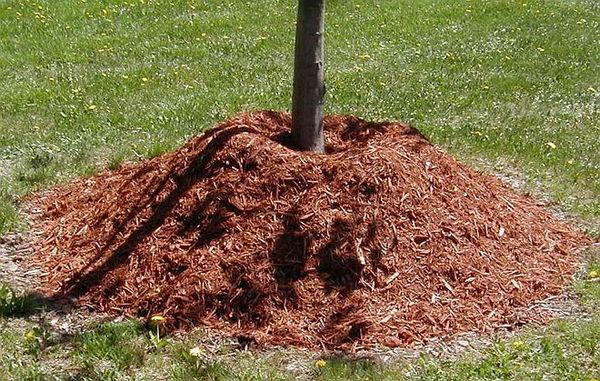
To minimize further care for the seedling, the soil around it should be mulched. Peat, green grass, sawdust, or humus can be used for this purpose.
Mulch will prevent weed growth around the tree and will also help retain moisture in the soil for longer. After this, further apple tree care includes the following steps:
- Fertilizing. Fertilizing is done in the spring (during bud break and flowering). The third feeding is done when the fruit is ripening. Fertilize the apple tree in calm, dry weather. It is advisable to apply fertilizer immediately after watering, dissolving the fertilizer in water.
- watering;
- fight against parasites and pathogenic microflora.
With proper care, the Geneva Early apple tree produces a bountiful and tasty harvest.
Storage of the harvest
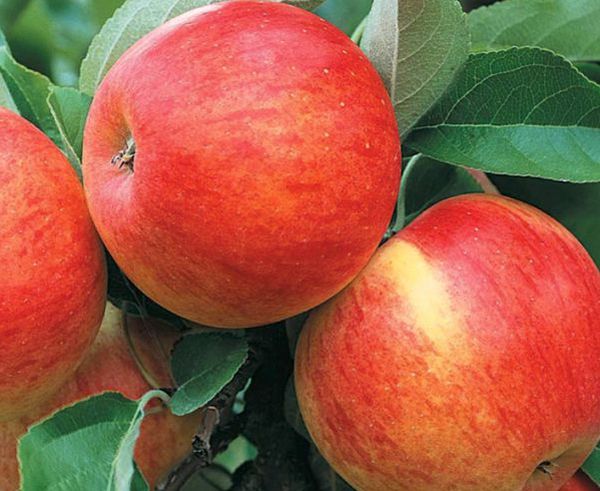
This variety is characterized by a short shelf life of the harvested fruit. The maximum shelf life of harvested fruit is 1–2 weeks. This requires maintaining proper humidity and temperature conditions. Refrigeration is also acceptable, as the fruit retains its quality for several weeks. Fruits from this apple variety are used for consumption or in juice production.
Advantages of the variety
The apple tree variety Early Geneva has the following advantages:
- early fruiting. Fruiting begins one year after planting the seedling;
- high and regular yield;
- Excellent fruit flavor. Apples are characterized by a slight sourness.
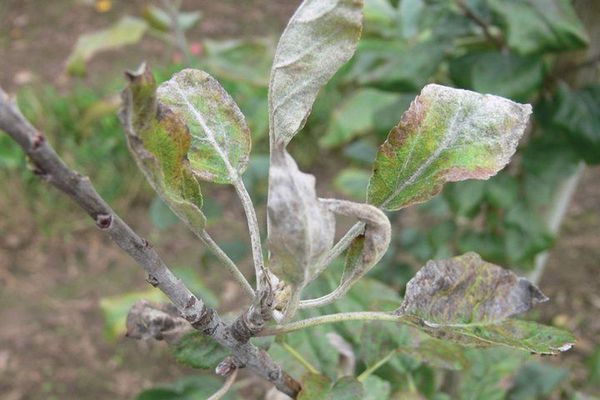
Thanks to these qualities, gardeners' reviews of this variety are very positive. Unfortunately, however, the cultivar is not without its drawbacks. Among the drawbacks, the tree's low resistance to scab is noteworthy. Therefore, the plant must be treated with fungicides several times during the growing season. However, the tree has good resistance to powdery mildew and fire blight. As we can see, the Early Geneva cultivar possesses good qualities, thanks to which its popularity in our country is growing every year.
Video "Apple tree variety Early Geneva"
This video will tell you about the Early Geneva apple tree variety.