
Description and characteristics of the plum-leaved apple tree
Description
The Kitayka apple tree is not a cultivar, but a species, comprising numerous varieties. All were developed by crossing garden and berry plants. These varieties include Dessertnaya, Anisovaya, and Zolotaya Rannyaya, all developed by Michurin. This species also includes the Saninskaya Kitayka, whose fruits are small and tart, and the high-yielding Apricot Kitayka. Other well-known varieties include Kerr, Dolgo, and Belfer.
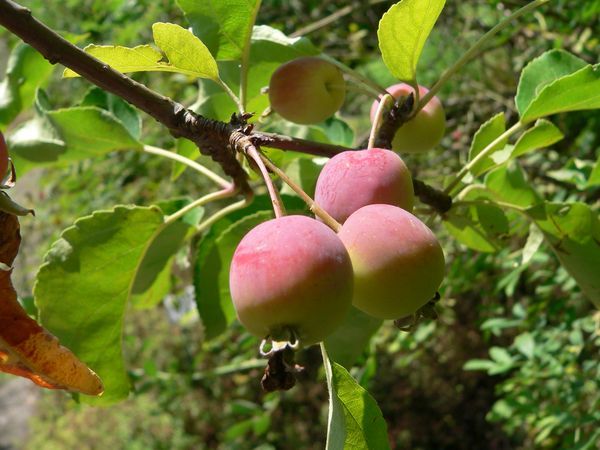
The plum-leaved apple tree is called so not because it “came” to us from China, but because of the similarity of its leaves to the leaves of the Chinese plum. They are long, richly green, with pointed tips and finely toothed edges. The Chinese tree grows up to 10 meters tall. The tree's branches reach upward, forming a broad, conical crown.
In spring, the Chinese plum-leaved apple tree blooms profusely. The flowers, depending on the variety, vary in size but never exceed 0.03 meters in diameter. They form umbel-shaped inflorescences that exude a pleasant fragrance. The pleasant scent of the flowers attracts numerous pollinators, which will then visit other flowering crops. Therefore, the Chinese plum-leaved apple tree has a beneficial effect on the harvest of other apple trees growing nearby.
The roots of this variety's plants are located close to the soil surface, but the root system is quite robust and branched, allowing the apple tree to access essential nutrients and require virtually no fertilizing. According to the variety's description, the trees are undemanding regarding soil composition, successfully tolerate frost and drought, and are virtually immune to fungal diseases.
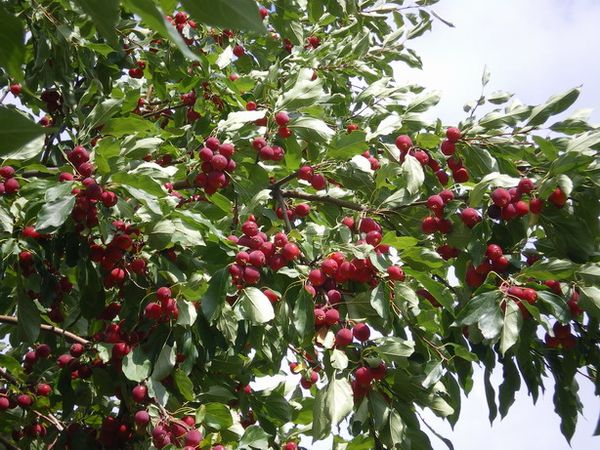
The plum-leaved apple tree, or better known as the Chinese apple tree, is represented by a number of varieties:
- Belfer. This variety is the only one of its kind that produces large, oval-shaped, yellow fruits. They are very aromatic and have a sweet, slightly tart flavor. The fruits weigh, on average, 0.12–0.3 kilograms each. However, this apple tree does not tolerate frost well, so it is grown in southern regions and is often susceptible to scab.
- Kerr. This Canadian variety of apple is a small tree with a sparse crown, so it doesn't require regular pruning. It produces fruit in its 3rd to 4th year. The yields are rich, abundant, or moderate. Kerr apples are rich in vitamin C, making them highly prized. A red apple tree weighs 0.04 kilograms and reaches maturity in September. This period is also considered the best time to harvest. Harvested fruits should be stored in a cool place, where they can be successfully stored until mid-winter. Canadians use Kerr apples to decorate their Christmas trees or stuff poultry. This variety of apples has a pleasant sweet-tart flavor. However, the fruits are rarely eaten fresh; they are more often used to make marmalades, jellies, preserves, and juices.
- The Golden Early Chinese apple has a pyramidal crown. The tree begins bearing fruit three years after planting. The harvest begins in mid-August. The fruits are golden and round. The flesh is sweet and sour. Fresh fruit lasts no more than a week and a half.
- Long. This variety is decorative: its round crown is completely covered with small pink apples in autumn. The tree typically does not exceed 4 meters in height, and the red fruits weigh 0.02 kilograms each.
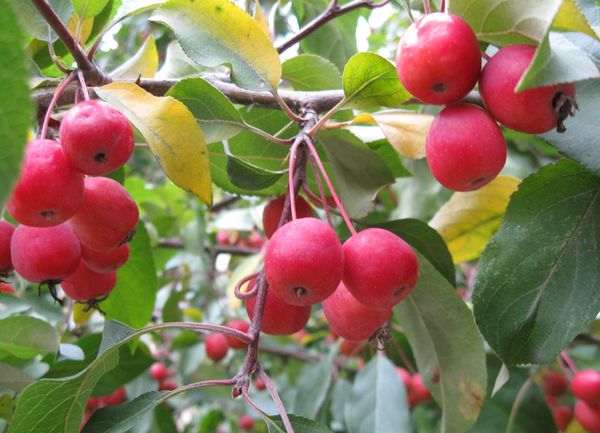
Main characteristics
In addition to its high yield and low maintenance, this apple tree boasts a number of other characteristics. It is frost-resistant and undemanding of environmental conditions. Furthermore, the plant tolerates periods of drought well and is resistant to fungal diseases.
The crop tolerates crown pruning well and is used to create new frost-resistant varieties, as well as a rootstock for grafting.
Pros and cons
The plum-leaved apple tree has several advantages over its closest relatives. The variety's advantages include:
- high drought resistance;
- frost resistance;
- consistently high yields;
- Most "Chinese" varieties have strong immunity to parasites and diseases;
- undemanding to environmental conditions and maintenance;
- There is no periodicity in fruiting: harvests can be collected annually.
Unfortunately, Chinese varieties have one drawback: tissue incompatibility occurs when used as rootstock. For example, incompatibility has been observed with Antonovka, Korichnevaya polosataya, and Papirovka. Good compatibility has been noted with Melba, which has a positive effect on the trees' winter hardiness. Most often, compatibility must be determined empirically, which is time-consuming.
So, the Chinese plum-leaved apple tree is represented by several varieties, each with its own advantages. The crop is harvested in the fall, in September. The fruits are most prized for their small, decorative fruit, which can be used to make delicious desserts.
Video: Caring for Fruit Trees
This video will teach you how to properly care for fruit trees.