
History of the discovery and description of the Simirenko apple tree variety
Content
History of discovery
Lev Platonovich, a Ukrainian breeder, named the new variety Renet or Ranet Platon Simirenko in honor of his father. The scientist lived in the small village of Mleevo, where he founded a fruit nursery. There, he successfully cultivated southern crops in the harsh Siberian climate. For his achievements, he received a gold medal at an exhibition in Paris.
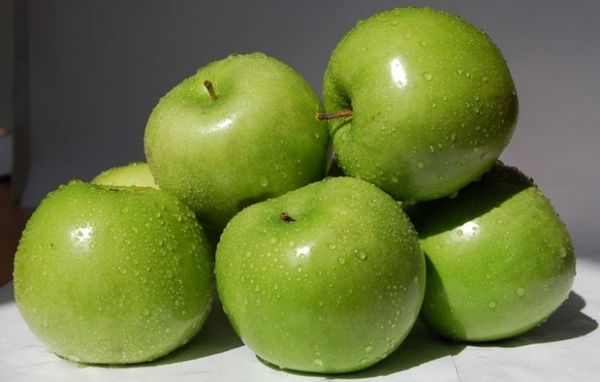
The name Ranet Platon Simirenko was popularly shortened to Semerenko. Do not confuse this variety with the winter apple tree called Renet Chernenko – these are different species. Lev described the new species in his book, "Pomology." The unique winter apple cultivar, Semerenko, was added to the USSR State Register in 1947. It is now successfully grown in the Stavropol and Krasnodar Krais, the Republic of Adygea, North Ossetia, and several other regions of Russia.
Description of the variety
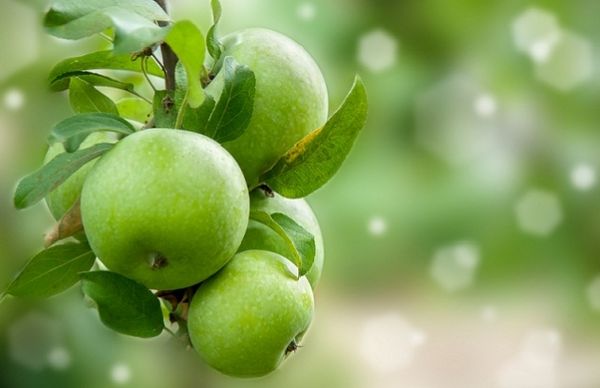
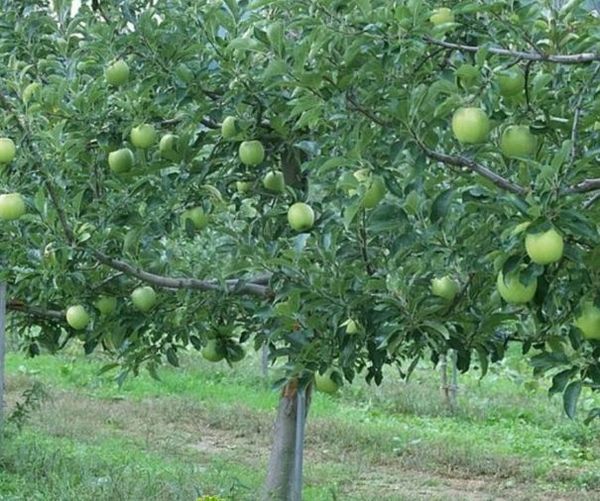
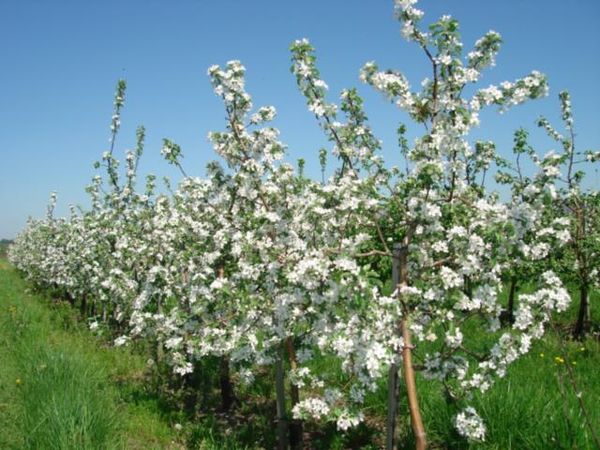
A description of this variety will help distinguish it from others. It is a sturdy, medium-height tree with a dense, cauldron-like crown. The bark of the branches and trunk is dark gray, and the shoots are medium thick. The light green, rounded leaves are arranged at a 90-degree angle. The cultivar produces large, beautiful white flowers. Ranet Semerenko apples are borne on specialized fruiting canes, as well as on rings and spears. The fruits are oblong, light green to deep green, and turn yellow during storage after harvesting.
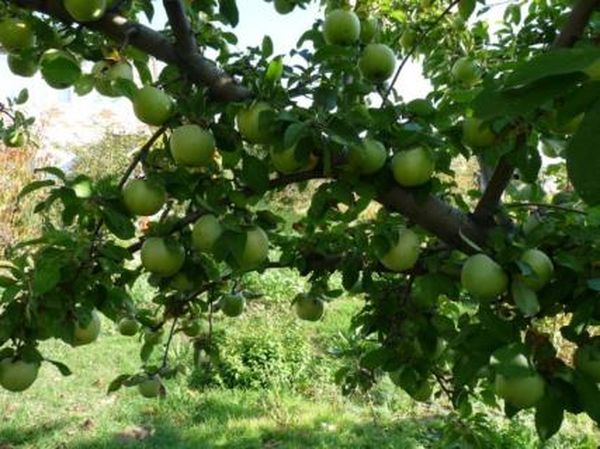
When harvested late, a raspberry hue is visible on the skin. Spots up to 5 mm in diameter are located under the skin. Some of the tree's fruits are harvested with small growths. Each apple weighs up to 200 g and has a sweet, tart flavor. The flesh is white, greenish, and grainy, juicy, and pleasantly fragrant. The fruit contains vitamins B, C, and E, biotin, carotene, iron, potassium, manganese, and pectin.
The Semerenko apple tree is self-sterile or partially self-sterile.
Pollinator varieties for this apple tree include Idared, Pamyat Sergeevu, Korey, Golden Delicious, Spur, Kuban, and others. They are planted nearby for pollination and good fruiting. The Semerenko apple tree, described above, begins bearing fruit in the third to fifth year on vigorous rootstocks. Harvesting is annual, beginning in late September, later reducing to once every two years.
Seven- or eight-year-old trees yield up to 15 kg per season, while ten-year-old trees yield up to 100 kg. Reviews describe the variety as drought- and wind-resistant, highly productive, and producing high-quality fruit early, with no loss of appearance or flavor during long-term storage and transportation. The apples are consumed fresh, canned, and added to drinks and dishes. Disadvantages of the Ranet Simirenko variety include low winter hardiness, susceptibility to wood freezing, weak immunity to powdery mildew, scab, and fungal infections, intermittent fruiting, and a decreasing yield as the tree matures.
Care and propagation
The crop should not be planted before March. Purchase healthy seedlings without damage or growths. Choose a well-lit site. Planting and care procedures include preparing a hole measuring 1 m by 60 cm, planting the seedling, then periodically watering, weeding and loosening the soil, pruning branches, fertilizing, pest control, and winter protection.
When growing the plant on its own, water it twice a month, using up to five buckets of warm, settled water. Then weed and loosen the soil to oxygenate the roots. Fertilizers are first applied in the second year, strictly in the spring and summer, using ammonium sulfate, ammonium nitrate, and nitrogen and phosphorus fertilizers. These fertilizers are applied to prepared beds up to 30 cm in diameter. Autumn fertilization with organic matter and complex fertilizers is also carried out.
During spring and fall pruning, branches growing in the wrong direction, dead, and old are removed. On young trees, growth longer than 60 cm is pruned to prevent the crown from becoming too dense. To prevent diseases and insects, it is important to prune branches promptly, remove weeds, and remove leaves and debris. At the beginning of the season, the garden is sprayed with Polycarbacin and Euparen, and in the spring, with copper-containing products.
The trunk of the late-winter Renet Simirenko apple tree is whitewashed with lime or a chalk solution to protect the bark from hares, mice, and other pests, and wrapped in burlap or roofing felt for the winter. A mulch of peat, humus, and compost is also applied to the area around the trunk. Young plants are covered with spruce branches or a wooden box, and in winter, a snowdrift is piled on the tree. In the spring, the snowdrift and the mulch are removed, and the soil is tilled.
Platon Simirenko's rennet is propagated by seeds or cuttings.
In the first case, pollen from one crop is transferred to another to create a new variety. This requires replanting many trees, and good fruit will not appear quickly. Propagating apple trees is easier with cuttings—if the above-ground part dies, the cutting, complete with its own roots, will regenerate itself. Cuttings are prepared in June, cutting a 4-cm section with a knife. The cutting, with four leaves, is then placed in a heteroauxin solution for 10 hours.
Planting is done in humus or leaf mold, or a peat-sand substrate, 4 cm deep in special mini-greenhouses. Space the cuttings up to 5 cm apart and up to 10 cm between rows. Young plants are grown further in a separate container or in a permanent location.
Video “Apple tree Renet Simirenko”
This video will tell you more about the Renet Simirenko apple variety.