
Using the ornamental Royalty apple tree in landscape design
Content
Description of the variety
The red-leaved Royalty apple tree is a hybrid of the well-known Nedzvetsky apple variety. This tree grows slowly, reaching a maximum height of no more than 6 meters. The crown is oval and compact, gradually widening and rounding with age.
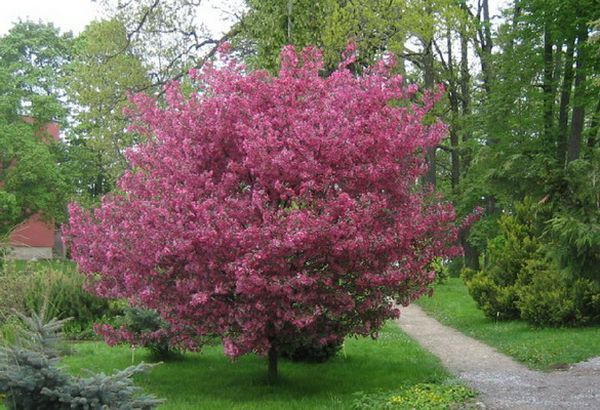
Royalty is a tree with red leaves, but when the crown is dense, a small part of the leaves are colored a rich green. These plant organs are oblong in shape and have a glossy sheen characteristic of apple trees.
Main characteristics
The Royalty apple tree's blossoms are beautiful and abundant. The first flowers appear in early May, and the last ones appear about two weeks later. The buds are typically a rich purple, quite large, and fragrant. During flowering, there are so many of them that the branches in the crown are practically invisible, creating the illusion of a blooming globe, a favorite among many gardeners.
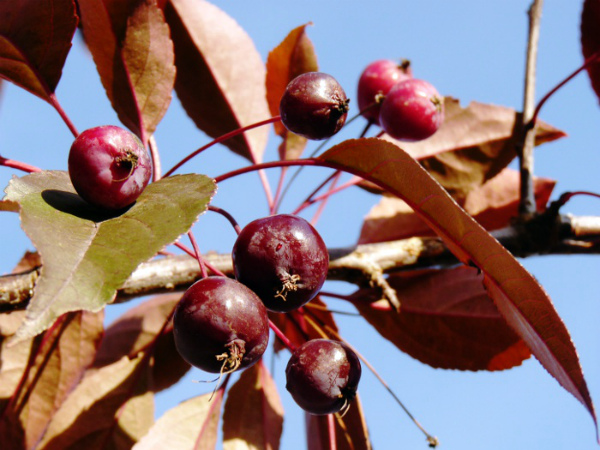
The tree's fruits are very small, usually round, or less commonly slightly elongated. They are red or purple in color. The apples have a thick skin with a light coating. They have a tart flavor, making them rarely eaten. The fruits are firmly attached to the branches and retain their shape even with the onset of frost.
Planting and care
The Royalty apple tree can be successfully used in garden landscape design only if planted and cared for properly. Cultivation techniques are largely similar to those for fruit varieties. In some ways, they are even simpler, as they don't require regular fertilizing. Like any other apple tree, this ornamental apple tree prefers to grow in a well-lit area. The soil should be loamy or sandy and well-drained, as standing water is detrimental to the plant.
As the variety description states, Royalty can be grown from seed, but this process is not easy, so it's best to propagate the plant using seedlings. Before planting, soak the purchased tree in water for several hours. The hole should be large enough to accommodate the tree's root system, allowing the roots to fully extend. After covering the seedling with soil, 0.02–0.03 meters of root surface should remain above the surface. Fertilizer should not be added to the bottom of the hole; compost is recommended.
It is advisable to mulch decorative tree varieties with bright materials, which will give the garden a special aesthetic.
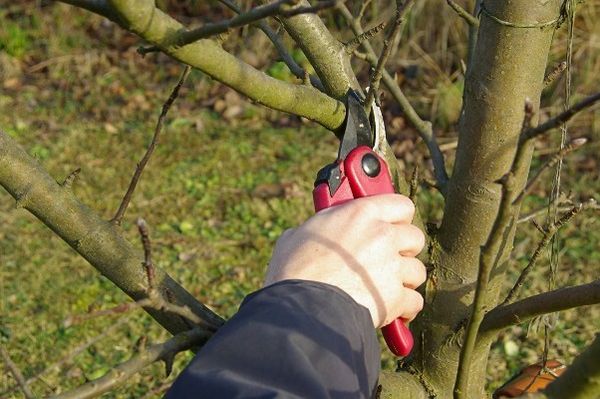
Royalty care consists of the following procedures:
- Feed the plants annually with complex fertilizers intended for ornamental trees.
- Trees should be watered only when necessary.
- If the soil around the tree is not mulched, it should be loosened and weeded from time to time.
- Occasionally, the plant requires crown shaping. However, pruning should be minimal, affecting only dead or diseased branches.
- Conduct preventative treatments against parasites and diseases.
Harvesting and storage
Apples ripen in early autumn. They aren't particularly tasty, and some even consider them unhealthy. However, there's no scientific evidence to support this. The Royalty apple variety produces fruit rich in vitamins and microelements. Their tart flavor is due to acids and triterpenoids. Therefore, although eating apples fresh isn't recommended, they can be used to make flavorful jam, jelly, or even cider. In this case, the harvest should be no later than mid-September.
Diseases and pests
Hybrid apple trees suffer from the same diseases and pests as fruit trees. Specifically, they are susceptible to powdery mildew, scab, and bacterial attacks that leave burn marks. Therefore, the trees require preventative treatments. Since the fruit is not intended for consumption, the tree can be treated with any insecticides and fungicides.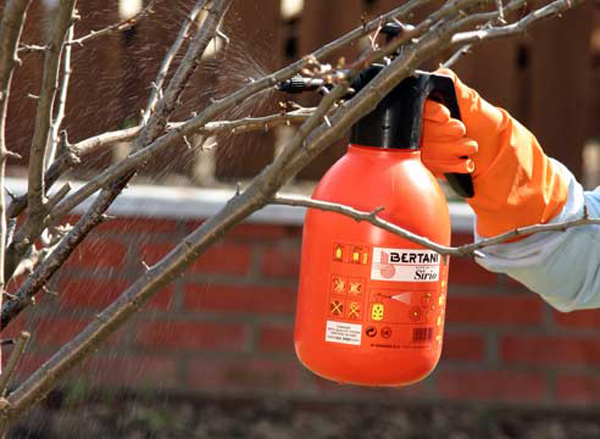
Preventative spraying is carried out in March before the first buds open and in early May, before the tree begins to bloom. Autumn treatments are carried out in late September or early October. However, these treatments are only recommended if the fruit is intended for consumption. Therefore, the Royalty apple tree is used for ornamental purposes. It is easy to care for and will be a true gem in any garden.
Video: "Overview of Ornamental Apple Tree Varieties"
This video will show you the variety of ornamental apple tree varieties.