
Features of planting and caring for a columnar apple tree
Content
Description
The columnar apple tree is the result of a natural mutation. In 1964, a Canadian gardener noticed a branch on a McIntosh apple tree, without any side branches, densely covered with apples. The curious gardener grafted some of the cuttings onto apple rootstocks. The mutation proved stable, and breeders in many countries began cultivating these unusual trees. Soon, columnar apple trees spread throughout the world.
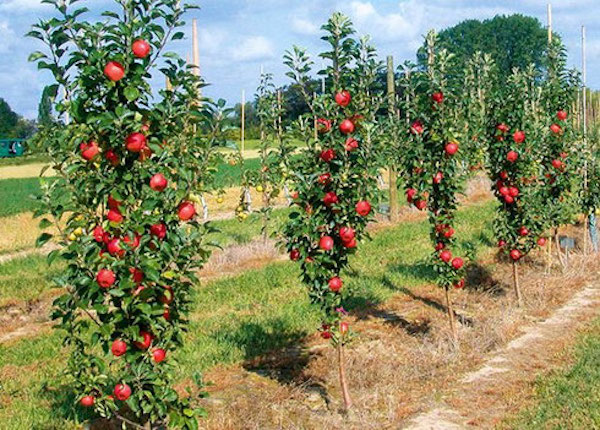
These apple trees resemble pyramidal poplars or cypresses because their branches diverge from the trunk at an acute angle. Scientists have discovered that this branch growth is caused by the Co gene. Only apple trees that possess this gene are considered columnar. Regular varieties grafted onto dwarf rootstocks are not. Therefore, keep this in mind when purchasing seedlings. Planting and caring for columnar apple trees has a number of specific features, which, once learned, will allow you to grow an entire orchard on your property.
Landing
Now we will tell you in detail how to plant a columnar apple tree.Columnar apple trees can be planted in spring or early autumn. The planting site should be exposed to sunlight and protected from wind. One-year-old seedlings take root best. For spring planting, prepare the hole in the fall, and for fall planting, prepare it in the spring. If it's not possible to prepare the hole that far in advance, prepare it at least 14 days before planting.
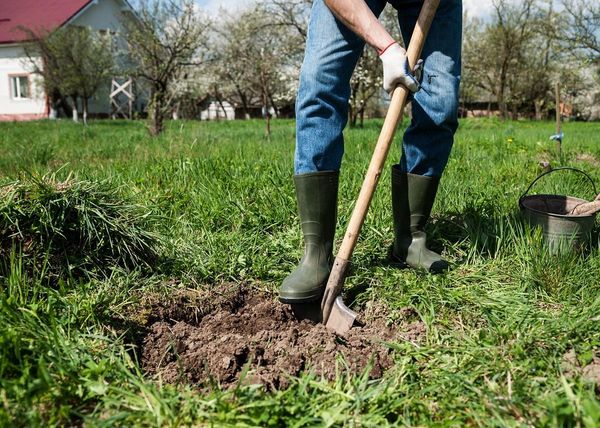
A hole measuring 100 x 100 x 100 cm is considered optimal. When digging the hole, separate the fertile and non-fertile soils. Add several buckets of compost or humus (30-40 liters), potassium (80-100 g), and superphosphate (100 g) fertilizers to the fertile portion. Line the bottom with a drainage layer of crushed stone or sand, and add the enriched fertile soil to the hole and leave it for two weeks. When planting a seedling, mound the fertile soil onto which it is placed. For better rooting, trim the root tips slightly. If the roots have dried out, soak them in water for 10 hours before planting.
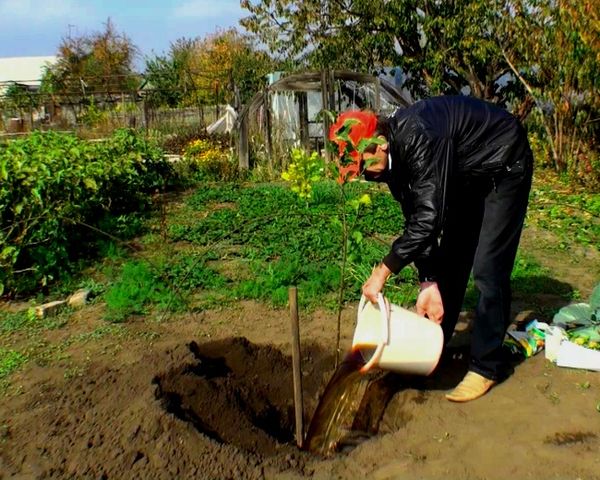
The straightened roots are covered with soil so that the grafting point is raised 2-3 cm and the root collar is at ground level. After planting, the hole is compacted and watered generously—1-2 buckets per tree. To reduce evaporation, it can be mulched with grass. Columnar apple trees should be planted with a distance of 1 m between rows and 50 cm between trees. How to plant a columnar apple tree in the fall? Planting is usually done in late September during warm weather. In the fall, mature seedlings are planted using a similar pattern.
Care and pruning
Caring for a columnar apple tree after planting involves proper fertilizing and watering. The first fertilizing should be done after the buds open. The next three fertilizing sessions are spaced two weeks apart. For fertilizing, prepare the following nutrient mixture:
- 1 bucket of water;
- 1 shovel of fresh manure;
- 1 tbsp. urea.
Nitrogen fertilizers are used for spring fertilization. In addition, spring treatments are carried out against pests and diseases, as well as thinning. First-year seedlings are completely deflowered, second-year trees are left with 10 flowers, and mature trees are left with twice as many flowers as they should have apples.
Summer fertilization with mineral fertilizers begins in early June. In August, stop applying nitrogen and organic fertilizers. A second thinning is also performed in the summer, removing half of the emerging ovaries. When the apples reach the size of a cherry, two ovaries are left on each inflorescence. When the apples reach the size of a nut, only one ovary is left on each link.
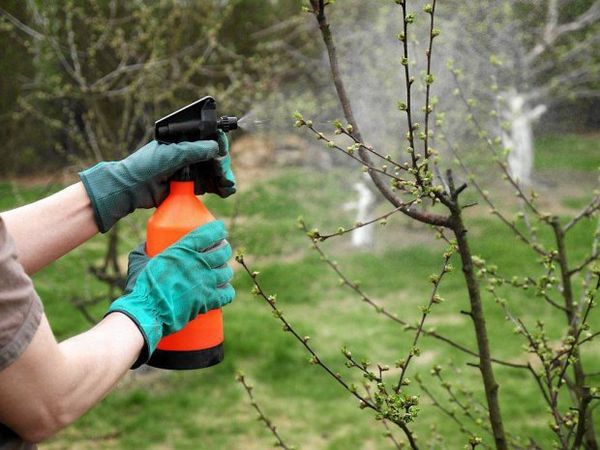
Summer pest control treatments are carried out no later than a month before harvest. After harvest, trees need to be fertilized and re-treated for pests.
Columnar apple trees generally don't require pruning. Typically, only the main shoot develops, and long side shoots appear only if the apical bud is damaged. If this occurs, leave the longest shoot, at least 20 cm long, and prune the rest. Trees requiring crown formation are pruned in early spring before the sap begins to flow.
On one-year-old trees, all lateral shoots are pruned, leaving two buds on each branch, from which shoots will later grow. The following year, the vertical branch is pruned again, leaving two buds, and the horizontal branch should be left to form fruit. A year later, the fruit-bearing branch is pruned to the ring. In the fourth year, lateral and abnormally grown branches are thinned out. In subsequent years, only dried and weak shoots are removed.
Preparing for winter
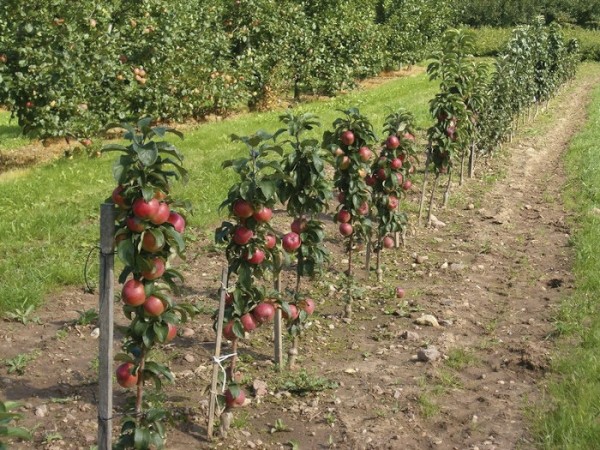
The apical bud of columnar apple trees is particularly susceptible to winter frost, as it produces several vertical shoots when exposed to frost. To maintain the tree's columnar shape, the apex is covered with rags under a plastic bag for the winter. It's also important to prevent the roots from freezing. To do this, the area around the trunk is covered with sawdust or spruce branches, and the growing point is wrapped in several layers of fabric or nylon stockings.
The best protection against frost is snow, which should be generously raked to the tree's trunk. To prevent the plantings from being flooded during the thaw, the snow is raked away from the tree at the end of February. To prevent the trunk from breaking in strong gusts of wind, it is tied to a support. As temperatures rise, trees should be gradually uncovered and ventilated to prevent overheating of the flower buds.
Diseases and pests
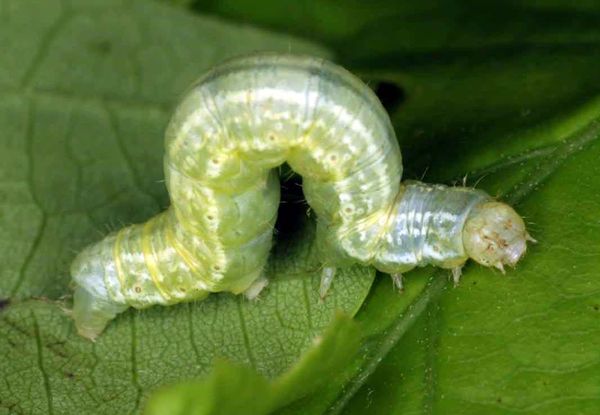
Miniature apple trees are susceptible to the same pests as taller trees: scab, aphids, codling moths, mites, fruit and fruit moths, sawflies, and other insects, which require insecticides to control. To treat these diseases, apple trees are treated with Fitosporin or Trichodermin.
Pros and cons of growing
The main advantage of the columnar apple tree is its compact size—the average tree height is 2.5 m and width is 0.5 m. This low growth rate simplifies harvesting. These apple trees provide little shade, allowing for the planting of other plants between them. This type of apple tree is often used in exterior design. Some varieties have a narrow root system and can even grow in tubs. Another undeniable advantage of columnar apple trees is their high yield and early maturity. Trees typically begin bearing fruit as early as the second year, and a single tree can yield up to 12 kg of apples.
Disadvantages include the high cost of seedlings and the limited lifespan of the trees. For most varieties, fruiting begins to decline as early as the seventh year and disappears completely by the fifteenth. Other disadvantages include a fragile growing point and weak roots.
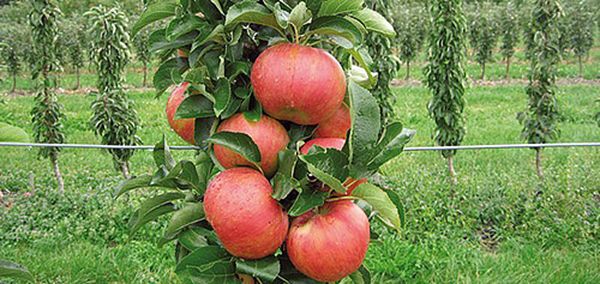
Although growing columnar apple trees requires constant care, the investment is more than compensated for by the abundant harvest and unrivaled beauty of the trees. Experienced gardeners recommend purchasing planting material from nurseries or specialized garden centers, where they can help you choose the right variety for your site and provide quality care recommendations.
Video: "Features of Growing Columnar Apple Trees"
In this video you will hear useful information about growing columnar apple trees.