
How to reap a bountiful harvest from semi-dwarf apple trees
Content
Description and Features
The semi-dwarf apple tree was created by grafting a specific vigorous variety onto a specialized rootstock. Such rootstocks are propagated vegetatively. In this case, the most suitable rootstock for this fruit tree would be MM-106.
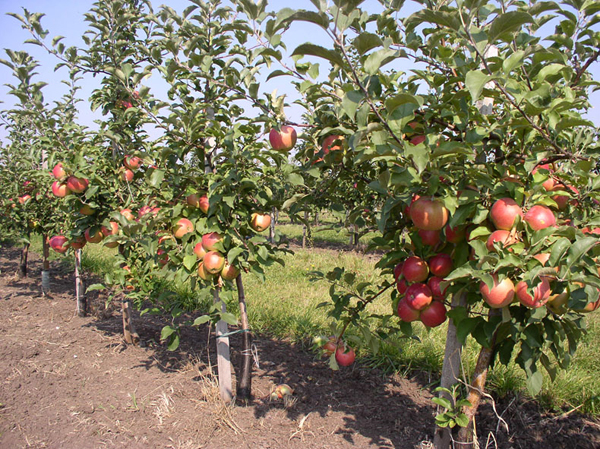
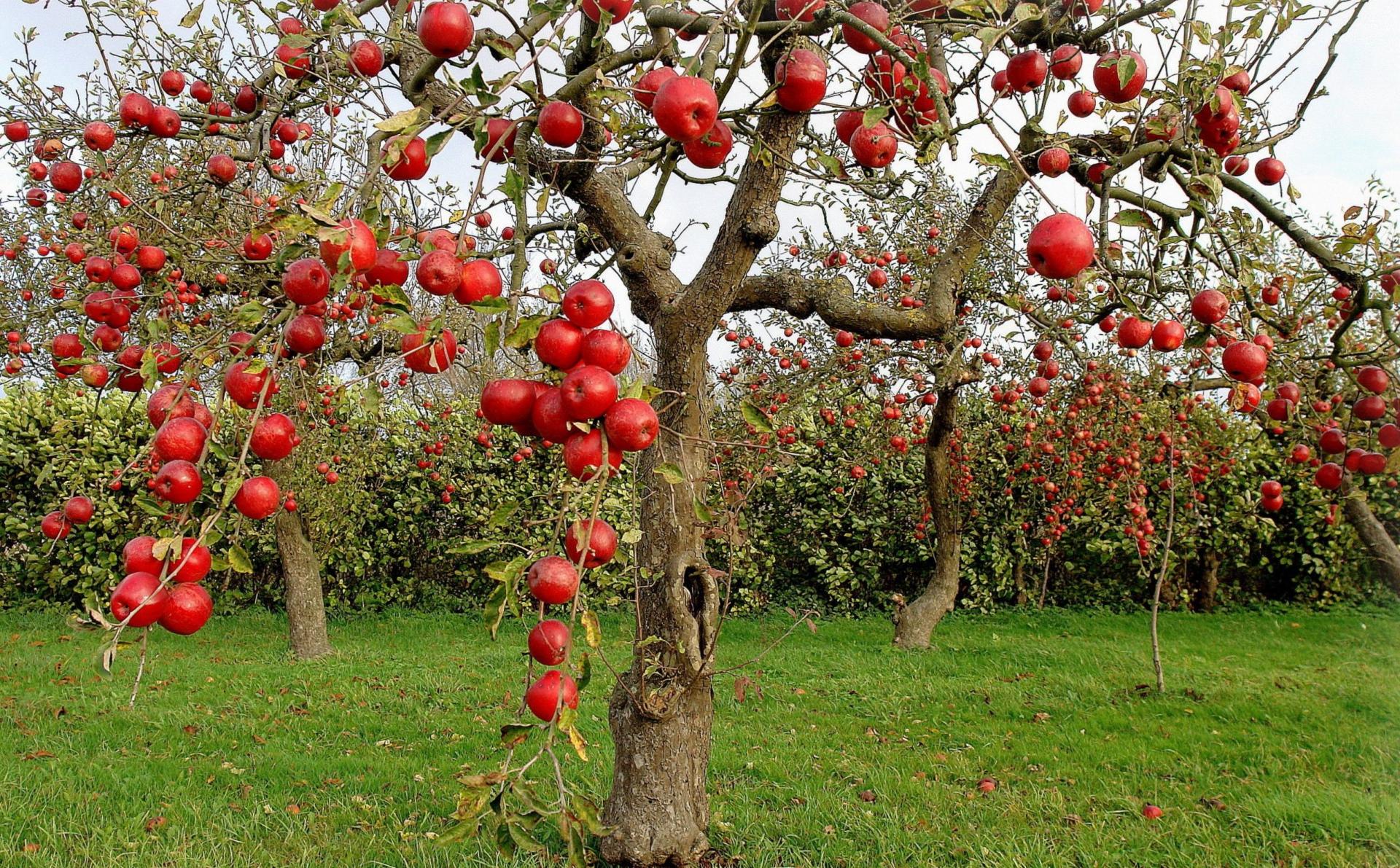
Semi-dwarf apple trees are defined as trees of medium height. Typically, a semi-dwarf apple tree reaches a height of 2–3 meters, with a crown diameter of approximately 1.5–2 meters. This height is the main characteristic of this apple tree variety.
Despite their compact size, caring for these trees is challenging, as they are known for their fussiness. The need for careful care for semi-dwarf trees is due to the method they were grown in, as well as the fact that their roots are located in the top layer of soil. Typically, their depth is only 10–40 cm.
It's also worth noting that these varieties have a short lifespan. On average, with proper and comprehensive care, they live for about 10–15 years.
Popular varieties
Today, various semi-dwarf apple tree varieties have been developed. Some of them are suitable for planting in the Moscow region.
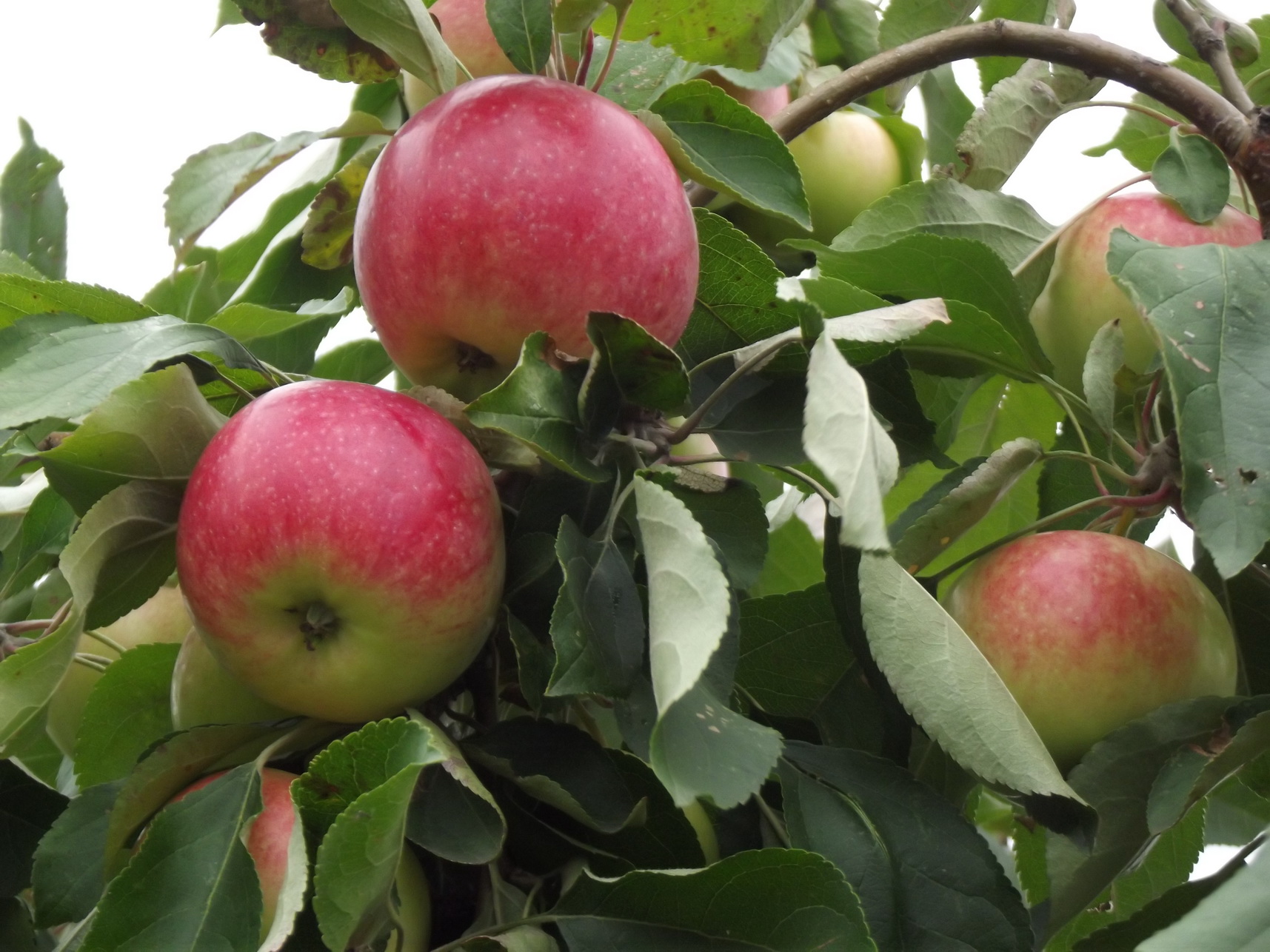
The following varieties are considered the most popular:
- Lobo. This apple tree is characterized by early fruiting and medium height. The fruits are large, aromatic, and very juicy. Their flavor is richly sweet with a hint of tartness;
- Melba. Considered a summer dessert variety, its apples have a sweet flavor and juicy flesh;
- Antonovka vulgaris. A very popular variety, often grown as a rootstock. It boasts excellent fruiting, a long lifespan, and good cold tolerance. The tree also tolerates close proximity to groundwater.
- Imrus. This is a winter-ripening apple tree. It is distinguished by its large fruits. The fruits are firm and very juicy, with a sweet and sour taste.
Some of the varieties listed above are suitable for the Moscow region and other regions of our country. However, if you plan to grow these varieties in your garden, you need to know how to plant and care for them.
Planting and care
Semi-dwarf varieties, like dwarf varieties, should be planted in the following types of soil to obtain a high-quality harvest:
- loamy chestnut;
- chernozems;
- sandy loam;
- sod-podzolic.
It is not recommended to plant such seedlings in saline soils, which are characterized by a high content of sulfate and chloride salts.
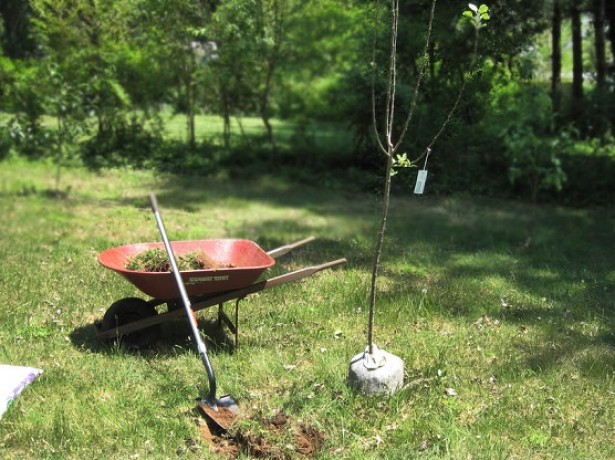
Once suitable soil has been selected, seedlings are planted as follows:
- a planting hole is dug, the diameter of which should be slightly larger than the root system of the plant;
- a small depression is made in the center of the hole, into which a peg is placed to support the young tree;
- Next, pour soil mixed with fertilizer into the bottom of the hole. The resulting mound should form;
- After this, a young tree is placed on the mound. Its root collar should be a couple of centimeters higher than the existing ground level;
- The seedling's roots are carefully straightened and covered with soil. After this, the area around the trunk is compacted slightly.
After planting, the young apple tree should receive proper care, which includes the following agricultural practices:
- Watering. Its frequency and abundance depend on weather conditions. To prevent frostbite, watering apple trees stops in August;
- application of fertilizers;
- weeding;
- Pruning. This is done regularly to prevent the tree from breaking branches due to an excess of fruit. Branches should be evenly distributed across the crown;
- spraying against pests and pathogenic microflora.
It's worth noting that recently planted seedlings experience a disruption in their annual cycle. As a result, they begin to leaf out a little later. Shoot growth also begins with a delay. However, the root system exhibits rapid growth.
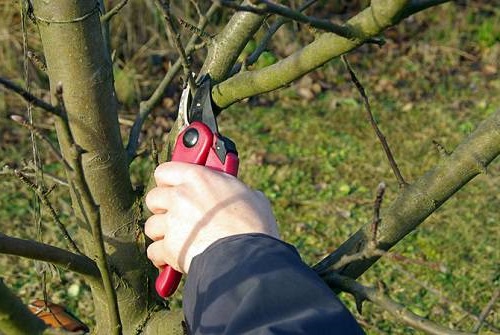
Apple trees grown on semi-dwarf rootstocks require quite complex care. Therefore, each step described above must be performed according to the proper guidelines.
Harvesting and storage
Almost any variety bears fruit early (from the second to third year of life). Moreover, with proper care, harvesting can begin in the fall. Depending on the variety, fruit can be harvested from late August through October.
The harvest of these varieties is stored for quite a long time. Some varieties (for example, Lobo or Imrus) remain fresh until March. However, for long-term storage indoors, optimal conditions must be created.
Pros and cons
All semi-dwarf apple tree varieties have the following advantages:
- compactness;
- Yield. Some varieties produce up to 50 kg of apples per season;
- excellent taste of fruits;
- Apples have better qualities than vigorous varieties. They are larger and have a more nutritious composition;
- early fruit bearing;
- easy processing of trees, as well as simple harvesting;
- excellent winter hardiness;
- may be adjacent to groundwater;
- high resistance of trees to diseases.
The disadvantages of growing such varieties include:
- complex care;
- short lifespan of apple trees;
- slow growth;
- The low height of the skeletal branches makes it possible to pass under them only by bending over;
- Poor recovery from injuries (such as frost damage). This reduces the trees' resilience to adverse environmental factors.
Now you know what a semi-dwarf apple tree is. Before planting these varieties, you need to consider all the difficulties involved in growing them.
Video: "Apple Tree Pruning Guidelines"
This video will show you how to properly prune apple trees in your garden.