
Review and diagram of apple tree fertilization in spring
Content
Spring fertilizing scheme
Fertilizing young trees in spring is done in stages: before flowering, during flowering, and after flowering. Let's take a closer look at what and how to fertilize apple trees at each stage.
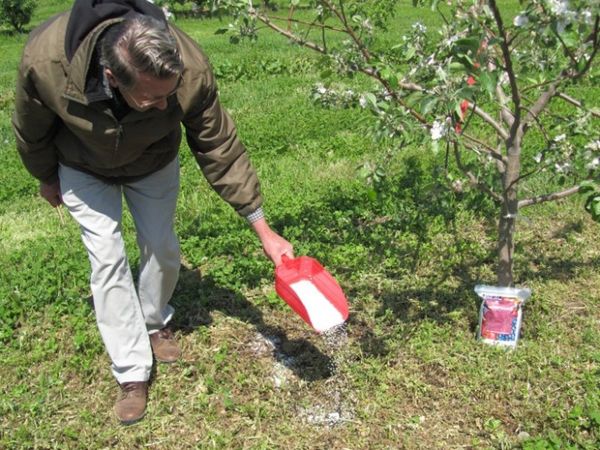
Before flowering
From early to mid-March, only the root system is fertilized, primarily with nitrogen-containing fertilizers. Moreover, it is necessary to apply fertilizers at a distance of approximately 50–60 cm from the trunk, with mandatory loosening of the soil.
As an early feeding it is recommended to use:
- Potassium sulfate. Dosage: no more than 5 g of dry matter per 5 liters of water;
- ammonium nitrate. Dosage: for mature trees – 40 g per 10 liters of water, for young trees – 20 g per 10 liters of water;
- Ammonium sulfate. Dosage: 25 g per 5 liters of water. If ammonium sulfate is used in combination with the above-mentioned agents, the dosage should be reduced to 15 g per 5 liters of water.
During flowering
From early to mid-April, as in the previous stage, it's necessary to fertilize only the root system. During flowering, the following mixture is most beneficial for apple trees:
- 800 g potassium sulfate;
- 1 kg of superphosphate;
- 5 liters of bird droppings (can be replaced with urea – 500 g);
- 200 liters of water.
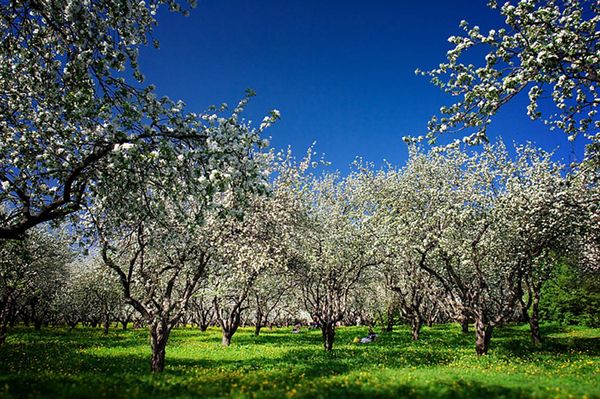
All ingredients should be diluted in water and left to steep for a week. Then, fertilize the apple trees with the infused mixture in the root zone (50–60 cm from the trunk).
After flowering
From early to mid-May, after the apple tree has finished blooming, additional foliar feeding is carried out through spraying. Urea is used for spraying apple trees at a rate of 50 g per 1 liter of water.
To fertilize the root zone, the following mixture is used at this stage:
- 50 g nitrophoska;
- 1 g dry sodium humate.
Dissolve both products in a 10-liter bucket of water. It's recommended to pour 2–3 buckets of the mixture under each apple tree.
At home, apple trees are most often cared for using organic fertilizers due to their availability. However, mineral fertilizers should never be neglected. Fertilizing apple trees is much more effective with a combination of both. Now let's take a closer look at how to fertilize apple trees in the spring.
Organic fertilizers
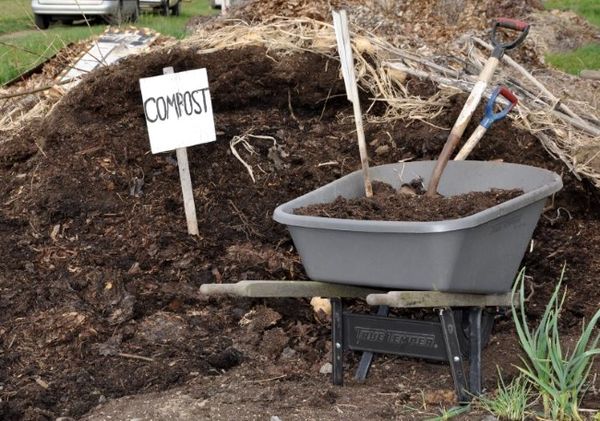
As already noted, their advantage lies in their affordability and environmental friendliness. With regular use of organic fertilizers, the soil becomes looser and absorbs water better. So, what are they?
Manure
Fresh cow or horse manure is used. Use with caution due to its high ammonia content, which can damage the plant's rhizomes. To prepare a liquid mixture, use 10 liters of liquid per 1 kg of manure. When adding manure during tillage, use 10 kg per 1 m².
Humus
This product is a product of decomposed plant and animal waste. It is a safe alternative to fresh manure and is used in the same proportions.
Bird droppings
Chicken manure contains high levels of nitrogen, which stimulates rapid and balanced plant growth. It must be applied carefully, strictly observing the correct proportions, to avoid burning the rhizomes. As a liquid fertilizer for apple trees in spring, manure is used in the following proportion: 100 g manure/15 l of liquid. The solution is left to infuse for 5–10 days. Dry manure is used for digging.
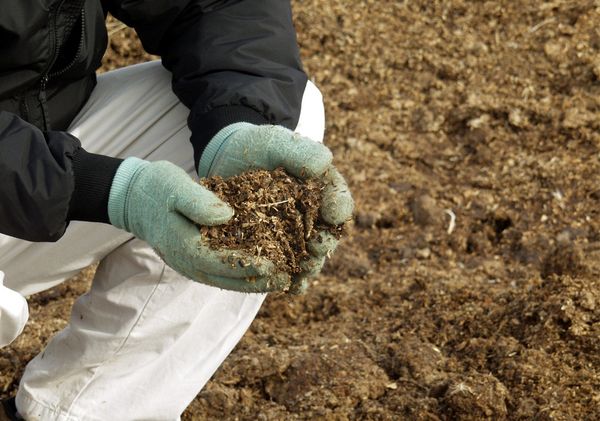
Wood ash
Valuable for its high content of various chemical elements, it is an excellent substitute for potassium fertilizers. It is used to protect soil from insects, rot, and fungal diseases.
Bone meal
It has a high nitrogen and calcium content and is used to deoxidize soil. Bone meal is now available in specialized agricultural stores.
Mineral fertilizers
Gardeners commonly believe that such fertilizers can be harmful to both human and plant health. However, with rational use of mineral fertilizers and strict adherence to dosages, this risk is reduced to zero, and the benefits are enormous. Mineral fertilizers are especially recommended for soils depleted in micronutrients and depleted soils. When fertilizing columnar apple trees in the spring, it's advisable to include minerals such as nitrogen, phosphorus, and potassium.
Nitrogen
On the one hand, using nitrogen fertilizers promotes the growth of young shoots and the development of rhizomes. However, excessive nitrogen in the soil can lead to reduced fruiting in young apple trees. Therefore, it is recommended to add nitrogen fertilizer when the trees are 2–3 years old. This is especially important to remember if you have columnar apple trees on your property. Who wants a lush apple tree with a low yield?
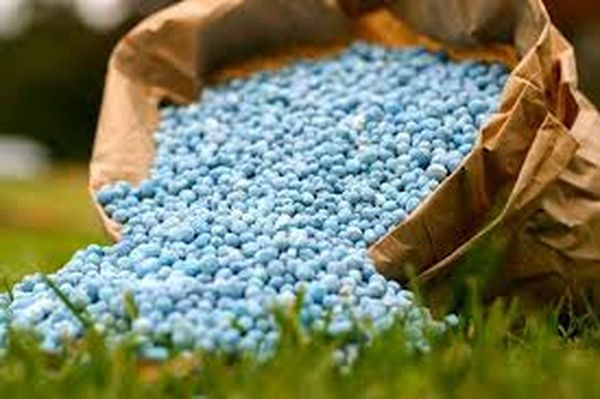
Ammonium nitrate has proven to be the best nitrogen-containing fertilizer, the method of application of which is described above.
Phosphorus
Phosphorus fertilizers (superphosphates) have a beneficial effect on flowering and fruiting. For enhanced results, it is recommended to use superphosphates in combination with urea and potassium sulfate. Dosage:
- superphosphate 1 g/1 l of water;
- urea 50 g/1 l of water;
- Potassium sulfate 6 g/1 l of water.
To fertilize an adult tree, 30–40 liters of nutrient solution are required; for a young tree, 15–20 liters.
Potassium
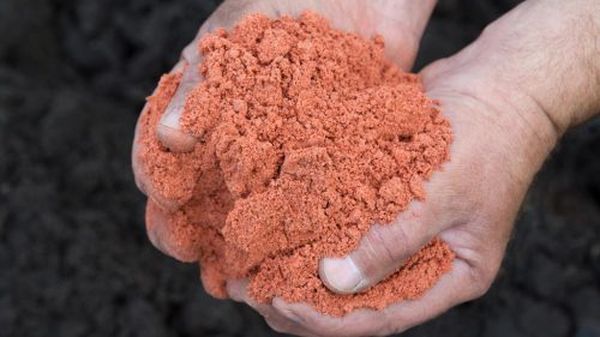
Fertilizing apple trees with potassium is necessary to stimulate the immune system and promote healthy tree development. Potassium-containing fertilizers include potassium salt, potassium chloride, potassium sulfate, and potassium sulfate. Potassium sulfate is considered the best. The recommended rate for spring apple tree fertilization is 10 g per 1 m² of soil.
Caring for an apple tree in the spring is quite a labor-intensive process, but the reward in the form of a rich harvest of fragrant apples is worth it.
Gardener's Tips
When fertilizing a tree, two important factors must be considered: soil conditions and the age of the apple tree. During the first 3-4 years, fertilizing is not necessary if sufficient substrate was added when the apple trees were planted. Overdoing it with fertilizing is undesirable, as over-fertilizing will lead to reduced fertility.
The soil type determines the most effective fertilizers for apple trees, and the amount needed. For example, black soil contains sufficient nitrogen, so nitrogen-based fertilizers are not recommended. However, the opposite is true for sandy and clayey soils. Now you know the best way to fertilize apple trees in the spring to ensure maximum benefit.
Video: "How to Fertilize Fruit Trees"
This video will tell you about the best way to fertilize fruit trees.