
How to properly whitewash apple trees in spring
Content
When is the best time to whiten?
Apple trees need to be whitewashed at least several times a year. This is due to the simple fact that the paint often wears off within a few months, leaving the tree unprotected. When should trees be whitewashed? In fact, farmers haven't reached a consensus yet. Some studies show that early spring whitewashing can stunt the growth of young trees and can even lead to their death. Other experts also insist that whitewashing in the spring is unnecessary, as it has no effect.
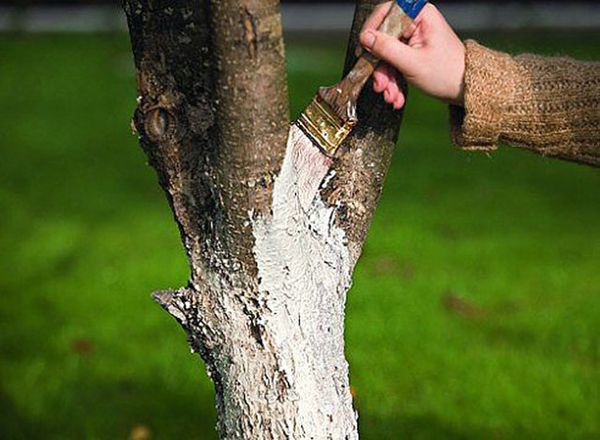
On the other hand, there are counterarguments in favor of spring painting. Spring whitewashing is essential, as the temperature fluctuations that still accompany trees awakening in spring can cause the bark to crack. Such irregularities sooner or later lead to infection by a wide range of pathogens.
The first whitewashing is best done in March. The deadline is April. This is the most vulnerable time for trees, requiring special protection. Pay particular attention to treating older trees and young apple trees. The former are prone to bark damage, while the latter are often more susceptible to infection.
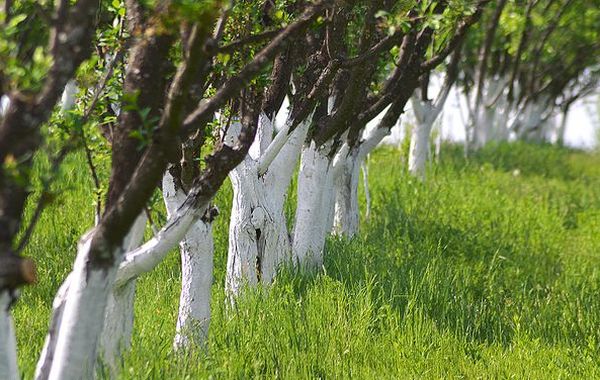
The second whitewashing period is between April and September. In reality, whitewashing should be done when the old paint has washed off the tree trunks. Whitewash typically wears off within two to four months, depending on its quality.
Solution recipes
The composition of whitewash can vary depending on the desired effect. Some formulas protect trees from diseases and pests, while others are designed to protect against burns. Still other mixtures improve plant resilience and can boost their immune system.
When doing this procedure themselves, people often use lime. They whitewash apple trees with it to prevent the bark from overheating. Lime also has a weak antibiotic effect. However, the lime is often washed off fairly quickly, and attentive gardeners carry out up to four whitewashings per season. In other compositions, the same lime is often used as a coloring agent. However, depending on the composition, certain active ingredients are added.
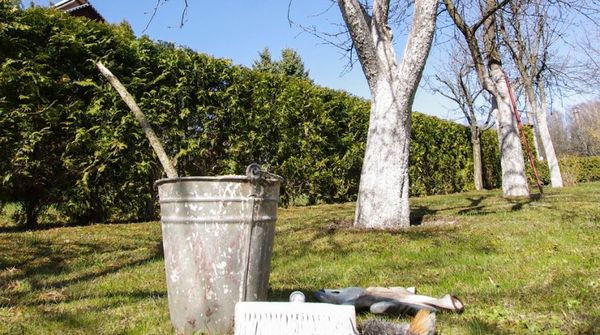
Water-based paints are currently popular. They provide a more consistent finish on the tree trunk. Gardeners also noted that this paint doesn't wash off even under direct water pressure.
Here are some recipes for good whitewashing for apple trees of different ages.
- Copper sulfate – 2 tablespoons
- PVA glue – 1 tablespoon
- Water – 2 liters.
You can add "Knockdown" rodent drops to this composition.
For burns, you can use another recipe:
- water – 2 liters
- slaked lime – 250 grams
- PVA – 2 tablespoons
Apple trees must be whitewashed with a layer of at least 3 millimeters.
Instructions
Is it possible to paint a tree trunk without pre-treating it? Yes, but this will significantly reduce the effectiveness of the whitewash. Before starting, remove any unwanted growths on the bark and trim away any insensitive, corky areas. Treat any resulting wounds with a special antiseptic or copper sulfate.
Prepare a stock solution. Carefully and carefully paint the tree, applying two or three coats if necessary. The whitewash should extend up to the so-called green cone—the vegetative parts of the green plant. Some paint only the base of the trunk, but this is considered a serious mistake. Paint both the root tips and the protruding parts of the roots above the soil.
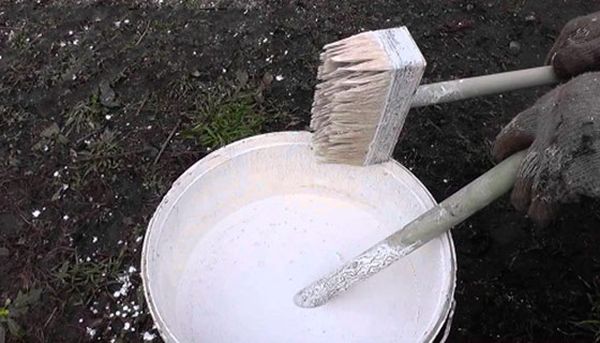
How to whitewash is a simple matter. Just use a wide brush or even a special sprayer to evenly apply the paint to the wood. What color should the finished painted part be? A uniform, rich white. Now you know when to whitewash apple trees and how to do it correctly.
Video: "Proper Whitewashing of Trees"
This video will show you how to properly whitewash an apple tree.