
Proper pruning of apple tree seedlings in spring after planting
Content
Why prune seedlings?
First and foremost, apple tree pruning helps give the tree a neat appearance and properly shape its crown. Timely and regular pruning of apple trees stimulates growth, proper development, and the formation of full-fledged, healthy fruit.
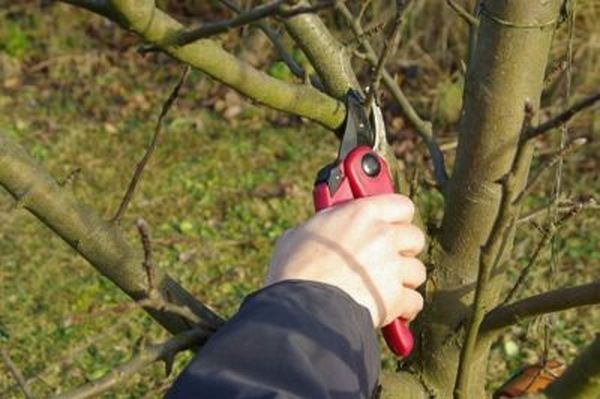
Apple trees are pruned for various purposes:
- form a beautiful and correct crown, which will make it easy to harvest the future crop;
- By removing competing but less developed shoots, young branches are strengthened. This ensures the full growth of the young tree;
- remove dried, deformed and diseased branches, promoting the emergence and growth of shoots capable of bearing fruit in the future;
- provide access of the sun to all branches;
- Preparing seedlings for the winter period.
The time of year to prune depends on the end goal and the desired outcome. Apple trees are typically pruned in the spring or fall. Is it possible to prune a sapling in the summer? Yes, but only if absolutely necessary.
Rules for pruning tree seedlings
Pruning apple tree seedlings in the spring should be done before the growing season begins: the tree not only recovers faster, but also grows more intensively. Shoots are typically pruned in summer to stimulate the formation of fruit buds and improve fruit quality. However, the best time for pruning is considered to be autumn, when the tree enters its dormant period.
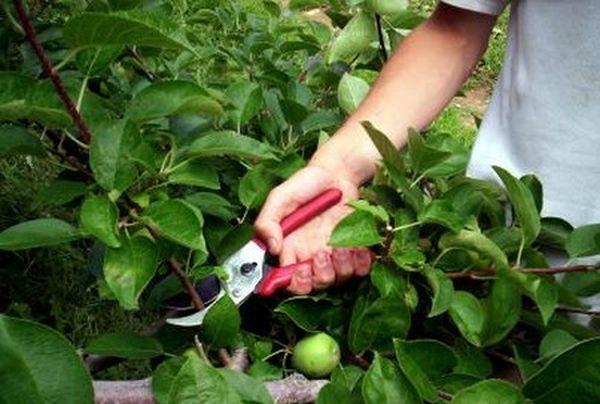
At this time, remove dead and damaged parts. Pruning after frost can lead to disease and death of the seedling. To know how to prune a seedling correctly, you need to follow certain rules.
In autumn you should do the following:
- Remove large damaged or rotten branches.
- Thin out the crown in areas of dense branch clusters, removing weak and underdeveloped shoots.
- Remove branches that grow at an acute angle to the trunk: such branches are prone to breakage in the event of a heavy harvest.
- Protect the tree by treating the cuts with garden pitch or oil paint.
- To prevent the spread of disease, burn waste.
Spring pruning is done in March or April. To avoid pruning the seedling incorrectly, follow these guidelines:
- Make cuts above the eyes.
- Treat the cut areas with garden pitch.
- Get rid of last year's shoots.
- Choose the length of the pruned branch according to the apple tree variety: for dwarf apple trees, pruning is performed at 2-3 buds, for medium-sized apple trees – at least 5, for tall apple trees – from 9.
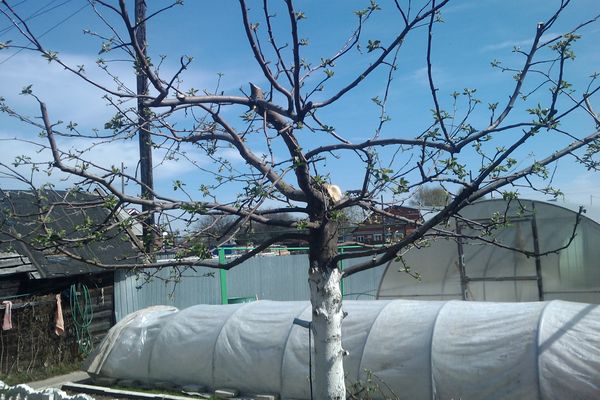
However, the basic recommendations regarding how to prune a seedling depend on its age and the time since planting.
Scheme for pruning seedlings
One-year-old apple tree saplings are pruned in the first year after planting. A one-year-old sapling is often unbranched, so it is pruned and cut back. The height is calculated based on the rootstock height. Medium-sized and seedling rootstocks allow for higher pruning. Once the tree has grown sufficiently, the leaves around the trunk should be removed. If the planted apple trees are already branched, side shoots should be removed.
Branches growing within 70 cm and those growing at a right angle are removed. Branches growing at a wide angle are pruned. These branches ensure a strong crown and ripen fruit earlier. Pruning two-year-old apple trees has its own specifics. Since such a tree already has several shoots growing from the trunk, after planting, two-year-old apple trees are pruned, leaving only the most developed shoots growing at a wide angle. These will later form the tree's "skeleton." Excess branches are removed.
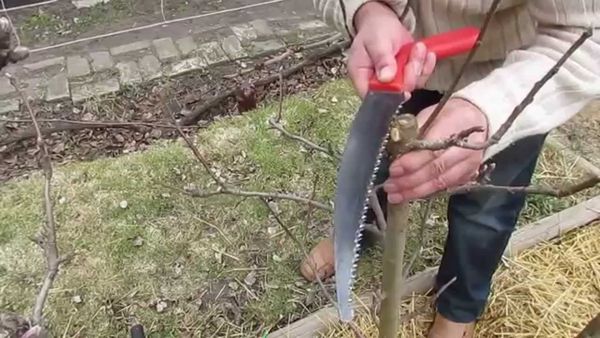
To form a central conductor that will grow vertically, the most developed bud is selected.
The height of this shoot should be several buds higher than the other branches of the "skeleton." The remaining shoots are pruned so that the lower ones are longer than the upper ones. This type of pruning of a two-year-old apple tree creates a popular crown type—a strong and rounded one. For the next 3-5 years, pruning apple trees in the spring or fall is not recommended, as this may delay fruiting. However, it is still necessary to remove diseased and broken branches. If the tree is growing too vigorously, the conductor can be shortened slightly.
Formation of tree crowns
Many gardeners prefer a bowl-shaped crown because it's neat and easy to cultivate. Symmetrically arranged branches form a single tier half a meter above the ground, eliminating the central conductor. It's best to remove this conductor within a few months of planting. To form a beautiful "cup," the seedling needs sufficient space; staking may be necessary later. Dwarf rootstocks are an excellent base for this type of crown. Its main advantage is unimpeded sunlight access to all branches. Subsequently, care should be taken to promptly remove suckers from the main branches and any excess shoots growing inward.
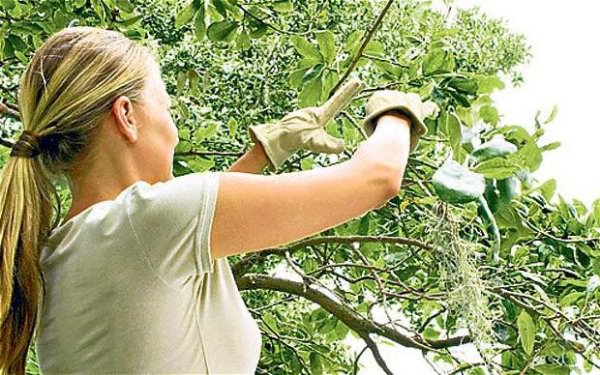
And don't forget about hygienic pruning. The "skeletal" branches should be arranged in a subordinate manner: the closer to the trunk, the longer. A spindle-shaped form is also very popular: semi-skeletal branches are arranged in a spiral around the trunk. The height, as a rule, should not exceed three meters. Since the branches must assume a horizontal position, they are bent using wire braces. However, this type of crown is only suitable for seedlings with dwarf rootstocks.
Another suitable crown type for apple trees with dwarf rootstocks is a slender spindle. The central conductor is approximately 2.5 meters tall, and the crown is formed by short horizontal branches. The standard for breeding is quite low. Dwarf varieties are trained with a bush-like crown, with the trunk no more than a few dozen centimeters high, so that it is completely covered by snow in winter. Care for the seedlings properly, and they will grow into beautiful trees.
Video "Apple Tree Pruning"
This video will show you how to properly prune apple trees.