
Rules for treating apple trees from diseases and pests with urea in spring
Content
What are the benefits of urea?
Urea (carbamide) is a chemical compound that is a diamide of carbonic acid. It appears as white crystals and must be dissolved in polar media (liquid ammonia, ethanol, and water). Urea can be used in combination with other fertilizers. However, when combining these, the pH must be taken into account.
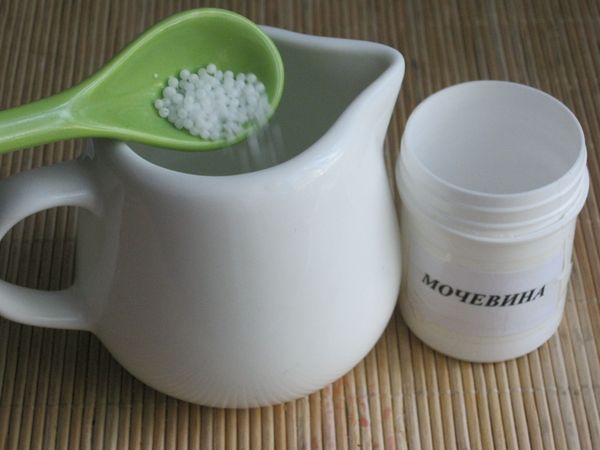
Gardeners often apply urea to their gardens in the spring because this fertilizer contains a high amount of nitrogen. Nitrogen stimulates plant growth (vegetative mass growth), thereby accelerating their emergence from winter dormancy and getting them into a productive mood. For this reason, this fertilizer is quickly absorbed by plants. Therefore, in this case, it is better than saltpeter.
It's important to remember that this substance should be used with caution, as excess nitrogen in the soil inhibits plant growth. Therefore, apple trees should be treated in the spring with urea diluted to a specific concentration.
The same solution is used to treat apple trees for pests in spring and fall. Urea helps prevent the development of various diseases on fruit trees.
This substance can be used for spraying or as fertilizer in the spring, after the snow melts.
Recipes and preparation
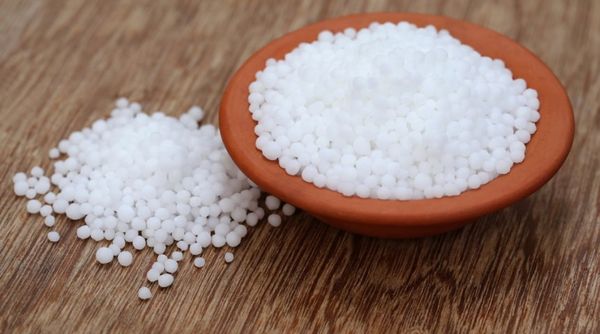
Before spraying apple trees with urea, it's important to understand how to prepare it. Various urea recipes currently exist. They vary in concentration, as each crop has its own nitrogen requirement. Therefore, fertilizer solutions for apple, cherry, and other fruit trees will require different concentrations.
When purchasing this substance to spray apple trees in the fall or early spring, you need to know that urea is sold in two varieties:
- marked "A" - used as an additive in animal feed, as well as for the production of resin and glue;
- marked "B" - used as a fertilizer.
Due to its high nitrogen content, when preparing urea, it's important to follow the proportions specified in the product's instructions. This is because the concentration of the product, intended for treating garden pests and diseases, will differ slightly from that of regular fertilizer.
Recipes for preparing a urea product:
- For foliar feeding of shrubs and trees, dilute 18–32 g of powder in 10 liters of water to obtain a solution. The exact dosage of urea depends on the plant species;
- to spray fruit trees, 500 g of urea is diluted in 10 liters of water;
- The standard product is prepared by diluting 30–40 g of powder in 10 liters of water;
- To feed fruit trees, dilute 500–700 g of the substance in 10 liters of water. However, for spraying the garden against diseases and pests, a lower concentration of the mixture is used. Recipes that use a smaller amount of powder are also available.
It's worth noting that the application rate of urea for fertilizer depends on the soil type in the garden plot. When combining urea with other fertilizers, all components must be used in strict ratios. Otherwise, the opposite effect may occur.
The preparation of the fertilizer is carried out as follows:
- the required amount of urea is poured into the container to prepare the fertilizer;
- then 2 liters of water are poured into the container;
- after this, the powder is stirred until the powder is completely dissolved in it;
- then water is added to the container to reach the required volume.
It's important to understand that spraying your garden against harmful insects and pathogenic microflora should only be done with a freshly prepared solution. The same rule applies to fertilizing. This will maximize the expected effect.
Processing instructions
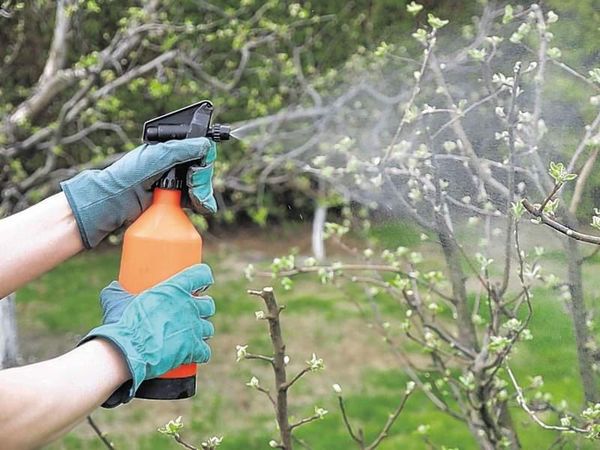
Once the solution is ready, it's necessary to properly treat the fruit trees with urea. Typically, trees are treated with this solution twice a year: in spring and fall.
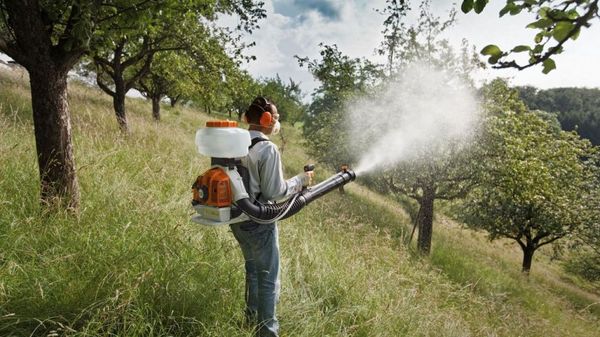
Spring treatment of apple trees from pests in early spring looks like this:
- the procedure is carried out after the snow melts;
- The outside temperature should be between 5 and 6 degrees Celsius. At this time, the parasites that overwintered in tree bark are still dormant;
- the spraying solution is prepared according to a special recipe (500 g of urea is dissolved in 10 liters of water);
- take the mixture for spraying, based on the calculation that 2-3 solutions are used per 10 square meters;
- the solution is applied evenly.
This treatment allows you to destroy the following pests:
- weevil;
- flower beetle;
- copperhead;
- aphid.
This procedure is especially important if there were a lot of parasites in the garden last season.
It is important to know that spraying apple trees with urea slows down their flowering period by approximately 1.5–2 weeks. This treatment is relevant for early varieties of fruit trees.
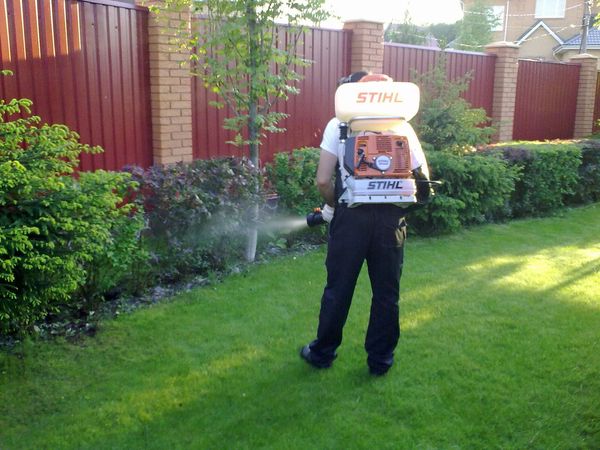
In the fall, gardens are sprayed with urea for preventative purposes, as well as to treat rot and fungal diseases (such as scab). At this time, the tree crown receives the greatest attention.
Precautionary measures
Treating apple trees with urea in spring and fall against diseases and pests requires careful precautions. When handling urea, wear protective gear (mask, gloves, goggles). Avoid eating, drinking, and smoking while spraying. After finishing work, wash your hands and face thoroughly with soap. Avoid working in windy or rainy weather.
Video: "Early Spring Spraying of the Garden with Urea"
This video will show you how to properly spray your garden with urea in early spring.