
How to treat apple trees against diseases and pests in spring
Content
When and how to process
No matter how hard you try to care for your trees, your efforts may be in vain if you don't protect your apple tree from pests and diseases in a timely manner. You can preserve your orchard by treating the plants with biological or chemical pesticides. However, before applying the treatment, you need to decide what to spray your apple trees with in the spring, and remember that the procedure is a three-step process.
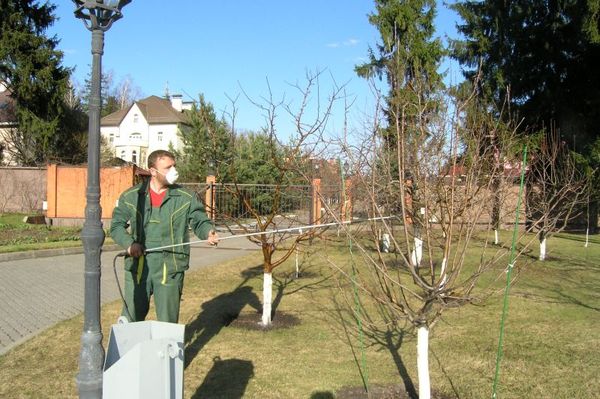
The first stage
This stage of early spring apple tree treatment begins in mid-March. By this time, air temperatures should reach at least 5 degrees Celsius. During this period, the main goal of spraying is to protect the apple trees from pests and diseases. This treatment also destroys any parasites that survived the winter in the bark.
If you don't know which product to choose to properly spray your apple trees in the spring, learn about the specifics of using biological and chemical products.
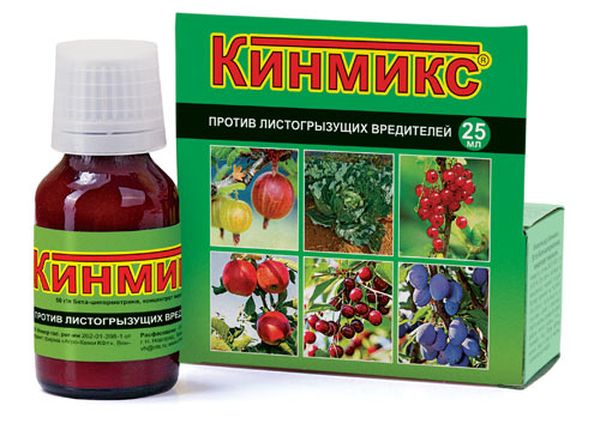
Trees can be treated with chemicals such as Kinmix before bud break. Otherwise, the products will burn young and tender parts. Before treating apple trees with chemicals in the spring for pests, the tree's crown should be pruned, the trunk should be cleared of old bark and lichen, and any damaged parts should be removed.
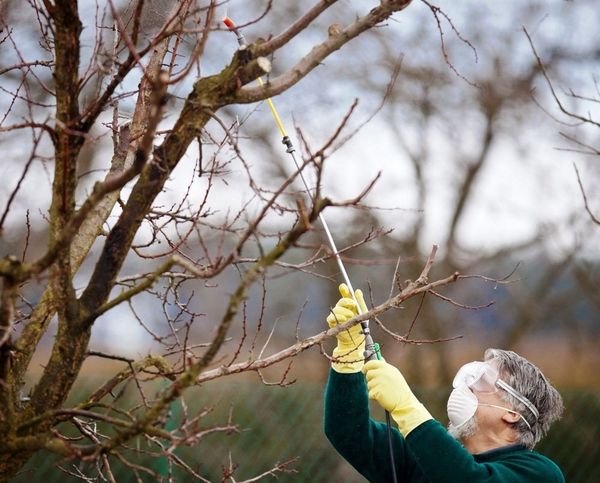
Protecting apple trees from pests involves whitewashing the trunks with lime both before and after spraying. What should you treat apple trees with at this stage?
Many people spray their trees with copper sulfate, as this fungicide can prevent rot and fungal diseases, as well as disinfect plant wounds.
Nitrofen is often used; like Kinmiks, it's a combination product. It kills insects and their eggs, as well as fungi that cause many diseases, and prevents the development of powdery mildew, scab, and various spotting diseases.
The first spraying can also be done with urea or a urea solution. This solution will provide reliable protection against apple blossom beetles, leafhoppers, and weevils. Urea can also combat scab, spotting, and a number of other diseases, and enrich the soil with nitrogen, which increases apple tree yield.
The second stage
The second stage of apple tree treatment begins when the buds begin to open, before flowering. Depending on the regional climate, spraying is carried out in March or April. Why treat apple trees in the spring? The main purpose of spraying during this period is to eliminate "winter" pests. Leafhoppers, mites, scale insects, and blossom beetles that overwinter under the bark can cause irreparable damage to fruit trees. At this stage, gardeners also actively combat scab and fruit rot.
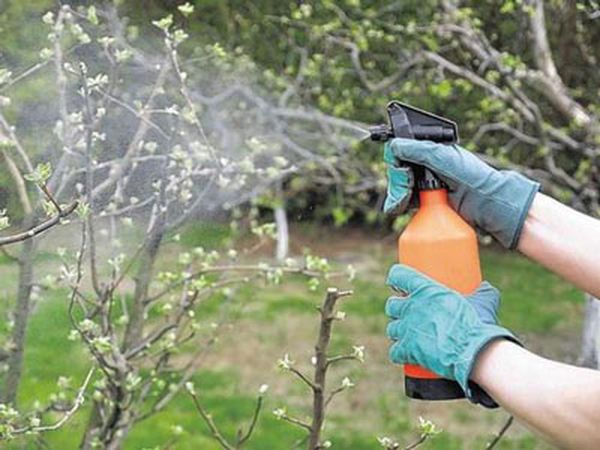
What should apple trees be sprayed with during this period? Iron sulfate is often used. While it doesn't completely eliminate the pests, it does kill about half of the leafhopper larvae, disinfects and accelerates the healing process of tree wounds, combats scab, moss, and rot, and enriches the soil with iron.
Colloidal sulfur is often used in spring to protect not only apple trees but also shrubs from pests and diseases. A colloidal sulfur solution can combat fungal diseases and plant mites. It is compatible with most other fungicides and can be used concurrently.
Lepidocide is a biological product used to protect apple trees from pests in the spring. When ingested by parasites, the substance causes paralysis. It is completely safe for pollinators.
The third stage
The final stage of apple tree spraying occurs in May. It is carried out after the apple trees have finished blooming. The main goal of treatment during this period is to eliminate codling moths, moths, aphids, mites, and other insects harmful to fruit trees.
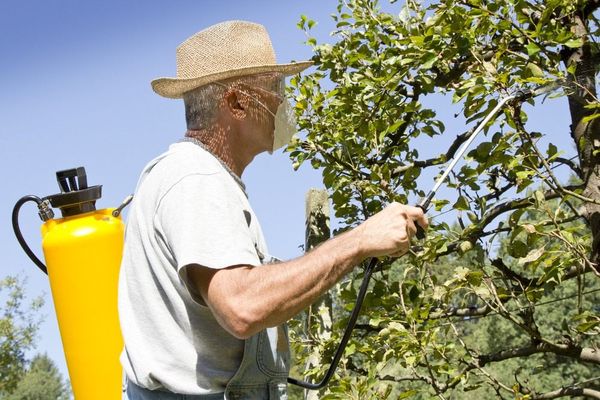
How can I protect my apple tree from diseases and pests? Immediately after flowering, I can repeat the treatments I performed in the second stage. Three weeks after flowering, I spray the trees. The following products can be used for this purpose:
- "Benzophosphate" is an insecticide with intestinal action. It destroys parasites that feed on the green parts of fruit trees.
- Karbofos is an insecticide that effectively combats weevils, spider mites, aphids, scale insects, codling moths, and leaf rollers. It can also kill bees, so it should be used with caution.
- Chlorophos solution is a systemic, broad-spectrum insecticide.
- "Kinmiks" is a complex product capable of destroying most pests.
Processing agents
Spring apple tree care involves treating them with products of varying types and modes of action. Therefore, when deciding what to spray on fruit trees, it's important to understand the differences between each product.
According to the method of action, drugs are divided into two large groups:
- Contact insecticides are lethal to insects upon direct contact. They are effective, but their duration of action is short-lived and easily washed away by rain. Contact insecticides include "Karbofos" and "Benzophosphate."
- Complex products penetrate deep into the wood tissue, destroying parasites and harmful insects, as well as their eggs and larvae. These products last for two weeks. An example of a complex product is "Kinmiks."
Biological
These products contain bacteria and viruses, or parts thereof, that have a detrimental effect on fruit tree parasites and fungal pathogens. Their effect is gradual, lasting for half a month. Apple trees are sprayed with biological products in the last months of spring, after the tree has finished blooming.
Chemicals
Chemicals are the most effective in controlling pests and fungal diseases, but they pose a risk to human health. Therefore, extreme caution is required and all instructions must be followed when using them.
"Kinmiks" is a systemic drug of chemical nature.
Combined
Combination products consist of chemical and biological components. Therefore, using these products, you protect your plant from both various pests and fungal diseases.
Precautionary measures
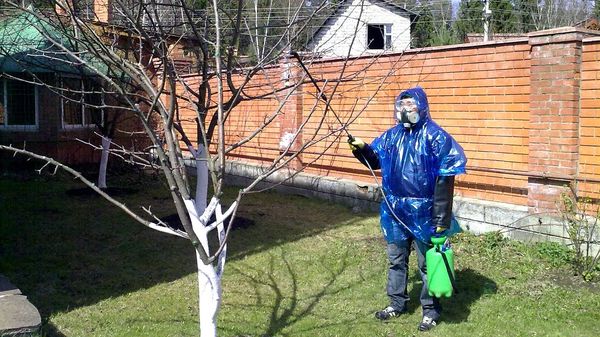
Treating apple trees in the spring against diseases and pests must be done according to certain rules. First, the correct ratio of ingredients when preparing solutions must be observed and the expiration dates of the solution must be observed. This is the only way to ensure healthy trees. Second, the solution for treating apple trees must be prepared just before use, not before. Third, regardless of the composition of the solution, the treatment must be carried out while wearing protective clothing. Under no circumstances should the treatment be applied to a blossoming apple tree, as this could result in a lost harvest.
Fruit Tree Processing Video
This video will teach you how to properly treat fruit trees for diseases and pests.