
Key characteristics of the Mutsu apple tree with exquisite flavor
Content
Description of the variety
This is a medium-sized tree, reaching a height of no more than three to four meters. It grows quite vigorously in southern regions, but in areas with cooler temperatures, its growth rate slows, though not noticeably. Young Mutzu apple trees have a rounded crown, but as the tree matures, it transforms into a broad or inverse pyramidal shape. The branches are not heavily leafed, and the skeletal branches are quite strong, extending upward at an acute angle (35–60 degrees) from the trunk. Furthermore, the lower branches may droop toward the ground due to the weight of the fruit.
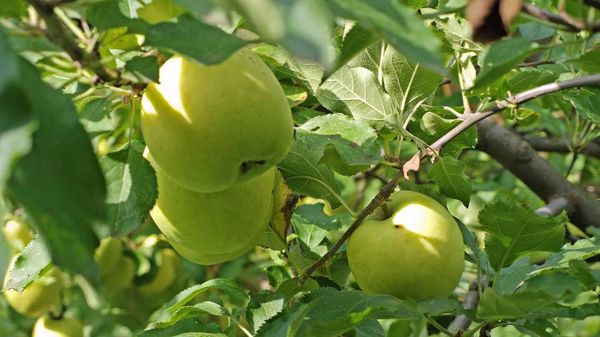
Because the center of the crown is often bare, the fruits are exposed to the beneficial influence of the sun, since nothing shades them from the light. Therefore, it is not surprising that Mutsu is characterized by early fruiting – the first harvest can be collected within 2–3 years after planting the tree (depending on the method and location of planting).
Leaves
The leaves of this plant are quite large, long, and narrow, ovoid in shape and a rich emerald color. The apple tree's leaves are not very pubescent—the fluff itself is visible mainly on the underside of the leaf. The surface, however, is noticeably shiny and smooth, especially noticeable in bright sunlight. In mature specimens, the leaves sometimes curl clockwise.
Flowers
This variety's flowers are medium-sized, distinguished by a distinctive saucer-shaped form and a beautiful, milky-white color. The plant's flowering season is expected to be quite late—in May. However, this undoubtedly has its advantages, as this timing allows the flowers to avoid being damaged by spring frosts. Furthermore, this species is characterized by partial sterility, so to ensure a good harvest, it's necessary to plant additional pollinator varieties to facilitate the process.
Apples
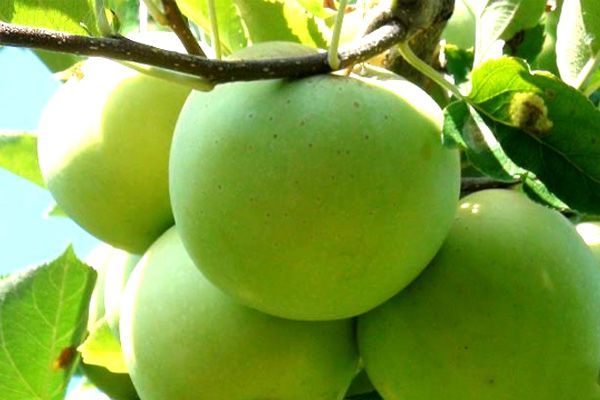
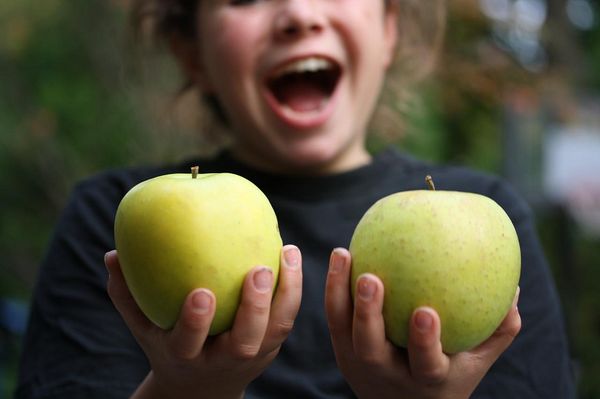
The fruits can be quite large – there are specimens weighing up to 300 grams, but their weight generally ranges from 100 to 250 grams, and depends on growing conditions and the presence of nutrients in the soil. The peduncle is not very wide, but quite long. The apples are round in shape and yellowish-green in color, sometimes with a slight pink tint (resembling a blush).
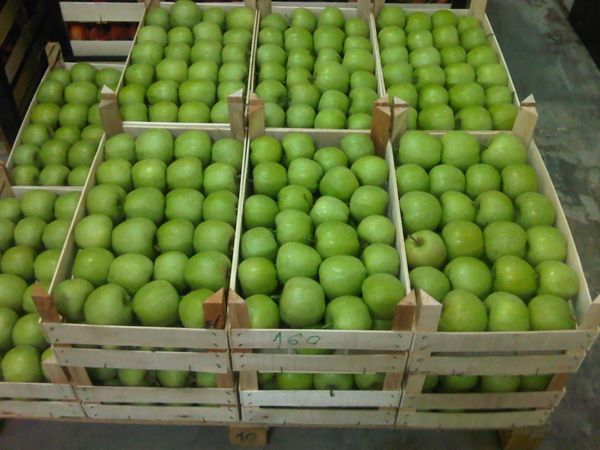
The fruits of this variety are juicy, with smooth, shiny skin. The taste is sweet and sour, and the aroma itself can even reveal hints of honey. It's worth noting that the special flavor qualities for which these fruits are prized develop several months after harvest. Therefore, if you want to fully enjoy the taste, avoid eating the apples immediately after harvest (usually in late October). It's also worth noting that transporting this variety is easy—the fruits retain their appearance and flavor perfectly.
Planting and care
Since this tree isn't particularly tolerant of low temperatures, it should be planted in level areas, avoiding any depressions, as these are where cold air tends to accumulate. The planting site should be chosen so that it is protected from cold winds. Additionally, it requires additional protection from rodent pests, such as special plastic netting.
The soil should be rich in nutrients and well-drained. However, it's important to consider that overwatering is detrimental to trees. Therefore, proximity to groundwater is undesirable. Chernozem soil is ideal for growing this species. In other soil types, comfortable growing conditions will need to be created. Improvement measures focus on additional enrichment of the soil with nutrients.
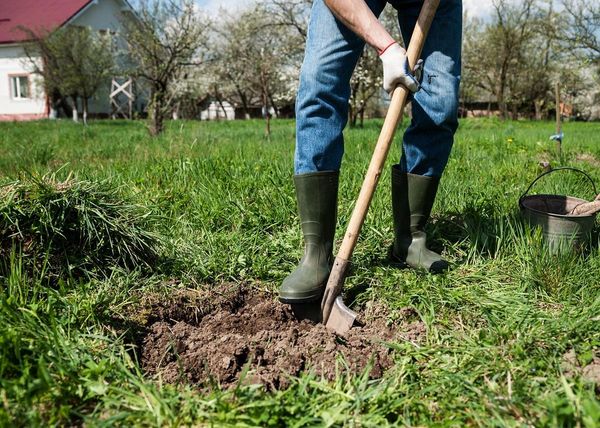
To ensure a bountiful harvest, an apple tree should be planted in a spacious, sunlit area. If it is left without adequate sunlight, the yield may be reduced by half. Furthermore, the distance between plants should be 3-4 meters to ensure optimal growing conditions. It is best to plant this tree in the spring. Frequent pruning is not necessary; it is sufficient to do this every 5-6 years, as the branches dry out.
It's important to note that you should only purchase seedlings from specialized nurseries that can provide all the necessary certificates to avoid accidentally purchasing a seedling of a different variety with similar characteristics.
To ensure the plant takes root and doesn't introduce any infections into your garden, you should purchase seedlings from a local grower, preferably one with good reviews, to ensure greater confidence in the quality of the product.
Advantages and disadvantages
This fruit, beloved in many parts of the world, has many advantages. Firstly, its distinctive flavor is what many connoisseurs love about it. Secondly, its considerable yield and early ripening allow the owner to obtain a significant quantity of fruit in a relatively short time. Thirdly, it keeps well during transportation, making it possible to sell the fruits of this variety and also store them for personal consumption for a long time.
However, along with its advantages, there are also disadvantages that must be dealt with when growing this tree. These include a relatively slow fruiting period. In some cases, the fruit skin can be excessively thick. It also has low tolerance to cold temperatures, requiring careful management of the necessary conditions for the trees. Furthermore, there is a high risk of pest infestation, such as codling moths, or fungal diseases (powdery mildew). In these cases, additional measures must be taken to address these issues.
But despite all this, the advantages of the Mutsu apple variety clearly outweigh all the disadvantages, and it is a welcome guest in the garden of many farmers.
Video "Mutsu Apples"
This video will introduce you to the popular Mutsu apple variety.