
Is it possible to graft an apple tree onto an apple tree and how to do it correctly?
Content
Is it possible to graft an apple tree onto an apple tree?
Fruit trees can and should be grafted. This procedure speeds up the growing process: to avoid growing a whole tree, simply graft a branch of the desired variety onto an older apple tree. This will eliminate the risk of rabbits, as wild varieties have a strong, disease- and pest-resistant root system, while the branches of new varieties will produce large, juicy fruit. Almost any variety can be grafted onto a tree that is not of the exact species (otherwise known as a "wilding").
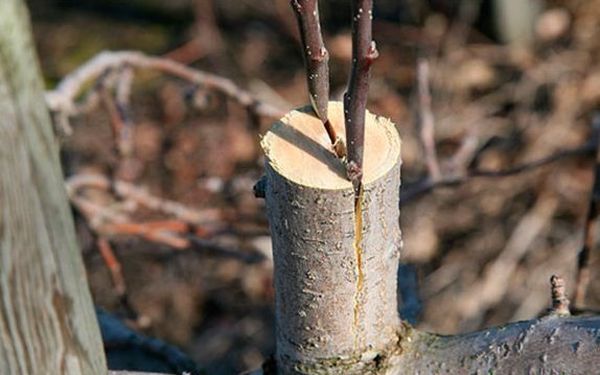
Many grafting methods have been developed to date. Their use will depend directly on your goal and the tree you have. For example, some particularly resourceful gardeners graft onto bark and even stumps.
In order for the plant to take root successfully, these manipulations must be carried out in a timely manner. In general, correct grafting of all types of apple trees is a whole science, the understanding of which will help you get a delicious harvest.
Vaccination timing
When is the best time to graft an apple tree? It's no wonder that grafting these trees is called "spring grafting." All procedures are best performed in the spring. The best time to graft is before the sap begins to flow through the tree's veins. Therefore, the best time to graft an apple tree in the spring is April.
The second question is: what time of day is the best time to graft an apple tree? It's best to do this early in the morning, when it's still possible to avoid direct sunlight. Another reason for early morning grafting is that the tree's sap will begin to flow abundantly after awakening, allowing the grafted scion to take root more quickly.
How to choose a variety
Unfortunately, some varieties may be vegetatively incompatible. Therefore, before understanding how to graft your tree, it's important to understand the available options.
It's worth noting that grafting is typically done between a wild berry and another variety. However, grafting can also be done on other members of the same family, such as rowan, cherry plum, pear, quince, or aronia. However, these grafts are short-lived and can cause various problems, including smaller fruits and sometimes losing their shape, aroma, and flavor.
However, these types of grafts can correct some of the tree's characteristics. For example, quince grafting produces a very fruitful plant, while rowan grafting produces small fruits. These experiments are aimed at saving space, so that another rose-colored tree doesn't have to be cut down to plant an apple tree.
When choosing a rootstock variety, focus on its flavor and growing conditions. Some varieties grow very poorly without rootstocks due to their weak root systems.
Methods of grafting
We've covered when grafting is appropriate. Now let's answer the question: what are the different methods for grafting different apple tree varieties?
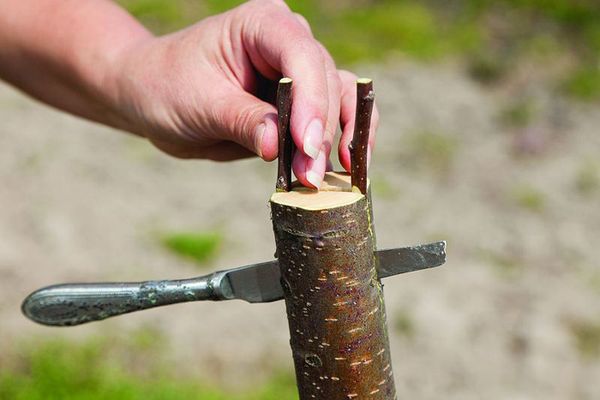
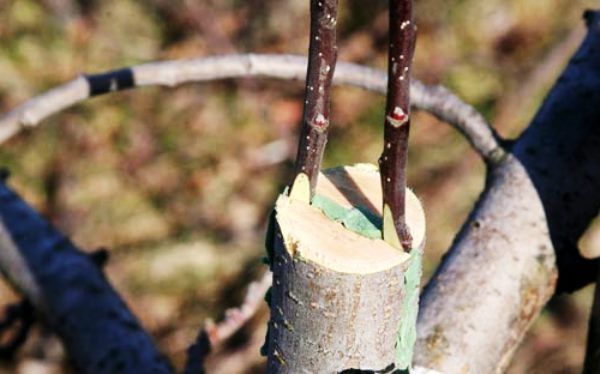
Cleft grafting involves cutting off a branch from the tree you want to graft onto. Make a longitudinal cut and insert the scion directly into the cleft. To secure the scion more securely, tie the graft site tightly with rope.
A half-split is a safer method. The split depth is only three centimeters. This method doesn't require significant trauma to the tree and can be used even on thin branches.
An angular cut is made by cutting off a young branch from the mother tree and making a small cut on the side. Try to match this shape on the petiole and press them tightly together, securing them securely. Over time, the lateral branch is pruned.
You can even pinch the cuttings under the bark onto a stump. Make longitudinal cuts in the bark, insert the cuttings, and secure everything with plastic wrap.
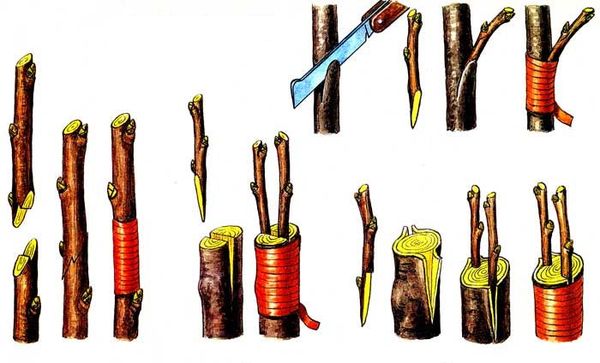
Budding is the process of grafting a tree using a bud. One method involves taking a bud cut with a piece of bark and placing it into a T-shaped notch in the wood.
Gardener's Tips
To ensure the most successful grafting, it is necessary to tightly connect the rootstock and scion, and then carefully remove the tool so that the slit closes.
To ensure faster vaccination, it is necessary to prepare the vaccination material at least a day in advance. It is recommended to store cuttings in a damp and cool place.
To maintain a healthy tree, ensure all manipulations are performed with clean hands and tools. Garden varnish can be used to secure the scion and rootstock.
Video: How to Graft an Apple Tree
This video will show you how to graft an apple tree yourself.