
Causes and treatment of apple tree moniliosis
Content
Description of the disease
Apple fruit rot, well known to experienced gardeners, is a fungal disease caused by an ascomycete fungus called Monilinia cinerea Honey. This disease is characterized by the conidial and sclerotial stages.
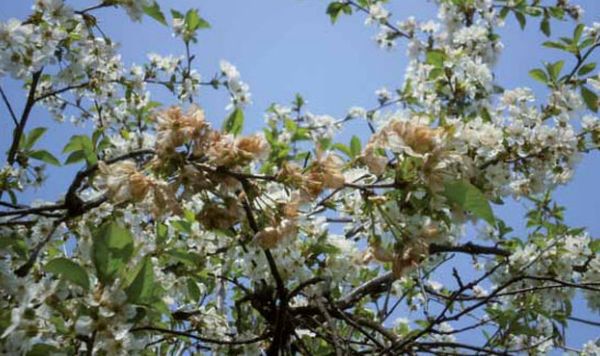
During the first stage, small gray lesions can be seen on all parts of the tree. In spring, signs appear on flowers, then on shoots. The second stage is the dormant stage. Several scientific articles describe two forms of moniliosis: apple rot, which develops throughout the fruiting period, and leaf scorch, also known as monilial blight, which affects leaves, branches, flowers, and ovaries. Fungal spores typically spend the winter on fruit that has fallen to the ground or remains on tree branches in the form of mycelium. With the onset of spring warmth, the disease worsens. The spores are spread by the wind.
A rainy summer with temperatures up to 20°C (68°F) is favorable for the disease's development. Other factors that contribute to infection include the flowering period, humidity over 70%, previous hail, windy weather, rain, snow, and fog, a winter with heavy snowfall, a long and cold spring, dirty harvesting containers, unsterile pruning or grafting tools, unsanitized storage areas for garden tools, and a petiole pit where moisture has accumulated. The entire fungal development cycle coincides with the apple tree fruiting period.
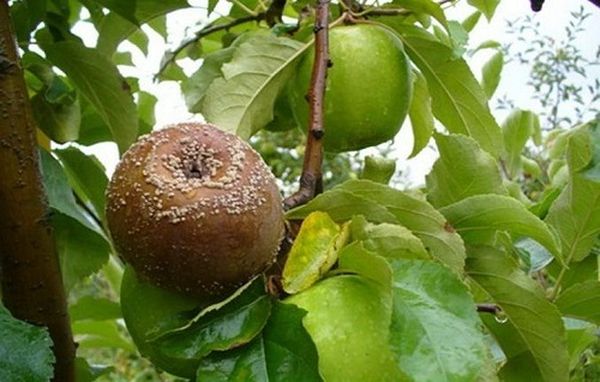
Those at risk of developing the disease include weakened crops, spoiled apples, those with wormholes and other damage on the surface.
Causes and symptoms
Apples most often rot due to actinomycete infestation. Other causes of moniliosis include damage to the bark surface, contact between infected fruit and healthy parts of the tree, damage to the apple surface after bites from codling moths and goose beetles, the presence of plant diseases, untimely removal of already infected branches and fruit, and a high susceptibility of a particular variety to infection. It usually takes up to five days from infection to the first signs of the disease. Sporulation begins 10 days later.
Symptoms of the disease include the presence of worm-eaten fruit and rot spreading from a small brown spot. Characteristic grayish hardenings can be seen on the surface. This is where conidia will form. The fruit turns brown or almost black. The inside becomes too soft. Symptoms of monilial blight include a brown or almost black discoloration of the flowers, which soon dry out. The same applies to foliage, ovaries, twigs, and fruiting branches.
What danger does it pose?
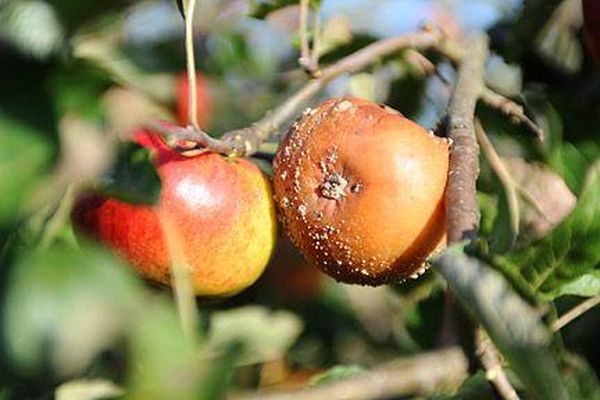
Regarding this disease, control must begin as quickly as possible. Otherwise, healthy apples planted near already infected ones will quickly become infected as well. As the fruit ripens, the number of those infected with moniliosis increases. If an infected apple remains on the branch, the virus quickly spreads along the stem to the branch itself.
Next, neighboring branches inevitably become infected, where the fungal infection can find a winter refuge. With the arrival of spring warmth, the infection penetrates the young ovary, causing an exacerbation of the disease. This is followed by the inevitable wilting and death of the emerging young branches. The greatest danger to the tree comes from infection of the bark of the branches, which can result in visible wounds and cracks from which gum oozes. In the most severe cases, the entire tree is affected.
Treatment methods
How to treat this disease? Control measures include treatment with chemicals such as "Hom." To use, dilute about 40 grams of the product in a 12-liter bucket of water. Treatment is carried out during foliage formation and after flowering.
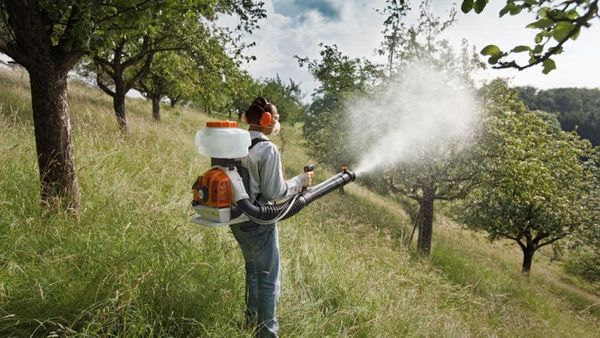
Fruit trees can also be treated using solutions of Bordeaux mixture, colloidal sulfur, and zineb suspension. These are usually diluted at a rate of 100 grams per 10 liters of water. There is also a ziram suspension, which is recommended to be diluted at a rate of 50 grams per 10 liters. Avoid spraying trees on a rainy day, as this can cause burns.
Treatment consists of treating crops after the flowering period. This is usually done twice, with a mandatory 12-day interval.
Prevention
For prevention, it is recommended to grow varieties with strong immunity to moniliosis, such as Saffron Pepin, Slavyanka, Golden Winter Parmen, and others. Other preventive measures that are effective throughout the fruiting period and beyond include timely harvesting, careful harvesting and storage to prevent damage to the fruit's surface, storing the harvest at temperatures around freezing, and promptly pruning branches with damaged apples, foliage, and other parts.
Also, don't forget to protect your trees from all kinds of damage. Experienced gardeners spray apple trees with fungicides and other modern treatments as a preventative measure, and also treat trees for infectious and other diseases, including insect repellents.
Video "Apple Tree Moniliosis"
This video will tell you what moniliosis is and how to treat it.