
Basic methods of combating bark beetles on apple trees
Content
Description of the pest
The adult beetle is a small insect, only up to 4 mm long, with a cylindrical body covered in hairs. Its base color is dark brown, while its legs and antennae are dark brown, and its entire body is covered with dotted stripes. In the spring, when apple and pear trees are about to finish blooming, these insects begin to emerge. They mate for several weeks, fly off in search of new homes, and lay numerous eggs under the tree bark.
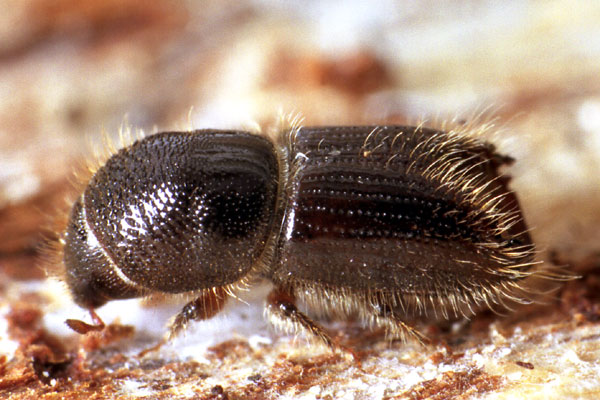
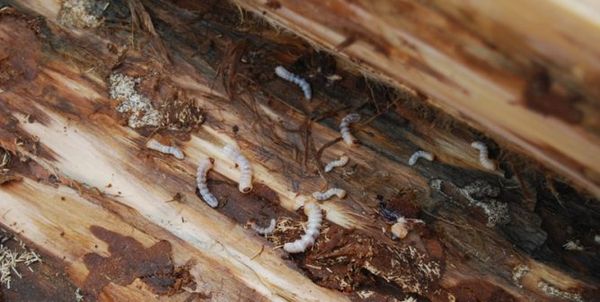
After some time, the eggs hatch into larvae—small white worms with no eyes or legs, but powerful jaws that they use to gnaw at the wood. Until the following spring, for almost a year, the larvae feed on the sap and soft tissue of the tree. In spring, the larva metamorphoses into a beetle and emerges to expand and spread the population.
This pest infests sick and weakened trees, those growing too close to each other, or those growing near a building wall. Its victims include not only apple and pear trees, but also cherry plum, sour cherry, plum, and sweet cherry trees. If even one tree in the garden is damaged by the bark beetle, then all the other trees are in great danger.
Signs and symptoms
Bark beetle control on an infested apple tree should begin immediately. It's important to notice the pest's presence, preferably as soon as possible. This can be indicated by a small amount of fine wood dust (shavings) that the beetles and larvae expel as they chew through the wood. The color of these shavings can be used to determine the extent of the infestation: if they are brown and rather dark, the damage is confined to the upper tissues beneath the bark. White wood dust indicates that the pest has chewed through the splint, indicating severe and deep damage to the tree trunk. Typically, the appearance of white sawdust is a sign of infestation; the tree should be destroyed as soon as possible.
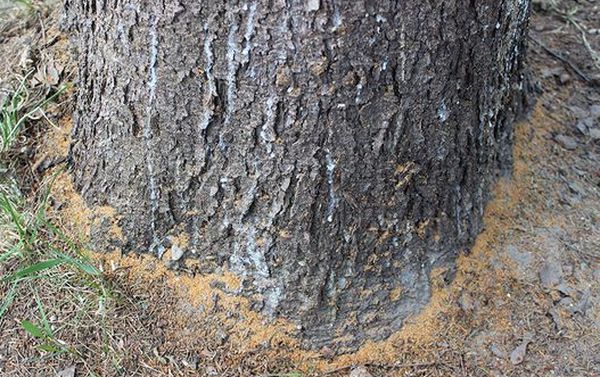
The appearance of a woodpecker in the garden should alert the owner and prompt a careful inspection of every tree; the bird is acutely aware of where its food is. Sudden stoppage of individual shoots, wilting of young branches, gum flow, and holes up to 2 mm in diameter—all these are signs of pest activity. The exit hole is a round hole in the bark, from which the females make tunnels in various directions, like sunbeams in a child's drawing. At the end of each tunnel, eggs are laid. A single female lays about a hundred eggs in the nest, which soon hatch into voracious larvae.
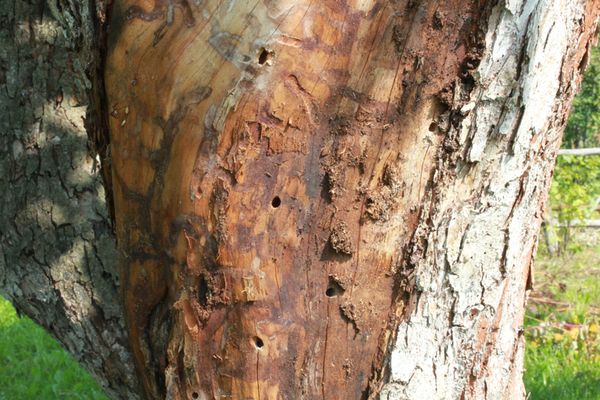
Peeling bark indicates the tree's death; there's no point in fighting for it anymore; it must be destroyed. However, we get rid of it along with a mass of bark beetle eggs and larvae, and this gives hope for saving other trees.
What danger does it pose?
The bark beetle and all its offspring spend almost their entire life inside the tree, with the exception of a short period of flight, making the pest difficult to detect in the early stages of infestation. This explains the enormous damage the apple bark beetle causes to the tree—it lives inside, burrowing countless passages, compromising the integrity of the tree and inflicting wounds. The larvae feed on the tree's sap and soft wood. All this insect activity literally kills the apple tree, first by simply disrupting metabolic processes and sap flow, and then by completely destroying it from the inside.
In addition, beetles infect the plant with fungal and infectious diseases, which further weakens the tree, leading to its death, and increases the risk of disease for other garden inhabitants.
Methods of control
Bark beetles need to be eliminated as quickly as possible, no matter what methods are used. If bark beetles have already appeared on an apple tree, a variety of control methods can be used, but first, it's important to confirm that the tree is indeed infested with bark beetles. After this, it's recommended to carefully inspect the trees to assess the damage as accurately as possible. If the bark peels off easily, shoots are not developing, all the thick branches are covered in holes oozing white wood flour, and intricate patterns of insect eggs are visible under the bark, the tree will have to be cut down and burned down to the last branch.
If the bark doesn't peel off when poked with a knife, and only a few holes are visible on the trunk, with dark brown dust pouring out, you can try sealing all the holes with specialized products. The entire apple tree should be treated with these same products several times at two-week intervals. All surrounding trees should also be sprayed with insecticides, even if no pests have yet been detected. Particular attention should be paid to weak trees, those that have recently recovered from an illness, or those that have been replanted. Usually they use "Chlorophos", "Karbofos", "Confidor", "Antizhuk", "Calypso".
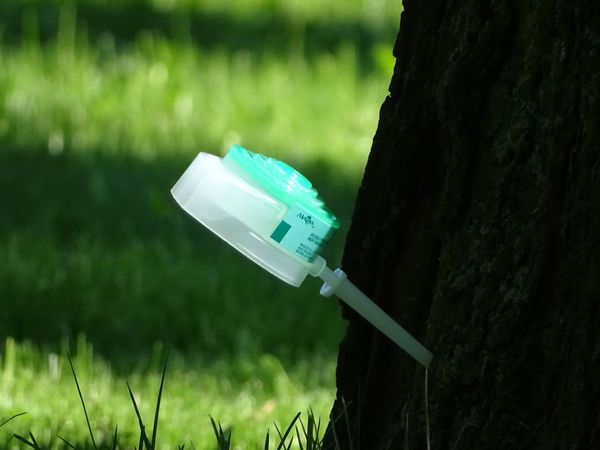
Freshly cut trees and branches are laid out during the beetle's flight period, then burned, reducing the pest population. For protection, the trunks are coated with a mixture of clay and humus or manure and slaked lime.
Prevention
Although beetles can fly considerable distances, they most often spread quickly within a small area. Keeping the garden clean and promptly removing plant debris and pruned branches will help prevent such a spread. Avoid leaving stumps, dead wood, fallen leaves, and cut or broken branches in the garden. Weeds should be removed and the soil under fruit trees should be regularly cultivated to prevent pests from establishing a home there.
Bark beetles unerringly target weakened trees, so strengthening the tree's immune system and fertilizing it regularly are very effective defenses against the pest. Any cuts, breaks, and wounds should be treated with garden pitch, and trunks and branches should be inspected frequently.
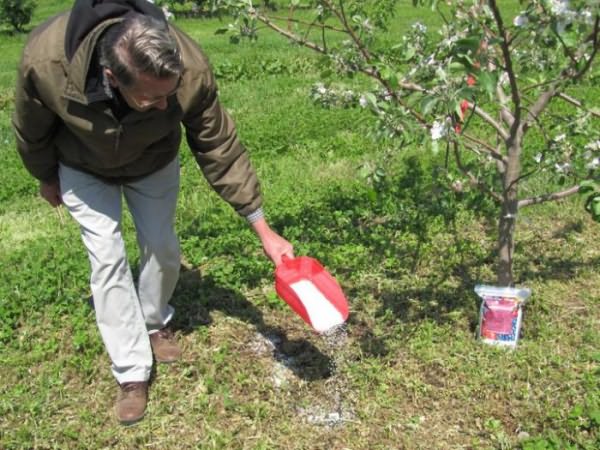
Experienced gardeners recommend treating fruit trees with insecticides prophylactically immediately after flowering, and again two weeks later – this will protect the plants during the beetle outbreak. Large private gardens require this treatment, but smaller private farms are usually reluctant to use chemicals. However, a solution of carbolic acid and soap is also an option; it's less harmful and provides protection.
Video "Bark beetle on an apple tree"
This video will show you how to identify the presence of bark beetles on an apple tree.