
Characteristics of the Melba dwarf apple tree
Content
Description of the variety
Dwarf apple trees grow up to 2 meters tall, with a rounded, slightly raised crown that develops with age, and for the first few years resemble columnar trees. The tree's height and fruiting time depend on the rootstock onto which the variety is grafted. For example, on a seed rootstock, Melba (or Malba) grows up to 4 meters, begins bearing fruit in the sixth year, and lives for up to 20 years, gradually decreasing in yield after the 10th year. A dwarf tree produces its first fruit at 4 years old and lives for no more than 15 years.
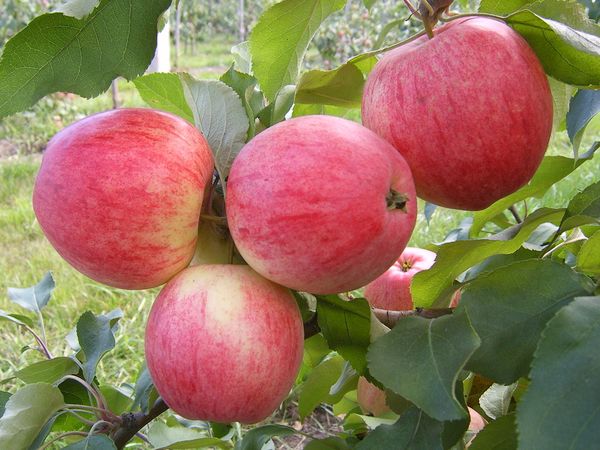
The trunk and branches of young trees are smooth with a reddish tint, and the shoots are slightly pubescent. With age, the bark acquires a brownish-orange hue. The leaves are elongated, dark green, glossy, and serrated, convex when young and concave with maturity. The flowers are large, white and pink, and have a very pleasant fragrance.
The fruits are medium-sized, weighing between 120 and 160 grams. Their base color is green, with a red striped blush covering almost half the apple, punctuated by small light spots. A waxy coating imparts a slight bluish tint. The apples are round, slightly widened at the base, and the skin is thin and delicate, yet quite strong.
Main characteristics
The variety description indicates early flowering, which, depending on the region, can occur from April to May. The fruits ripen in August, but if the summer was cold, full ripening may take until mid-September. Fruiting begins at four years, but the tree may begin to bloom in the second year. It's best to pluck the buds to allow the apple tree to develop enough strength to bear its first fruit. After six years, you can get 30 kg of fruit; a mature tree can yield up to 50 kg. After ten years, the harvest becomes irregular.
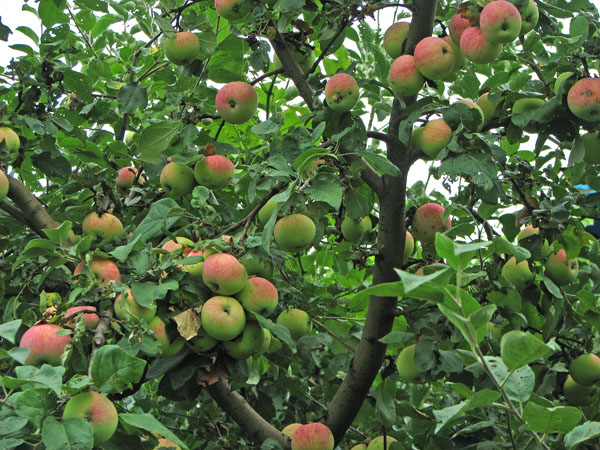
Along with excellent reviews, there are complaints about poor winter hardiness and lack of scab resistance. Scientists have created many varieties based on this cultivar, including the well-known Melba Red clone, or Melba Red apple tree, which boasts a bright blush across the entire apple and excellent resistance to fungal diseases. However, we will describe a dwarf tree of the main cultivar, the planting and care of which is of interest to many gardeners across the country.
Growing and care
The Melba variety, or more precisely the Melba apple tree, grows well in the south and central regions. It's not recommended for cultivation in the Urals, Siberia, and the Far East due to harsh winters, but gardeners have been known to obtain excellent harvests by carefully covering the tree for the winter. The seedling should be planted in a sunny location, but protected from northerly winds; this could be a slope with a deep water table. Melba doesn't like heavy or waterlogged soils. The soil should be light enough to allow water and air to penetrate, neutral or slightly alkaline. Plants should be planted at least 2 meters apart, with other pollinating varieties that bloom at the same time growing nearby.
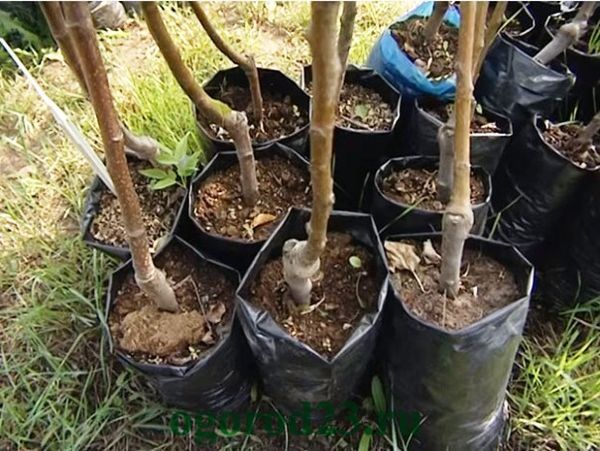
It's best to plant the plant in mid-September to allow it time to establish itself before frost. Dig a hole up to 1 m wide and 90 cm deep about two weeks before planting. Add plenty of fertilizer—rotted manure, compost, wood ash, superphosphate, potassium sulfate, and, if the soil is acidic, dolomite flour. Soak the seedling's roots (if exposed) in water the day before planting and, just before placing them in the hole, dip them in a clay-manure slurry. Create a drainage layer at the bottom of the hole, drive in a stake, then add soil and fertilizer, water, place the roots, cover, compact, and water thoroughly. After watering, the root collar should be 6–9 cm above ground level.
For the first 3-4 years, the crown is shaped by spring pruning. Subsequent care consists of watering, weeding, loosening the soil, and fertilizing.
After watering, the tree trunk area can be mulched. In the fall and spring, it's essential to dig and remove plant debris. Mineral and organic fertilizers are applied several times during the season.
Harvesting and storage
Tasty, healthy apples are harvested from August to September and can be stored for up to two weeks in the refrigerator. If slightly unripe (before the base color has turned yellow), they can be stored until January in cellars, layered in wooden crates. The layers are interleaved with sawdust, paper, or sand.
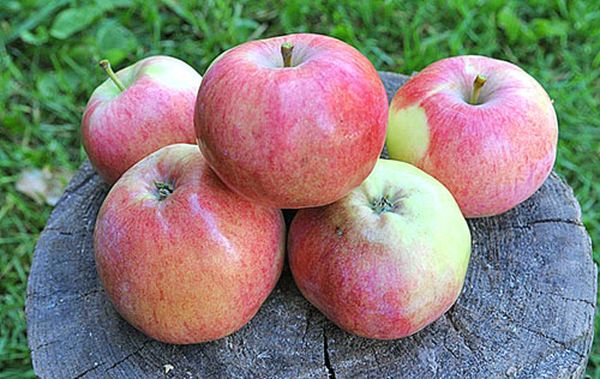
These sweet and sour apples with a wonderful caramel aroma are eaten fresh, cooked, and used to make juices and liqueurs. Their high sugar content (over 10%) and ascorbic acid (over 13 mg) give the crisp, fine-grained, white flesh a wonderful flavor.
Diseases and pests
Unfortunately, Melba is often attacked by pests and diseases. It suffers from scab, powdery mildew, cytosporosis, fruit rot, dieback, black canker, and other diseases. It can also be attacked by codling moths, leaf rollers, scale insects, flower beetles, and sawflies. Special treatments are required for prevention and treatment.
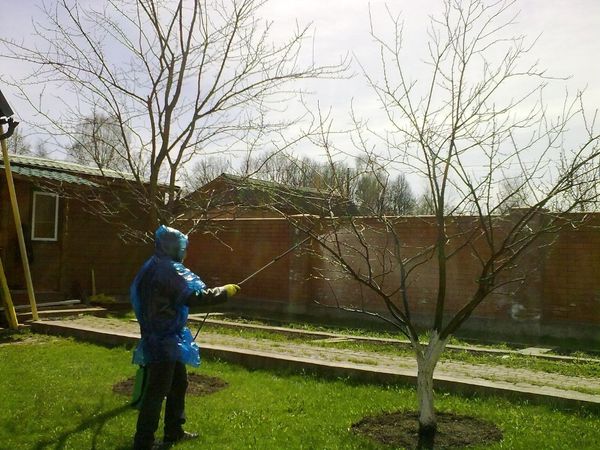
It is very important to remove plant debris around the tree, dig up the soil, and saturate it with water and fertilizer in a timely manner to increase its resistance.
Pros and cons
A fast-growing, compact tree with a good yield, producing healthy and attractive fruit that can be stored and transported without loss—this variety has many advantages. The wonderful flavor of these apples never gets old, and they are grown for homeowners and for sale wherever the climate permits. However, the disadvantages are also significant: poor frost resistance, susceptibility to scab and other diseases, the need to grow other varieties nearby as pollinators, and irregular harvests after a certain age.
Video«Melba apple tree»
In this video you will find interesting information about the Melba apple tree.