
Planting and caring for the columnar apple tree Malyukha
Content
History and description of the variety
Columnar apple varieties appeared approximately 50 years ago. They are believed to have originated in Canada. It all began when an amateur gardener discovered an unusual apple tree on his property, one that had no side branches and was simply a vertical column. Despite its unusual structure, the tree produced abundant fruit.
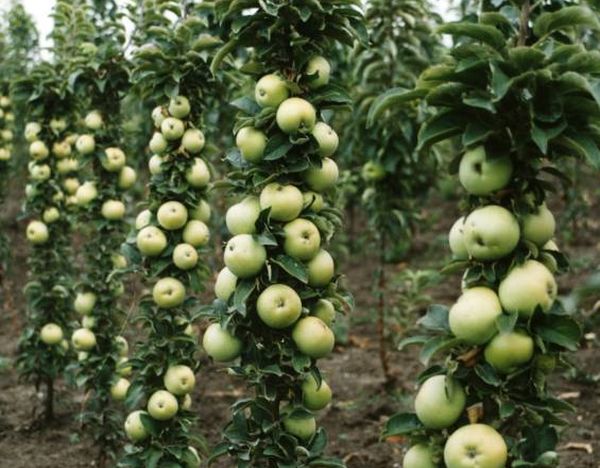
The breeder first developed the columnar apple tree, Vozhak. Subsequently, all other varieties were created, including Malukha. It is a dwarf tree created by crossing an ornamental and a fruit tree. The variety is suitable for cultivation in central Russia, as well as in the Urals.
The Malyukha apple tree variety has the following description:
- tree height – 1.8 m;
- fruits are evenly distributed along the column;
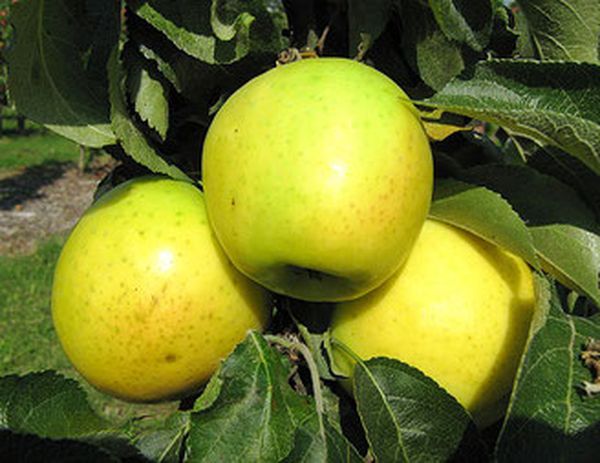
- The apples are yellow-green in color with a slight blush of light red.
The tree's appearance is neat and beautiful, as evidenced by numerous reviews from gardeners and landscape designers. Therefore, it is often used in decorative garden arrangements that include flowers and shrubs.
The fruits of this variety have the following description:
- medium size;
- weight of apples – no more than 250 g;
- The peel is strong but rather thin and has a waxy coating;
- The flesh is light-colored. It is juicy and has a sweet and sour taste;
- The fruits have a persistent aroma.
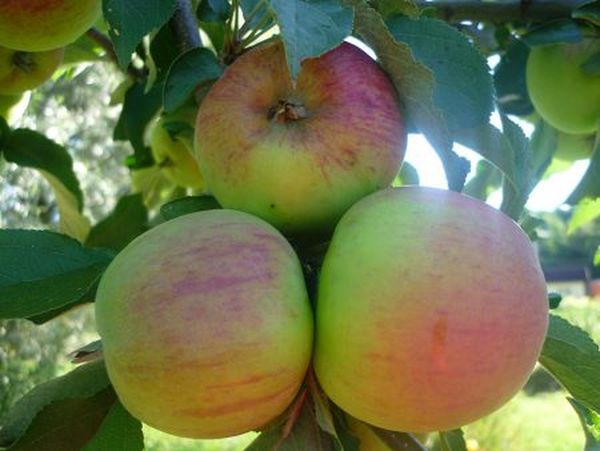
Apples ripen in September. Once picked, the fruits retain their marketable quality until January.
Main characteristics
The columnar apple tree of this variety has the following characteristics:
- late ripening period (early winter);
- consistently high yields;
- high resistance to various pathogens;
- excellent winter hardiness.
Malukha apple trees begin bearing fruit in the first or second year of planting (with proper and balanced care). On average, a single tree yields 5-6 kg of fruit. The apple tree reaches its full fruiting potential at five years of age. Starting at five years of age, a single tree can yield up to 14 kg of fruit. Because the apples are evenly distributed throughout the tree, they are very easy to harvest.
Landing
To plant Malyukha seedlings, you need to properly prepare the planting hole. This is usually done in the fall. The actual planting of the young trees takes place in the spring. This planting method has received numerous positive reviews.
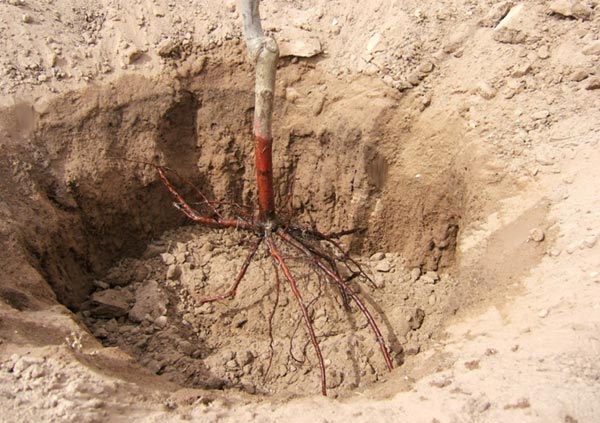
When digging planting holes, you should follow these recommendations:
- the depth of the hole is 50 cm. This depth is explained by the fact that the root system of the apple tree does not go deep enough into the ground;
- The hole width is 50 cm. However, this parameter varies depending on the size of the seedling's root system. Therefore, the planting hole width can reach 60 cm;
- The distance between two adjacent planting holes should be 1 m.
After the hole has been dug, a layer of sand and crushed stone is poured onto the bottom. The layer should be 25 cm thick. Next, the soil is mixed with humus (4 kg), superphosphate (80 g), and potassium sulfate (40 g). This is then mixed and poured into the bottom of the hole. This creates a mound in the hole. Next, plant the seedlings as follows:
- a support peg is driven into the earthen mound;
- Then, take a seedling and place it in a pre-prepared hole. One-year-old seedlings should be used for planting;
- its root system is straightening out;
- a young tree is tied to a peg;
- the hole is filled with fertile soil;
- Then the soil around the tree trunk is compacted. After this, the seedling is watered with two buckets of water.
It is worth noting that between the rows of seedlings of this variety it is quite possible to plant grain and other garden crops.
Care
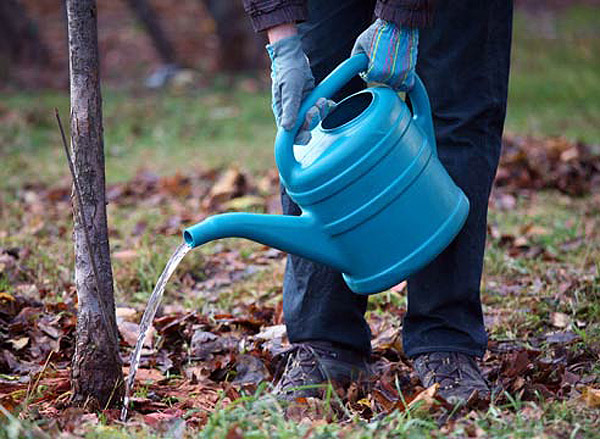
To ensure the Malukha columnar apple tree produces a delicious and abundant harvest, it requires proper care. Care for this variety should include the following:
- regular but moderate watering (especially during the first few years after planting);
- Periodic fertilization. It is best to apply fertilizers in dry form;
- preventive spraying of trees with insecticides and fungicides;
- For the winter, the apple tree trunk should be wrapped in a chain-link mesh to protect it from rodents.
If planting and care were carried out correctly, then the young apple tree will begin to bear fruit as early as next year.
Pros and cons
The Malyukha variety has gained its popularity and numerous positive reviews thanks to the following advantages:
- Compactness. Trees take up little space in the garden. As a result, a large number of apple trees can be accommodated in a small area. Moreover, due to the lack of branches, they do not interfere with the growth of other fruit crops;
- beautiful appearance;
- excellent presentation of apples;
- long storage period of fruits;
- good taste of apples;
- The trees don't grow to a very high height. This fact makes harvesting much easier;
- easy care;
- high cold resistance;
- Good immunity. Thanks to this, the apple tree is rarely attacked by pests and pathogenic microflora.
However, this variety also has its drawbacks. The most important drawback is its low fruit production. Moreover, the fruiting period is not particularly long. The apple tree produces a significantly smaller harvest after 5-8 years of cultivation. A second drawback of this variety is the high cost of seedlings. As we can see, the Malyukha Columnar apple tree is an excellent purchase for the garden, despite its relatively small harvest.
Video "Columnar Apple Tree"
In this video, you will hear useful tips on choosing columnar apple trees and how to care for them.