
How to make apple tree traps yourself
Content
Why are trapping belts needed?
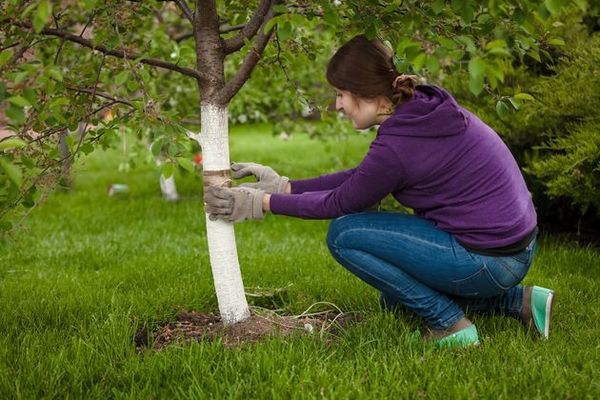
Experienced gardeners and summer residents know that making a trapping belt isn't difficult. All you need is scissors, glue, and the chosen material. And in about 15 minutes, the belt will be ready. It's a strip no more than 25 cm wide, made of polyethylene, rags, oakum, burlap, or any other dense material, depending on the design. The main thing is that it doesn't let light through. As any experienced gardener would say, "Once it's finished, I simply place the belt on the tree trunk about half a meter above the ground."
Homemade devices such as apple tree trapping belts offer an excellent mechanical means of protecting trees from insects such as apple and pear caterpillars, plum moths, gray and cherry weevils, apple blossom beetles, arthropods, barnacle beetles, and other pests. The belt will need to be removed periodically to remove any dead pests. If there are too many, the device should be burned and replaced with a new one.
Dry
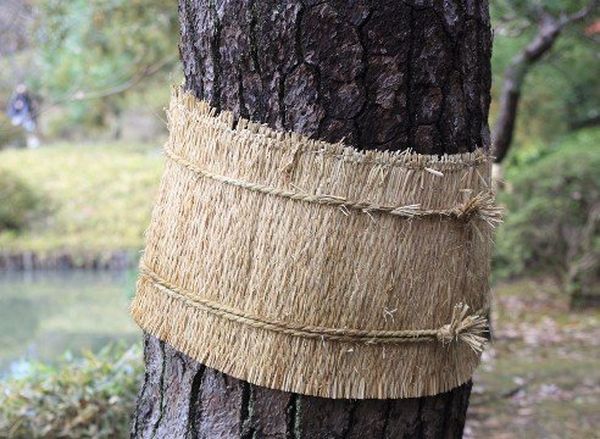
Dry belts are the most popular, valued for their environmental friendliness and ease of self-creation. This type of structure is usually made from matting, burlap, or corrugated paper. Before applying the finished strip, the trunk should be stripped of old bark and any cracks filled. The strip, at least 20 cm thick, is reinforced with twine, but be sure to leave free edges. Below, we'll explain in more detail what a dry strip looks like: a funnel, a collar, and a double-sided funnel.
Funnel
The design got its name not only for its similar appearance but also for its ability to draw pests into the very center of the device. To create the funnel, you'll need a thick sheet of paper or cardboard, which you wrap around the trunk in a circle. This creates a cone. There should be a gap between the bottom of the sheet and the trunk surface. The top of the paper should be flush with the bark. It's common to secure the paper with twine or rope. It's recommended to coat any areas through which insects can still enter with clay.
Gate
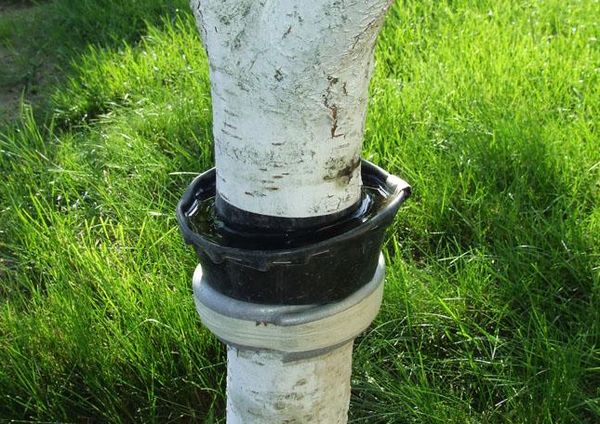
Another type of trapping belt is called a "collar." Cut a sheet of rubber about 4 mm thick. Wrap it around the apple tree to form a trap with curved edges. Secure the ends of this strip with special rubber cement. Fill the collar with sunflower oil. Experienced gardeners often add a decoction made from the leaves of the tree to which the trap is hung. You'll need to add oil periodically, remove any pests that get caught in the strip, and replace the collar with a larger one as the apple tree grows.
Double-sided funnel
In addition to the standard funnel, some DIYers create protective strips, commonly called double-sided funnels. Wrap the plant's trunk with a strip of thick paper or cardboard, about 30 cm wide. Attach this structure in the middle, leaving the top and bottom hanging freely. Don't forget to seal any areas where pests might enter with clay.
Poisonous
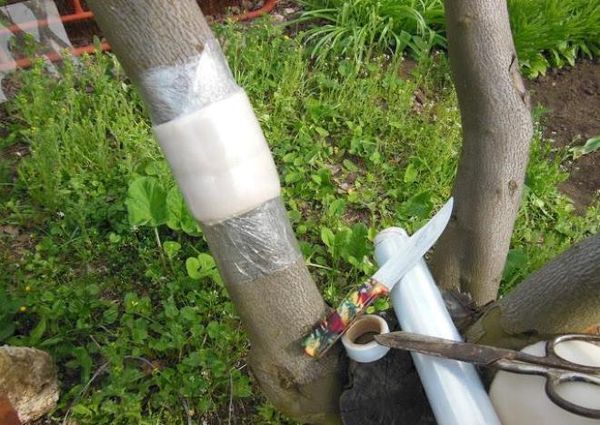
Poisonous, or self-killing, strips are not as popular as dry ones. Many gardeners, especially beginners, fear that ripe fruit may contain toxins due to the insecticide treatment. These concerns are unfounded, as the chemicals cannot reach the fruit from the lower part of the trunk, where the protective strip is attached.
A poisonous belt is made from burlap, thick paper, or other material. It should be coated with a modern insecticide whose instructions state that it is approved for use on fruit crops. The belt, no more than 25 cm wide, is placed on the trunk and secured at least 40 cm above the ground, leaving the edges free. To prevent the poison from evaporating, it is recommended to secure the top of the device with plastic film.
Sticky
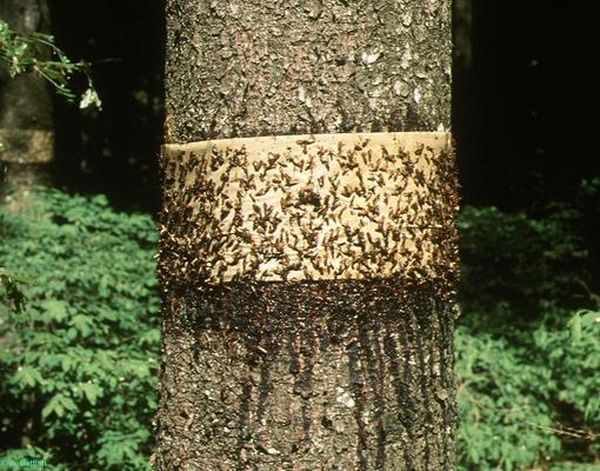
Sticky traps, also known as adhesive traps, are particularly effective against insects such as caterpillars, ants, and beetles, which tend to escape other types of traps. A prepared strip, typically up to 25 cm wide, is coated with resin or tar. A special adhesive is preferred, however. The trap is then securely fastened, making sure the sticky side is facing up. Sticky traps are commonly used both in conjunction with other types of traps and on their own.
Tips for use
The installation of the belt, regardless of the type, is best done between mid-March and the end of summer.
If the trap was set in August, don't remove it from the tree until October. Be sure to remove dead insects from the strip every few days. If you wait a week to catch more pests, you can replace the old belt with a new one. When creating any trap, it's recommended to wear gloves. If making a poison trap, be sure to protect your respiratory system with a bandage, mask, or respirator. For paper traps, it's best to cut corrugated cardboard across the grooves. For the adhesive belt, use green material. Fabric or paper of a different color can attract beneficial insects, which could lead to bees or bumblebees falling into the trap.
Video: DIY Apple Tree Trap Belts
This video will show you how to make a trapping belt for an apple tree with your own hands.