
Why do apple tree leaves curl and rust?
Content
Causes of the disease
In summer, when the trees are green and fruit is just beginning to set, an experienced gardener might notice rusty spots appearing on some leaves. As this inconspicuous disease progresses on an apple tree, or any other fruit tree, the leaves will turn black, and a yellowish coating will sometimes appear on the trunk. However, for the tree to reach this stage, the rusty spots on the leaf blades must be ignored for a considerable period of time.
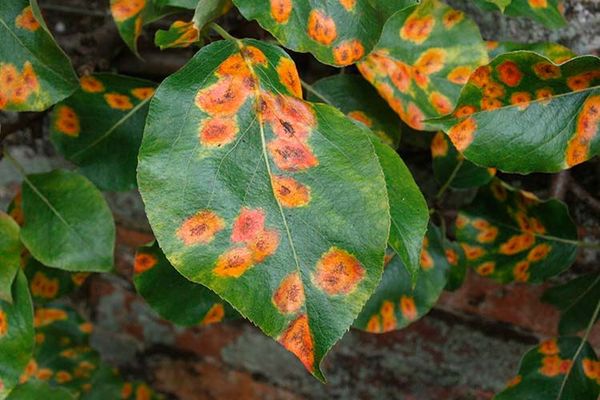
To answer the question of why apple tree leaves are turning yellow, it's worth consulting a phytopathology reference book. Yellowing leaves can be associated with a number of diseases, and sometimes even with a simple failure to meet all the tree's physiological needs. If the leaves of a domestic apple tree suddenly curl, lose their turgor, or acquire a yellowish tint, you likely have a problem with the tree's mineral nutrition. This problem can be treated without chemicals—feed the plant with fertilizer, water it regularly, and the symptoms will eventually subside and disappear altogether.
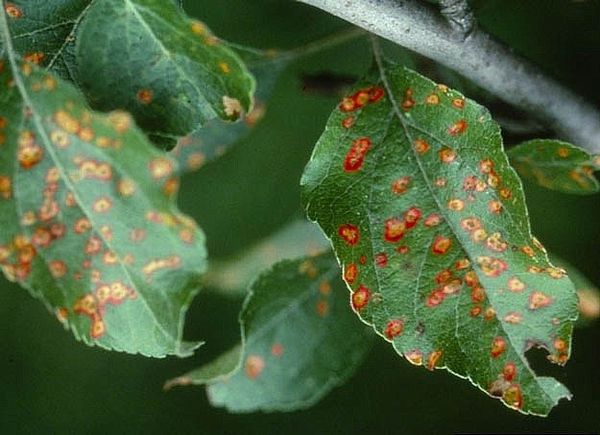
Signs of disease include spots on apple tree leaves and the drying of individual branches. Sometimes, you may see leaves turning black and fruit covered with brown spots. In these cases, you're dealing with a disease.
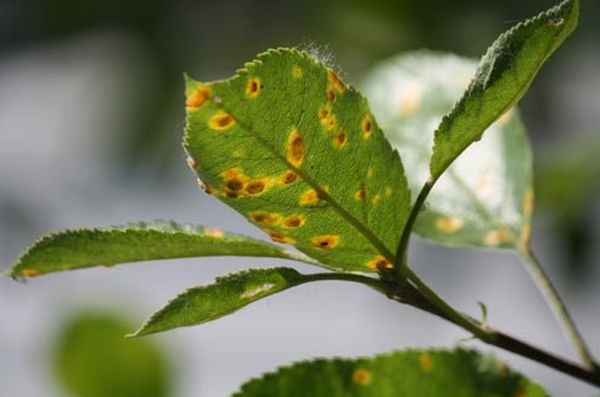
Apple rust is a very distinctive and easily recognizable disease. It is caused by fungi from the Puccinuaceae family. The disease primarily infects the leaves and can eventually spread to the trunk, shoots, and even the fruit. Apple rust has a number of distinctive symptoms, such as the appearance of rusty spots on the leaves, which eventually become necrotic. Sometimes the apple tree's leaves curl up, which is also a characteristic symptom.
Danger
The fungus develops en masse on leaf blades, siphoning off most of the tree's nutrients. As the sporulation surface area increases, it not only prevents the leaf from developing normally but also increases the surface area for liquid evaporation, leading to significant water loss. This causes the apple tree's leaves to curl. Furthermore, the fungus puts the tree into a mobilization state—affected plants are unable to grow normally, develop, or produce juicy, healthy fruit.
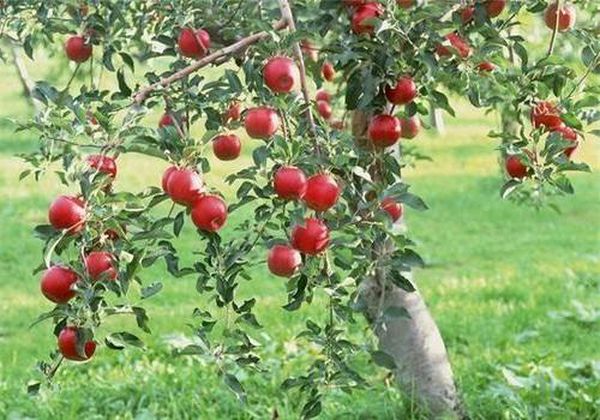
In fact, rust that appears on apple tree leaves is an uncommon disease for this plant. The entire group of rust fungi is characterized by a complex life cycle and the presence of multiple hosts and sporulation types. Since apple trees play an intermediate role in this cycle, treatment should focus not only on orchard hygiene but also on the fungus's intermediate host, juniper.
Treatment
How to treat rust and what should you treat your plant with? Treating leaf rust is a complex and painstaking process. To completely eliminate the disease, you need to implement a comprehensive treatment plan and measures to eliminate the pathogen in your apple orchard.
Agronomic practices for combating this disease include sparse tree planting to prevent pathogen spores from quickly infecting seedlings. Proper watering and fertilizing are also important. Trees overfed with nitrogen fertilizers are much more likely to become infected with rust. However, if outbreaks of the disease are detected, gardeners recommend using phosphorus and potassium fertilizers as a supportive treatment for the trees.
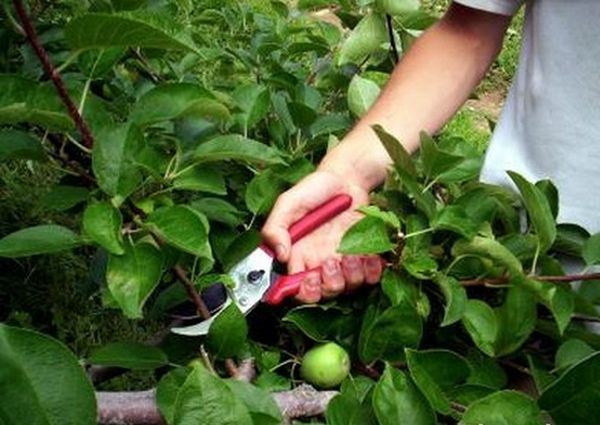
Don't forget about sanitary pruning of apple trees, which should be carried out at the beginning of spring and after harvesting.
If rust has already appeared in your garden—you see blackened or yellowed leaves—it's too late for preventative measures. In this case, treat the affected areas of the leaves and bark with copper or iron sulfate, then seal with a lubricant. If the infestation is severe, it's recommended to trim off the affected parts.
Disease prevention
In addition to the above measures, such as timely sanitation, low plant density, distance from junipers, proper mineral nutrition, and proper watering, treating trees with fungicides is recommended to combat leaf rust. The simplest, most well-known, and most readily available solution today is Bordeaux mixture. It consists of slaked lime and has proven highly effective against fungi of this family. Treatment is carried out in dry, cool weather. Among other options, the most popular and effective fungicides include Kuporoksat, Abiga-Peak, Champion, Strobi, Tsineba, and Vectra.
Sulfur-based products are also commonly used. To eliminate rust, dilute the product in the recommended proportions and spray regularly against this pest. This precaution will help keep your crop healthy and strong.
Video: "Rust on Fruit Tree Leaves"
This video will show you how to combat rust on fruit trees.