
Characteristics of the early winter apple tree variety Legenda
Content
Description of the variety
Thanks to its productive and aesthetic qualities, the Legend apple variety has proven itself in both commercial and private gardening. The trees are compact and short (approximately 3 m), making them suitable for growing in small spaces. The crown is dense and rounded, creating a neat, even decorative, appearance. The shoots are medium-sized, with short internodes, and the bark is gray and smooth.
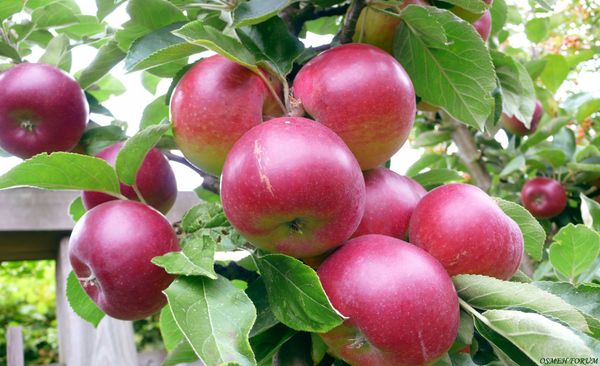
The fruits possess exceptional commercial qualities. They have a very striking appearance: virtually uniform in size, a smooth truncated-conical shape, and glossy, dark-red skin—these are the fruits that look most attractive on market and supermarket shelves. The apples are large (150–200 g), uniform in size, and have a green base color, though the red blush makes it almost invisible. The flesh is grainy, very juicy, and aromatic, with a wonderful dessert flavor reminiscent of caramel.
Main characteristics
Unlike its parent, Fuji, which failed to thrive in the Moscow region or anywhere in the central Russian region, the Legenda variety proved to be very winter-hardy and virtually disease-resistant. It equally tolerates frosty winters, damp, cool summers, and heat, provided it receives regular watering. This variety is late-ripening, with harvesting occurring in early October. The fruits have a good shelf life (5-6 months), have excellent commercial characteristics, are suitable for any preparations, but are best consumed fresh.
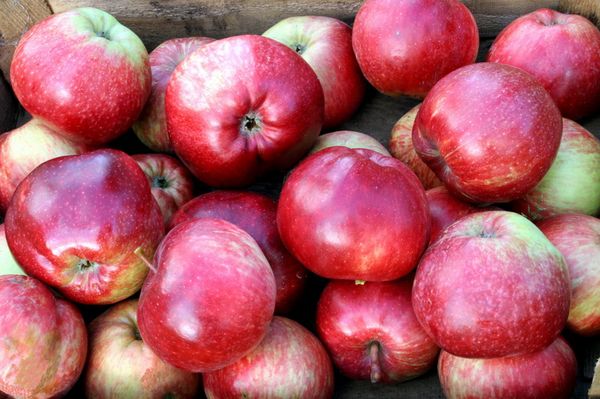
Another positive aspect of this variety is its not just high, but phenomenal yield. A mature tree can produce 100–120 kg of apples per season, which, considering its small size, is a significant amount. Legenda trees are early-bearing—they can bloom and set fruit in their second year, but reach their full productivity at 5–7 years of age.
Landing
The first thing to consider when planting is the quality of the seedlings. They should exhibit all the hallmarks of a healthy plant: well-branched, flexible roots, smooth, leafless shoots, and bark free of damage and abrasions. The planting location of an apple tree isn't critical, but it's important to know that a sunny location will yield higher yields and higher quality fruit.
Planting holes are prepared 2-3 weeks in advance. Fill the hole one-third full with fertilizer: humus or leaf compost (2 buckets), 300-400 g of superphosphate, and a handful of ash. The hole size should correspond to the size of the seedling's roots. When determining the depth, use the location of the root collar as a guide—after planting, it should be 5-7 cm above the surface.
Care
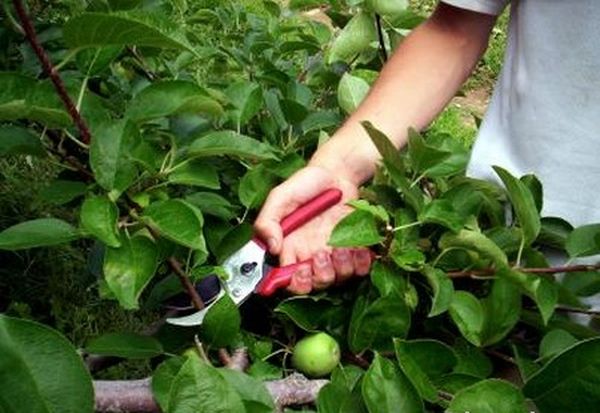
Legend apple trees are easy to grow and produce fruit even with minimal care. However, with extra attention from the gardener, the tree will reward you with a double harvest. This extra attention involves a number of standard care measures:
- keeping the tree trunk circle clean (regular removal of weeds and loosening of the soil);
- top dressing: nitrogen in spring, potassium-phosphorus mixture in autumn and mulching of the trunk area with humus;
- preventive treatment of branches and foliage with fungicides (Bordeaux mixture);
- pruning unproductive shoots;
- watering and sprinkling the crown - apple trees are very responsive to these procedures.
Since trees of this variety tend to be overloaded with fruit, it is recommended to remove some of the flowers by hand. The same applies to young 1-2-year-old seedlings—all flowers should be removed to allow the plant to strengthen and reach its full potential.
Diseases and pests
Legend apple trees are fairly resistant to disease and pest damage, but if they grow in an orchard near other apple trees, they are quite susceptible to infection. Fungal spores are easily carried by the wind, and insects won't miss the bright, plump, and delicious fruit.
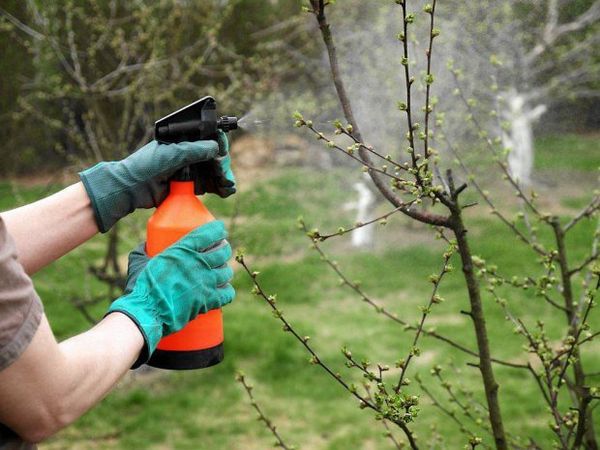
Codling moths are especially fond of these apples; without preventative measures, they can "devour" the entire harvest. Spraying with Fitoverm, Accord, and Alfacin during the growing season will help prevent pest infestations. The combined product Lepidocide helps get rid of codling moths; it should be applied to trees during periods of mass caterpillar hatching. During rainy summers, apple trees can become infected with scab.
If the rainy season is prolonged, trees should be sprayed with fungicides: Bordeaux mixture, Fitolavin, Nitrofen.
To ensure apple trees maintain their healthy appearance, it is necessary to pay attention to care and prevention:
- harvest crops on time and destroy plant residues;
- shape the crown, remove diseased branches;
- treat cuts, cracks and other damage.
Pros and cons
When considering the variety's positive and negative aspects, it was difficult to find any, as the hybrid's creation took into account all the shortcomings of the parent varieties. However, the apple trees have many advantages:
- excellent winter hardiness;
- resistance to diseases typical for apple trees;
- excellent presentation of fruits;
- excellent taste;
- undemanding in care;
- high adaptive capacity to climate.
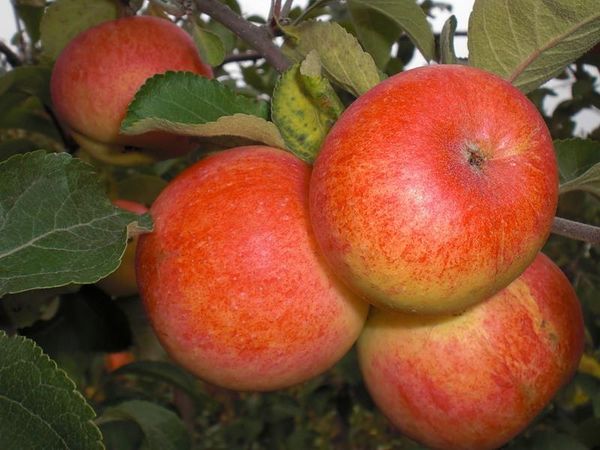
Legend is considered one of the best varieties developed in recent decades, as evidenced by reviews from modern gardeners. These compact apple trees are ideal for any garden: private, commercial, or intensive, and they can also become a true highlight of the property.
Video: "Autumn Apple Varieties Review"
In this video, you'll learn about different fall apple tree varieties and hear tips on caring for them.