
Signs and treatment of lichen on apple trees
Content
Description of the disease
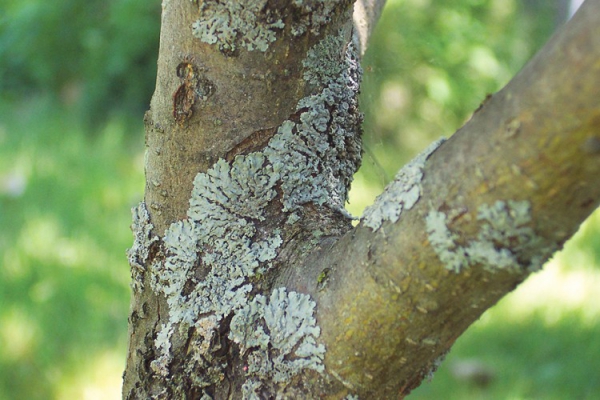
Lichens are scaly, plate-like, or bushy growths of varying shapes and colors. They are not considered plants, as they are a symbiotic relationship between fungi and microscopic algae, mutually benefiting each other. The fungus provides the algae with minerals and moisture, and the algae share sugars produced through photosynthesis. Lichens lack roots, so they cannot parasitize trees (feed on their sap), although there is a misconception that this is the case. The tree merely serves as a support, but the fungal spores can penetrate the upper layers of the bark, making the growths difficult to remove.
Lichens grow very slowly, so at the beginning of their appearance they do not cause harm to the tree. But over time, as they spread, they begin to cover the bark, disrupting metabolic and respiratory processes. As a result, the tree's growth slows, weakens, and becomes susceptible to disease. The bark growths provide an ideal breeding ground for fungal diseases and insects, which is another important reason why lichen on apple trees must be controlled.
Reasons for occurrence
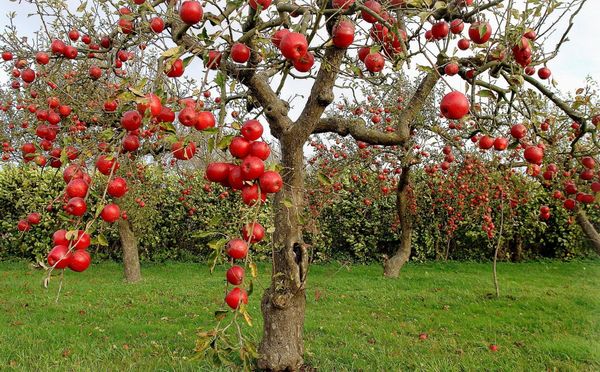
First of all, it's important to know that lichens only affect weakened trees, and the older the garden, the greater the likelihood of their appearance. Their presence in a garden indicates the trees' poor condition. But there's good news: lichens are a kind of indicator of the ecological health of the surrounding environment.
They can't survive in polluted air, so their presence in your garden is a sign that the site is in an environmentally safe location. There are only three main causes of lichen growth on apple trees: excessive soil moisture, insufficient sunlight, and increased soil acidity. These problems, in turn, can be caused by the following factors:
- flooding of roots due to rain or close proximity to groundwater;
- lack of timely preventive treatments;
- incorrect (dense) planting of trees - when in contact, plants quickly become infected from each other;
- mechanical damage, freezing or bark burns;
- high temperatures combined with high humidity (hot and rainy summer);
- too dense, poorly ventilated crown;
- winds that carry fungal spores.
As we can see, there are many reasons, but they all come down to weak immunity due to improper maintenance and care of the apple tree.
Signs of the disease
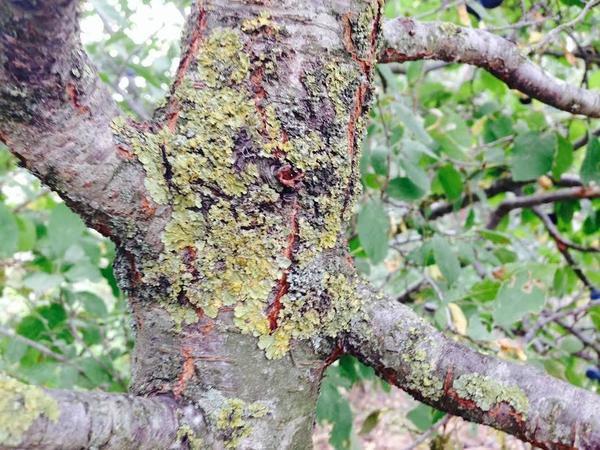
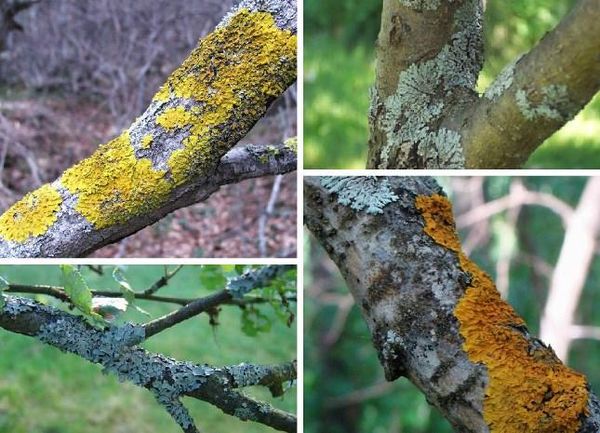
There are approximately 25 species of lichen found on trees, all of which have distinct external characteristics. New growths on the bark can appear as bushy, plate-like, crustose, or scaly growths, easily identified visually, but this is an advanced stage. This process begins with the colonization of simple, single-celled algae on the bark—green streaks that indicate excessive dampness in the garden. The algae first appear in the shaded parts of the tree, where humidity is higher and direct sunlight is absent.
Soon, this coating becomes dense, hardens, and develops a bumpy surface—turning into the true lichen we're accustomed to seeing on trees. Pathogenic fungi often attach to it, feeding on the tree's tissue, causing significant damage. Mold and a rusty coating indicate the presence of fungal growth. Without pathogenic growth, the lichen has a gray, brown, silvery, or bluish color. With extensive infestation, dehydrated (shrinking) areas are visible on the bark.
Treatment
There are three main ways to rid apple trees of lichen: mechanical removal, folk remedies, and commercial preparations. But before you begin, you need to clean up the trees: remove unproductive and heavily infested branches and clear away plant debris. Then, you can use one of the following methods:
- Remove the branches manually using a nylon or wooden scraper. Do this in the spring, when the bark contains more moisture and the growths are easier to remove. Then, treat the affected area with ferrous sulfate (3%) and then cover with a lime solution.
- Prepare a simple but effective solution from 2 kg of ash, 1 kg of salt, and 2 crushed bars of laundry soap. Mix all the ingredients, add 10 liters of water, bring to a boil, and cool. I use this mixture to treat the pre-cleaned bark of apple trees.
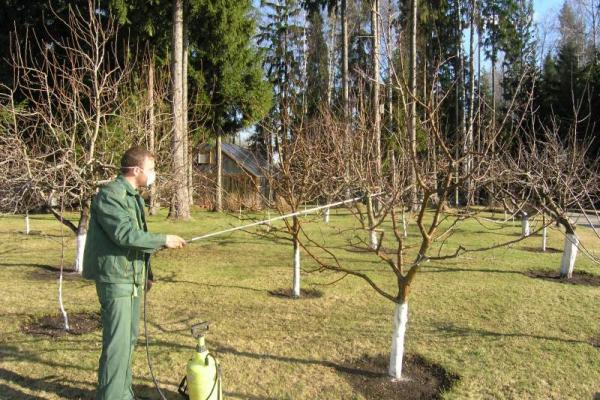
- What could be simpler than treating apple trees with fungicides? Ferrous sulfate (300–400 g/10 l of water) is the most effective lichen control method. Trees should be sprayed in early spring, while the buds are dormant. The lichen will dry out and fall off on its own within 7–10 days. Trees can also be treated with antifungal agents (Skor, Fitosporin).
Prevention
To prevent apple trees from becoming diseased, it's essential to constantly monitor their condition: perform sanitary and thinning pruning, always treat cuts and damaged bark, and apply fertilizers appropriately. But the most important preventative measure is whitewashing the trunks and main branches with lime (2–3 kg/10 l of water) with the addition of copper sulfate (100–120 g). Trees should be treated in the spring and before winter.
When fighting lichen, make sure that infected wood does not fall to the ground - to do this, lay film or other dense material under the apple tree.
Video "Lichens on Fruit Trees"
This video offers helpful tips for removing lichen from fruit trees.