
Description and care of the Red Early apple tree variety
Content
Description of the variety
The Krasnoe Ranneye apple variety was developed by a group of breeders at the Michurin All-Russian Research Institute of Fruit Crops by crossing the ancient Canadian Melba variety with the relatively frost-hardy domestic Vesna variety. The new hybrid inherited all the best qualities of its parents except frost resistance. For this reason, it never adapted to regions with harsh winters, but thrives in southern and temperate continental climates.
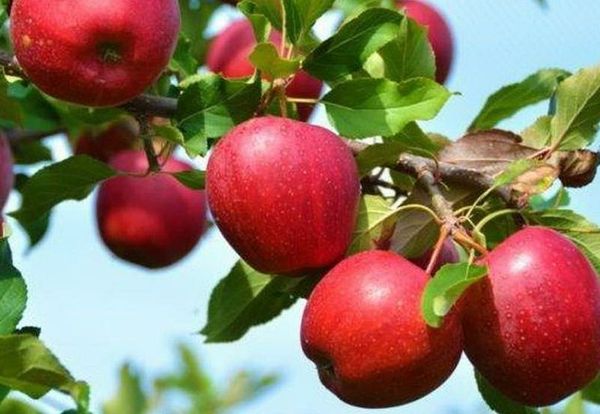
Trees of this variety are characterized by their moderate vigor and compact size. The crown is neat, medium-dense, and rounded, becoming more spreading with age but easily adjusted with formative pruning. The branches are arranged at a nearly right angle to the trunk. The bark is brown with a slight yellowish tint, and young shoots are pubescent. The leaves are medium-sized, on long petioles, without stipules. These apple trees bloom in early May; the flowers are medium-sized, white, and pinkish in the bud stage.
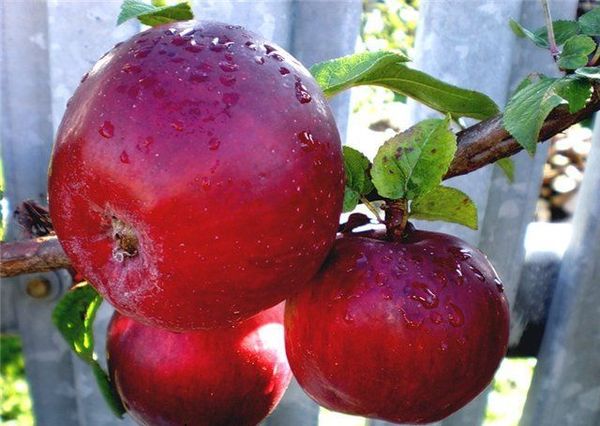
The fruits are not large in size (75–90 g), but have a very striking external description. They are round or truncated-conical, with a regular, even shape and a smooth surface. The skin is light yellow, but by the time they are ripe, it develops a dark red blush with a thick waxy coating, making them particularly attractive. The apple flesh is creamy, reddish beneath the skin, medium-firm, very juicy, and has a refreshing dessert flavor (sugar 10.7%, acidity only 0.58%).
Main characteristics
Krasnoe rannee is an early-ripening summer variety—the fruiting period begins in late July and lasts until mid-August. The apples ripen unevenly, and ripe fruits fall quickly, so it's recommended to pick them early from the tree—preferably let them sit for a week to fully develop their flavor and aroma. The fruit is primarily intended for fresh consumption, but freshly picked, they are ideal for making juice. They have a short shelf life—3–4 weeks in the refrigerator.
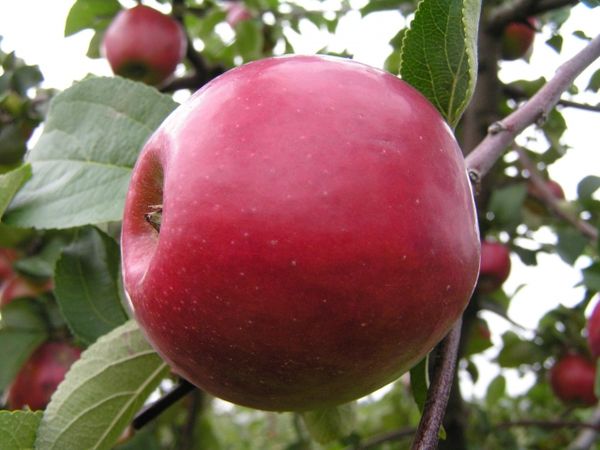
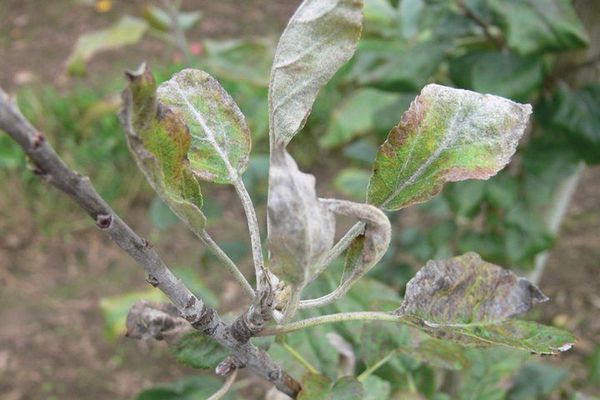
Red Early apple trees don't require pollination, begin bearing fruit early (in the 4th or 5th year), and are quite productive. The yield of one 7-year-old tree is approximately 27 kg. This isn't much, but considering the apple trees' small size and regular fruiting (without "resting"), it's quite impressive. The variety's winter hardiness is average—without shelter, the trees won't survive a frosty winter. Apple trees are often attacked by pests, and in humid conditions, they are susceptible to scab and powdery mildew.
Planting and care
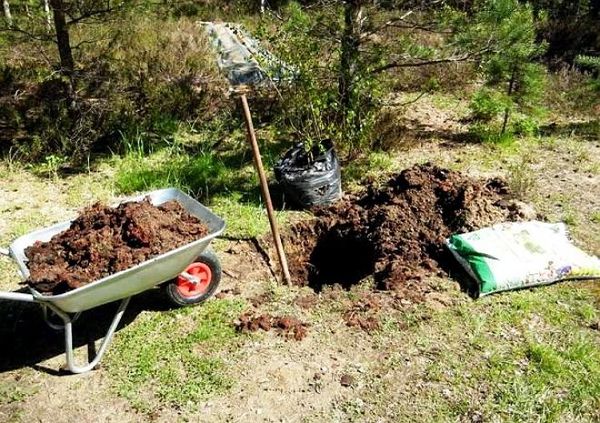
As mentioned earlier, apple trees don't tolerate severe frosts well, so they shouldn't be planted in regions with harsh climates. For planting, select a sunny, sunlit spot in the garden, preferably with loose, fertile soil. The root system of the seedlings is compact, so the planting holes are dug shallow, a layer of fertilizer is placed at the bottom, and the tree is then planted according to the standard scheme.
Apple trees don't require much care. In the spring, they need to be pruned and fed with a nitrogen mixture. During extreme heat, the trees require watering. Throughout the season, it is necessary to loosen and keep the tree trunk area clean, and in the fall, cover it with a thick layer of mulch to prevent the roots from freezing in the winter.
Pests and diseases
Red Early apple trees are prone to various diseases and are often the target of pests such as codling moths, apple leafhoppers, moths, leaf rollers, and aphids. To protect trees from these pests, preventative measures should be taken. The simplest and most accessible method of protection is spraying the trees with insecticides and copper-containing fungicides, such as Bordeaux mixture or copper sulfate. This treatment is carried out 2-3 times per season: always before bud break, then before flowering, and after harvest.
If apple trees do become diseased, treatment depends on the type of disease:
- The following preparations are effective against powdery mildew: “Hom”, “Skor”, “Fitoverm” (use according to the instructions);
- For scab, you can use Topaz or colloidal sulfur;
- In case of fruit rot, damaged fruits must be removed in a timely manner.
Fumigation of apple trees with tobacco dust helps get rid of leafhoppers, spraying the crown with chlorophos (0.7% solution) helps against apple moth, a solution of "Nitrofen" is effective against leaf rollers, and aphids on leaves can be eliminated with a folk remedy - tincture of tobacco or wormwood.
Pros and cons
The following qualities can be attributed to the advantages of the Red Early:
- compactness and decorativeness of apple trees;
- bright beautiful color of fruits;
- wonderful dessert taste;
- good resistance to heat and drought;
- early ripening (almost in the middle of summer).
The variety has no fewer disadvantages than advantages:
- small fruits that become even smaller when overloaded with crops;
- uneven ripening and shedding of apples;
- low yield;
- short shelf life of fruits;
- low winter hardiness;
- average resistance to diseases and pests.
Despite its many shortcomings, gardeners and consumers have been extremely positive about this variety. Many enjoy the refreshingly sweet flavor of the fruit, and while it's not suitable for commercial cultivation, it's a wonderful opportunity for small private farms to enjoy their first apples. Proper tree care will mitigate the variety's weaknesses, allowing them to enjoy a delicious and bountiful harvest.
Video: "Apple Tree Care Guidelines"
This video will teach you how to properly care for apple trees in your garden.