
Planting and caring for the Kovalenkovskoye apple tree
Content
Description of the variety
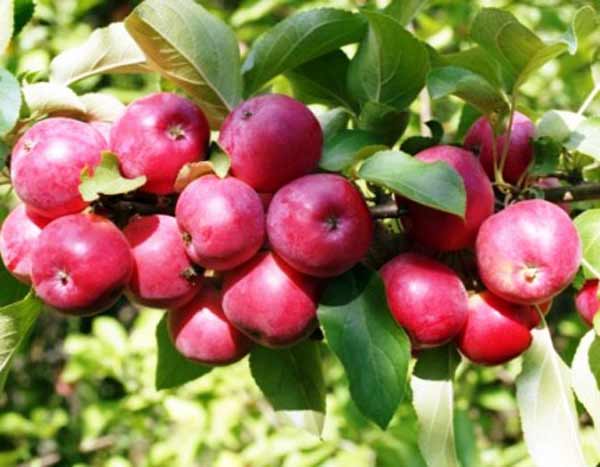
These apples are often called "Red Sweet," which accurately reflects their appearance and taste. The fruits are indeed covered with a bright red blush, spreading across the greenish-yellow skin. The intensity of the color depends on their location on the tree—in sunny spots and at the top, the apples develop a more intense blush. As for the taste, it is unusually sweet, without the slightest acidity, even in the aftertaste.
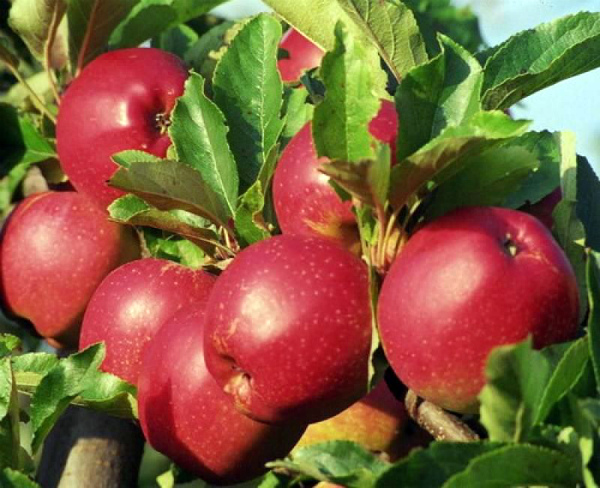
The fruits of this variety are quite large, ranging from 150 g (for the lower tiers) to 200 g (at the top). The shape is regular, round-conical. The skin is thin, covered with a bluish waxy coating when fully ripe. The flesh is juicy, medium-dense, fine-grained, containing 11% sugars and only 0.2% acids, which accounts for its delicious dessert flavor.
The Kovalenkovskoye apple tree is medium-sized, although it grows very quickly at first. The crown is dense, well-foliated, and attractively rounded. The shoots are vigorous, but somewhat crooked and irregular in shape. The bark is smooth and brown, dark red on young shoots. The leaves are elliptical, medium-sized, and dark green. The trees emerge early and bloom in early spring with large white flowers, gathered in clusters of 3-5.
Main characteristics
The Kovalenkovskoye apple variety is a late summer variety. In Belarus and Ukraine, the first fruits ripen in the second half of August, around Apple Savior. In the Moscow region, this period doesn't begin until the second ten days of September. Apples ripen unevenly, so harvesting occurs in stages. However, this doesn't affect the integrity of the harvest, as the fruits are firmly attached to the branches and don't fall off.
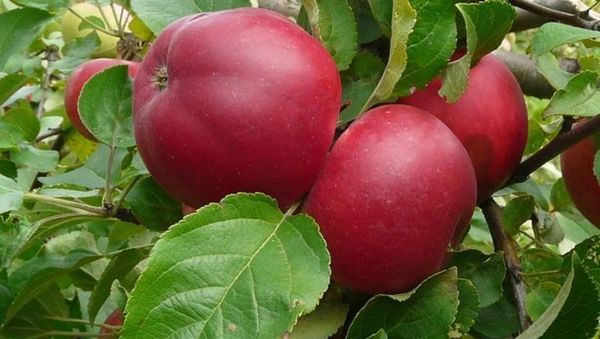
The apples fully develop their harmonious flavor two weeks after being picked from the tree. They have a short shelf life – 1–1.5 months in a cool place, or a maximum of 2 months in the refrigerator. Freshly picked, they have excellent marketability, transport well, and are suitable for all types of processing. Apple trees of this variety begin bearing fruit early – starting in the sixth or seventh year, yielding 30–60 kg per tree, but a good harvest can be achieved as early as the third or fourth year. Resistance to typical apple diseases is average. In humid conditions, apple trees can be susceptible to scab, so planting and orchard maintenance should take this into account.
Planting seedlings
Kovalenkovskoye apple trees prefer fertile, moisture-retentive soil with a neutral or slightly acidic pH. They thrive in loamy, sandy, organically enriched, or chernozem soils. The planting site is also important. It should be open, well-lit, free from northerly winds and drafts, and free from large trees and buildings nearby.
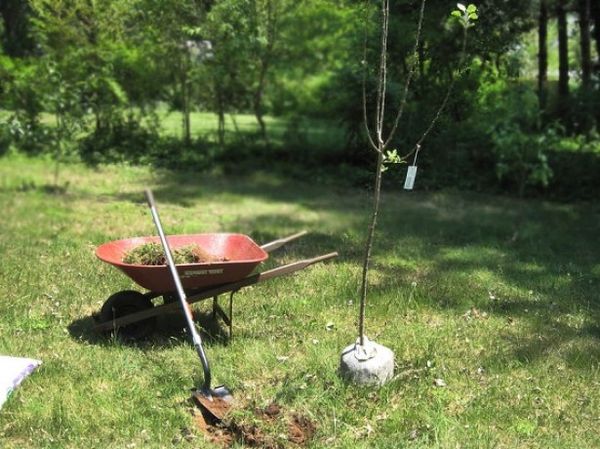
It is best to plant apple tree seedlings in the fall, approximately 1–1.5 months before the onset of cold weather (this period varies for each region).
Trees have a well-branched root system and root easily, but if frost interferes with this process, the plants may die. For this purpose, it is recommended to mulch the area around the tree trunk with humus or compost immediately after planting. Planting holes are dug to the size of the rhizome, approximately 70–80 cm wide and deep. A mineral-organic fertilizer consisting of compost or humus, potassium fertilizer, urea, and superphosphate is placed at the bottom. The holes are left in this condition for 5–7 days—this time is necessary for the fertilizers to react with the soil and with each other. Then, planting can proceed as usual.
Care
Proper care determines the tree's growth rate and fruiting time. While the seedlings are small, they require special attention: tie them to a support, remove weeds around the trunk, and water regularly until they take root. Fertilizing is not necessary during the first year after planting, but from the second year onward, young trees require additional feeding:
- in early spring with nitrogen fertilizer;
- in May – June, root feeding is applied (2 tablespoons of urea/10 liters of water);
- then, after a month, the crown is sprayed with an organic composition, for example, “Gumi”;
- In autumn, a phosphorus-potassium mixture is added to the tree trunk circle.
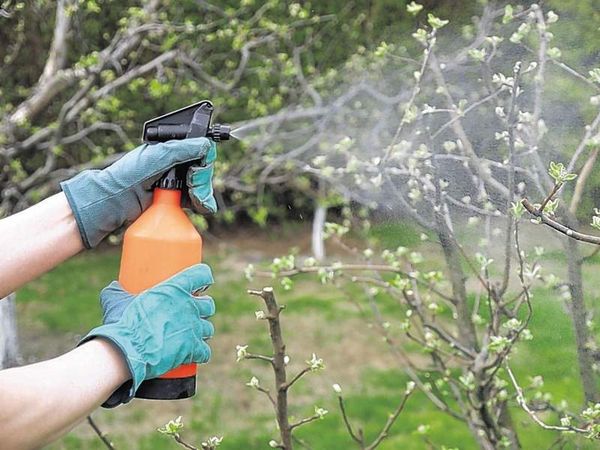
If a seedling blooms in the first year, all flowers should be removed to prevent the plant from wasting energy on fruit production. Flowering and fruiting are permitted in the second year. To prevent fungal diseases, apple trees should be treated with fungicides (Bordeaux mixture, Fitosporin) three times: before bud break, before flowering, and after fruit harvest. Since apple trees tend to become dense, regular spring pruning is essential.
Pros and cons
Reviewing reviews of Kovalenkovskoye apples, one can conclude that it is perhaps the most popular summer variety. Besides its impeccable dessert flavor, it has a host of other advantages that have not gone unnoticed by gardeners and ordinary consumers:
- attractive presentation of fruits;
- excellent winter hardiness;
- good resistance to diseases;
- early and regular fruiting;
- good yield;
- strong attachment of apples to branches.
It does have some disadvantages, such as a tendency for the crown to become dense, a relatively long ripening period, and a short storage period for the fruits, but this drawback is common to all summer varieties.
Video "Kovalenkovskoye Apple Tree"
In this video, you will hear the characteristics of the Kovalenkovskoye apple tree variety.