
A review of columnar apple varieties for the Urals
Content
Features of cultivation
The Central Urals are characterized by less than fertile soils, harsh winters, and frequent periods of summer drought, which, of course, hinders the growth of luxurious apple trees with a bountiful harvest. Even the wild apple and pear varieties common to southerners don't grow in the Urals. The situation began to improve with the establishment of the Sverdlovsk Selection Station. This enterprise developed and localized many varieties that now successfully bear fruit in the challenging conditions of the Urals region.
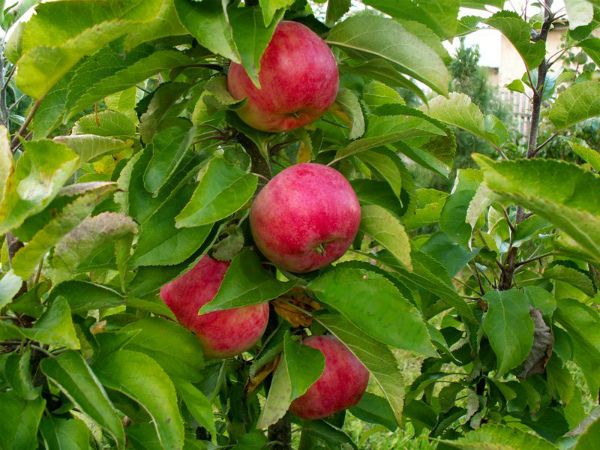
An apple variety developed for the Urals can be safely planted in the Volgograd region; it will thrive throughout the central region and the Non-Black Earth Region. Unfortunately, the opposite isn't true: a columnar apple tree that thrives near Moscow will likely freeze to death near Yekaterinburg or Perm.
But there are reviews from gardeners who grow these apple trees, which require very little space. It turns out that columnar apple trees can grow in the harsh conditions of the Urals. You just need to choose among the most winter-hardy varieties, plant them in the spring when the seedlings are no longer susceptible to frost damage, and then reap a good harvest by protecting the tree from the cold each winter. How can I find frost-hardy columnar apple trees for the Urals? I recommend choosing the most robust and resilient varieties, capable of withstanding temperatures as low as -50 degrees Celsius.
Malyukha
This apple tree grows up to 180 cm tall and prefers fertile, well-drained soil and plenty of light. In the second year after planting, it can yield up to 3 kg of apples, and after five years, it produces 10–12 kg of apples annually.
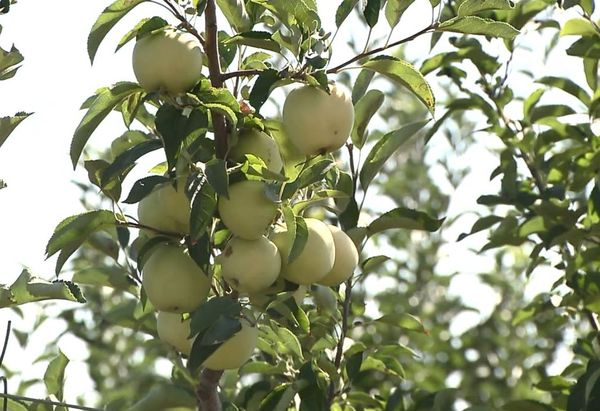
The apples are round, slightly elongated, green, sometimes with a subtle blush. They grow up to 120 g and ripen before harvest in September. They have a sweet and sour taste, store well until spring, and become sweeter with age. They are used to make delicious juices, jams, and preserves.
Malukha tolerates temperate winters well, although the trees are often covered for the winter, protecting them from hares rather than frost. The variety is resistant to most diseases and pests. Trees require no pruning; they are fed and watered in summer and respond well to organic fertilizers. To protect the roots from the cold, mulch the area around the trunk with a thick layer of peat, humus, or hay.
Vasyugan
This variety tolerates frosts down to -42°C (-42°F) without loss. The trees grow to a height of 3 meters, forming a dense crown covered with apples. Fruiting begins in the first year, but the ovaries are usually removed to allow the tree to grow. In the second year, 5-6 apples can be harvested—the so-called test crop. At four years old, each tree produces at least 6 kg of beautiful, large apples. August and September are the harvest time for the red-green fruits, weighing from 100 to 200 g. The apples are juicy, sweet and sour, with a creamy, fine-grained flesh. They are delicious fresh, cooked, and dried; after processing, they retain their pleasant aroma, but they do not keep for more than one month.
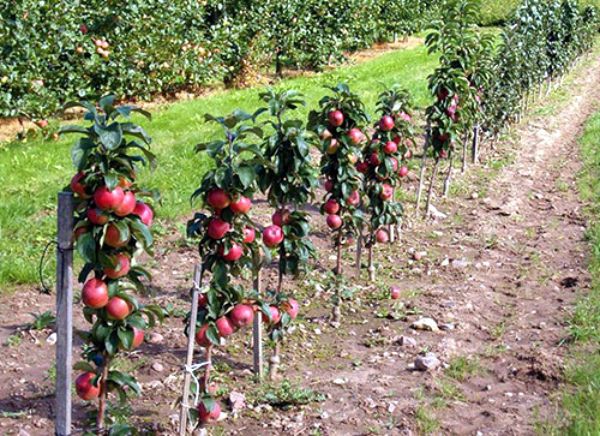
The Vasyugan variety produces a consistent yield for 14–16 years, after which the yield declines sharply. Therefore, young trees are planted in orchards every 10 years to ensure replacement without loss of yield.
Trees need to be fed, watered, protected from pests and diseases, and sometimes pruned to have a good harvest.
President
This variety is zoned for the Moscow, Samara, and Perm regions and is highly frost-resistant. Trees grow to over two meters tall, densely covered with dark green leaves and large apples weighing 150 to 250 grams each.
Like almost all columnar apple varieties, the President begins bearing fruit early, yielding 5 to 8 kg by the fifth year. With careful care, a tree can yield up to 16 kg. The harvest may not be uniform each year, but it is regular.
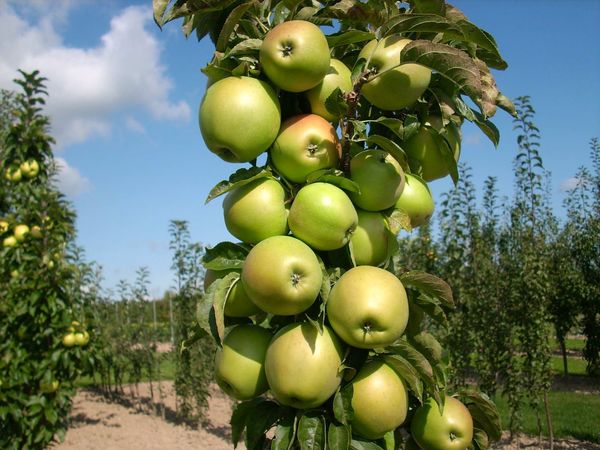
These yellowish apples with a purple-red blush have a round, slightly flattened shape, a thin, firm skin, and fine-grained, light-colored flesh. They are a dessert-like fruit, juicy, aromatic, and sweet and sour. Harvestable ripeness occurs in late August to early September, and consumption ripeness, with an intensified aroma and sweetness, occurs after six weeks. Under appropriate conditions, the harvest can be stored until spring.
Dialogue
Dialog apples are distinctive in appearance – they are yellow, somewhat flat, and not particularly impressive in size, weighing between 70 and 100 grams. They are, however, very tasty, juicy, and aromatic. Unfortunately, their shelf life is limited to one month, so they are best eaten fresh (to maximize their benefits) or processed.
The tree is medium-sized, tolerates winter frosts well, prefers fertile soil, and responds well to fertilization with humus or compost. Care is the same as for other columnar apple trees.
Amber necklace
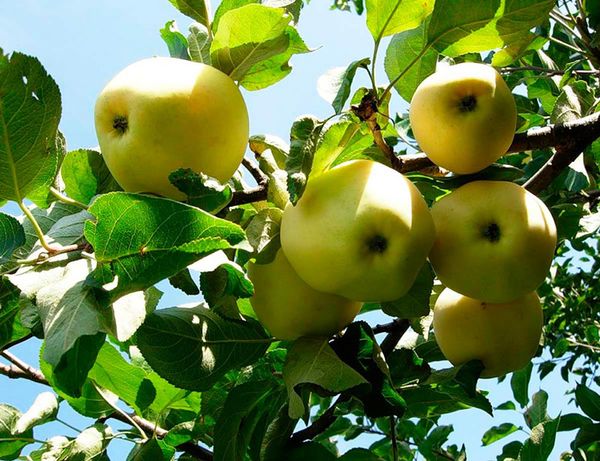
Apples of this variety truly live up to their name: yellowish-green with a delicate blush at the stem or on the side, they become increasingly amber-like as they ripen. For up to 15 years, they can produce a large annual harvest, weighing up to 18 or even 20 kg.
Juicy, delicious apples are harvested in September, and after six weeks, they become even more delicious and can be stored until late spring. Their thick skin allows them to store well and be easily transported. The average weight fluctuates between 140 and 180 grams; if the number of ovaries is reduced, the weight of each apple increases significantly, resulting in record-breaking apples weighing up to 300 grams. This variety grows well in the Urals.
Iksha
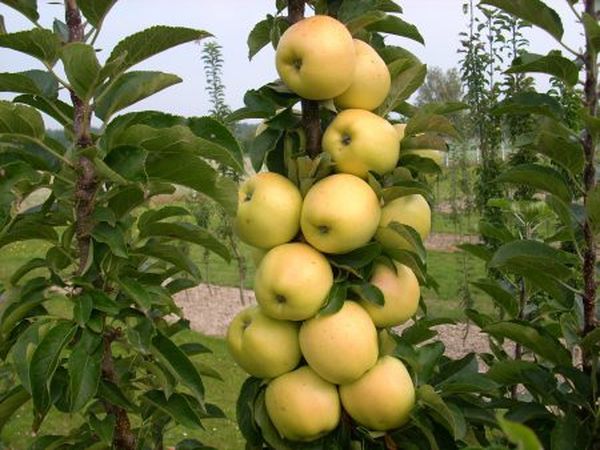
This variety tolerates temperatures as low as -42°C, making it suitable for cultivation in the Urals. It is resistant to many common apple tree diseases and is pest-resistant. The fruits ripen by early September and store for a month and a half. The medium-sized, flat-round apples are yellowish-orange in color with a red striped blush. They have a very pleasant aroma and a sweet-tart flavor with light, juicy flesh.
Apple trees begin to bear fruit early, consistently produce a good harvest for about 15 years, and require watering and fertilizing, like most columnar apple trees.
Video "Apple Varieties for the Urals"
This video will tell you which apple varieties thrive in the Urals.