
How to properly plan and plant a garden on your property
Content
What to consider

Before planting a garden on your property, you need to carefully weigh and analyze the following factors:
- The area you have available for a garden. Remember that each tree with a lush crown requires at least 4 square meters of soil;
- Site topography. It is advisable to plant an orchard on a flat site or on a gentle slope;
- The climate conditions in your area. The severity of winters and the length of summers will determine the choice of garden crops;
- Soil composition. The soil should be fertile and light. Fruit trees grow poorly on rocky, clayey soils, or where groundwater is close to the surface;
- accessibility of the site for the gardener. Don't forget that you will need to regularly care for your plants: prune, fertilize, and loosen the soil.
Video: "Rules for Planning a Garden Plot"
In this video, an expert will explain how to properly plan a garden plot.
Planning stages
A well-planned orchard will not only produce fruit regularly, but also be cozy, beautiful, and convenient for the gardener, making tree maintenance effortless. However, to achieve this, it's important to follow the garden planning steps in a specific sequence.
Selecting a site
It's common knowledge that most fruit crops prefer sunny locations. Therefore, the garden plot should be positioned so that heat-loving plants are located on the south (or at least southwest) side.
If you have a very limited area, you will have to plant the plants in stages: low-growing crops will grow to the south, taller ones – closer to the north side.
Selecting plants for planting
Once you've chosen a garden plot, it's time to decide which trees you want to plant. A detailed diagram of the future garden, showing all existing or planned structures, will be helpful—this will allow you to clearly see what the actual planting will look like.
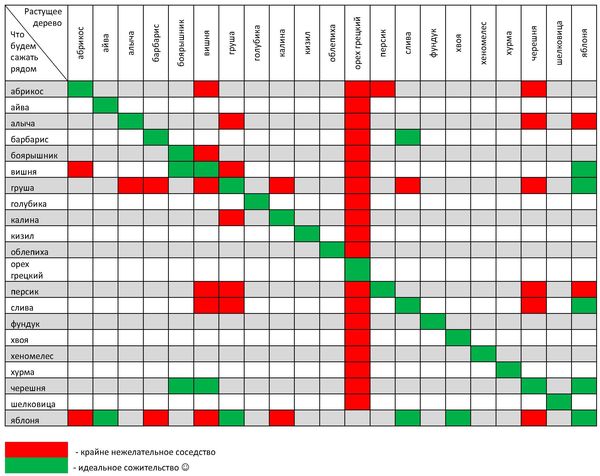
When choosing crops for planting, be sure to consider not only the size of the mature plants and their soil and lighting requirements, but also ensure that the selected plants can effectively pollinate each other – this will ensure a stable future harvest.
You should also consider the ripening time of the fruit: for example, when planting apple trees, try to have both early and late varieties, so that you can extend the harvest period and enjoy fresh fruit for a longer period.
Placement on the site
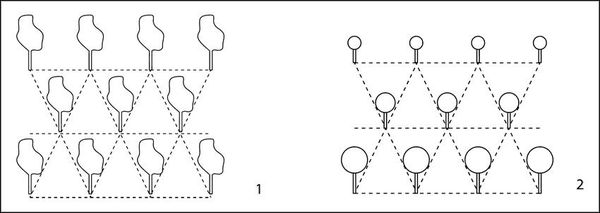
To ensure fruit trees thrive and produce fruit efficiently, they need to be planted at a certain distance from each other, as well as from existing outbuildings or decorative structures in the garden. For example, if you've decided to plant cherry or plum trees along the property line, leave at least 3 meters from the edge (this also applies to fences or buildings). If you've chosen apple trees as your boundary planting, the distance should be even greater.
If you've grafted your chosen crops onto tall rootstocks and are planting them in rows, maintain a distance of at least 5 meters between the rows. The distance between trees within each row should be approximately the same. Failure to maintain this distance will cause your plants to stretch (due to lack of sunlight), significantly reducing productivity and yield.
For low-growing crops, the specified distances can be reduced by approximately 1 m.
How to plant a garden
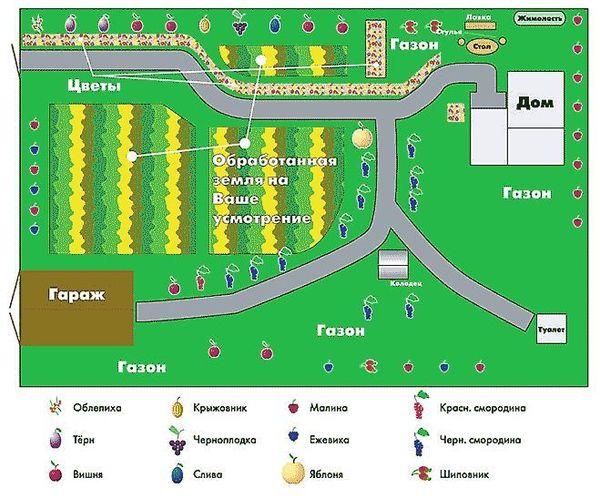
So, we've decided on the tree placement and the site plan. It's time to start planting the garden.
First, prepare the planting holes. If you plan to plant in the fall, you should begin digging the holes in the summer; for spring planting, prepare the holes in the fall. Add a layer of drainage material to each hole, along with the necessary fertilizer. When it's time to plant, add fertile soil to the hole so that the tree sits on a low mound.
Another important factor is the age of the seedlings. If we're talking about shrubs, it's perfectly fine to buy one-year-old seedlings. Trees, however, thrive better if planted at three years of age.