
How to prune an apple tree at different times of the year
Content
Why is pruning necessary?
For a mature tree, pruning ensures a good harvest, as for a tree to bear fruit abundantly, its crown needs plenty of light and fresh air. Fruit that ripens in the light becomes large and tasty, while neglected apple trees produce a small harvest.
By removing old apple tree branches, you encourage the development of new growth, thereby rejuvenating the trees. Finally, pruning young apple trees improves their survival rate.
Main rules and general principles
Let's look at the basic principles of how to prune an apple tree.
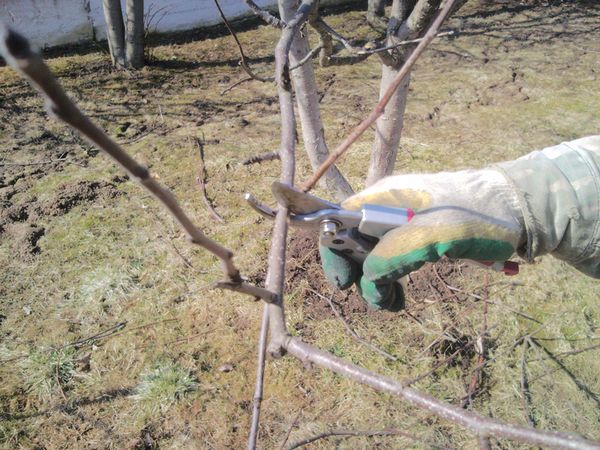
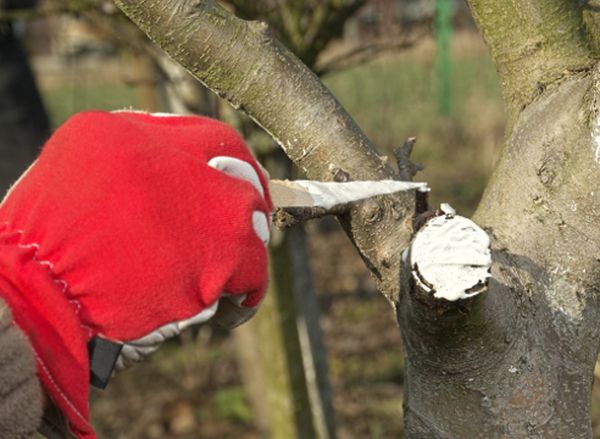
When cutting branches, you should use disinfected sharp tools: it is much easier for harmful bacteria to penetrate through a soaked cut. Thin branches (less than 2 cm) can be trimmed with pruning shears; for others, a garden saw will do. If the pruned branch was dry, the branch should be immediately treated with garden pitch or another wound-healing agent; the cut on a living branch should be allowed to dry for 24 hours beforehand.
When to prune an apple tree
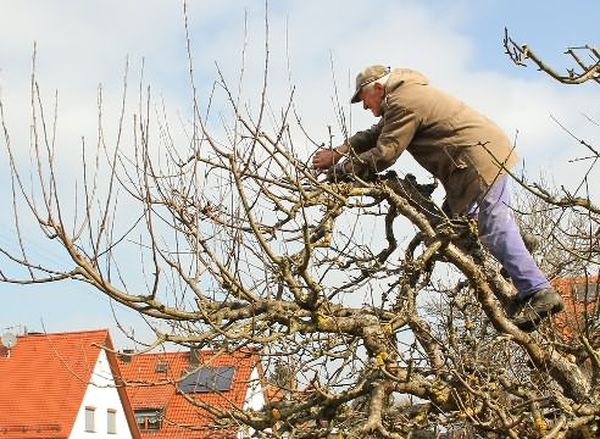
Now let's learn when to prune apple trees and the best times to carry out different types of work. How and when to prune depends partly on the local climate.
Winter pruning
Winter pruning of apple trees is only possible in southern regions with mild winters. Frozen cuts on branches heal very poorly and often begin to rot, so it's advisable to maintain a temperature of at least 10°C (50°F) for at least 2-3 weeks after pruning. At the first frost, pruning should be stopped immediately. Therefore, if you're unsure of your climate, it's best to choose a warmer time of year.
Spring pruning
In the spring, apple trees undergo sanitary and formative pruning. Experts recommend the period between the start of sap flow and the beginning of bud swelling.
Spring pruning should definitely include sanitary pruning. Spring pruning is also useful for shaping the crown and thinning it out if necessary. It's advisable to prune branches that grow inward at an acute angle. If a shoot is parallel to an older branch, it should also be removed.
When deciding how to prune an apple tree in the spring, it's important to consider the nuances of harvest regulation: if the previous harvest was poor, the apple tree needs to be pruned heavily to allow it to gain strength. A tree that has produced a lot of fruit can be pruned to a minimum.
Formative pruning of a young apple tree in spring is especially important – this is the best time to cut off the top, reducing the height of the tree.
Light summer pruning will allow the sun to better illuminate the already formed fruit. Also, at the end of June, you can pinch back any overly vigorous growth to prevent it from draining the tree's energy. Broken and diseased branches should be trimmed as soon as they are noticed.
Autumn pruning
Now let's learn how to properly prune apple trees in the fall. If spring frosts are common in your region, pruning should be done in August: the trees will wake up later next year, protecting the buds from freezing.
In early autumn, pruning of an old apple tree is recommended: old branches that have not produced fruit well should be cut off from the tree, especially those that block light from the young ones.
Sanitary pruning of apple trees in the fall is recommended after the leaves have fallen and the harvest has been collected – this makes it easier to spot damaged branches within the crown. It's best to start by removing large branches, including those that have cracked due to a heavy harvest. Then, trim shoots growing inward at a sharp angle (they can break off in winter due to snow) and "water sprouts," or upward-growing branches, as these are sterile. If two branches grow from the same spot, remove the weaker one.
Types and patterns of pruning
Let's find out what apple tree pruning schemes exist.
Formative
Apple tree seedlings are pruned by specialists to “balance” the root system and shoots.
How to prune a young apple tree? The first apple tree pruning is recommended one year after planting (if planted in the fall, it's best to leave the tree alone until spring).
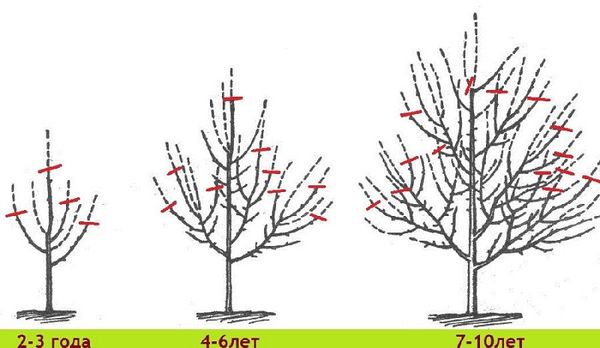
One-year-old trees are pruned as follows: cut off the crown at a height of 0.8–1 m (except for columnar varieties) and remove shoots up to 50 cm from the ground. When working with one-year-old trees, it is necessary to shorten long skeletal branches, which should have 3–5 buds and be 16–20 cm shorter than their height, so that the longest branches are at the bottom and the shortest at the top. Such tapering trees facilitate easy harvesting. Pruning for one-year-old apple trees should be done before buds appear.
In the second year, we establish tiers of skeletal branches. Most crown types require 2-5 branches per tier. The optimal distance between tiers depends on the tree's height. If the apple tree is short or recently planted, this may be 40 cm; for a tall tree, 60 cm. The prunings on a young apple tree should create approximately equal distances between branches at the same level.
To form a bowl-shaped crown, remove the central trunk down to the first fork of the branches. Lateral branches will replace it, forming 2–4 "trunks."
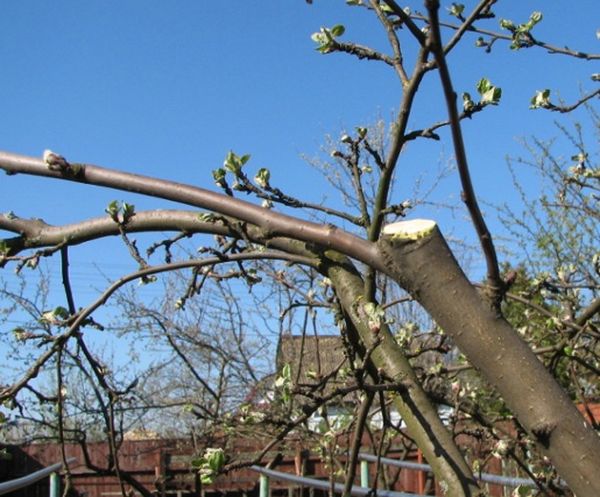
When pruning a three-year-old apple tree, remove excess branches, except for scaffold branches. On a tree between two and five years old, shorten branches by two-thirds of their length. The top bud should be facing outward. Before the tree is five years old, remove all one-year-old shoots.
If the tree has been trained correctly, it will begin bearing fruit within five years. These will appear on old, strong branches. At this age and up to seven years, skeletal branches are pruned in the fall by about a third of their length, which stimulates the formation of new buds.
For columnar varieties, apical buds should not be removed. The pruning rules for such trees are as follows: each pruned shoot with 2 or 3 buds remaining will produce the same number of large, strong branches. If there were more buds (up to 5), the shoots will be smaller. If such a tree is properly trained, it will produce 10-15 cm of annual growth.
In this case, when pruning the apple tree after planting, the lateral shoots should be shortened, leaving two buds each to ensure the shoots are as strong as possible. The central shoot should be secured to a support. If there are any large shoots close to the soil, they should be cut off.
At two years of age, the resulting pairs of shoots are inspected. The more horizontal one is left, and the second is shortened again to two buds. After a year, the branches that have already produced fruit are removed, and the remaining ones are treated as per the previous year's plan.
During the 3rd to 5th year, a ring-shaped cut is made on the fruiting formations, thus obtaining a standard tree.
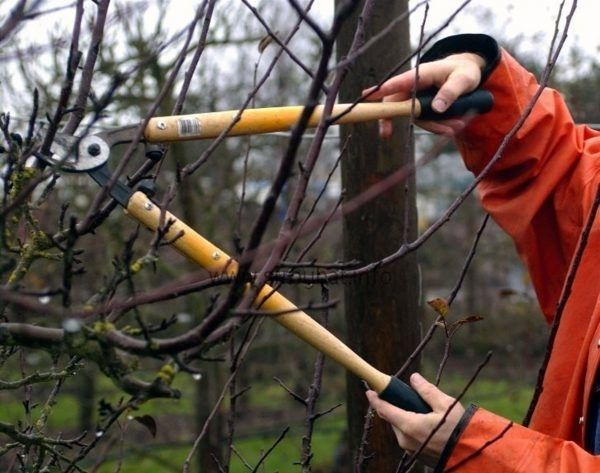
Almost every gardening forum offers detailed pruning schemes for different types of crowns, so even a beginner can understand everything.
Rejuvenating
Let's look at how to prune an old apple tree.
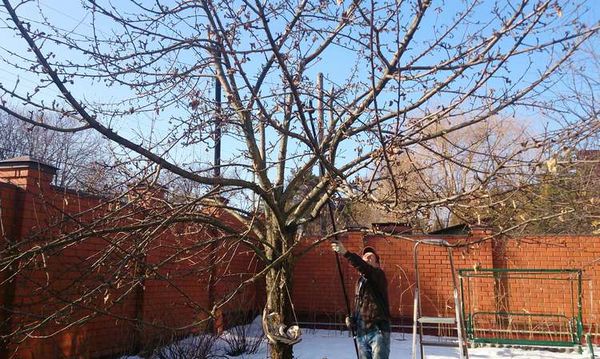
Rejuvenation pruning of mature apple trees involves removing all branches that don't produce fruit, allowing young, fruitful shoots to grow better. Can skeletal branches be pruned? Definitely yes. Also, if the trees are taller than 5 meters, the tops can be pruned, otherwise the flow of sap and nutrients upwards will drain them. Pruning severely neglected apple trees is especially important.
When deciding how to prune an old apple tree, keep in mind that it's unwise to prune too many branches at once, or more than 2 meters per year—this will weaken the tree and reduce its yield. This type of pruning should be done annually, but in small increments. For this purpose, it's a good idea to keep a maintenance calendar.
Sanitary
This type of pruning involves removing diseased, dying, and broken branches. This is especially important in intensive apple plantings, where infection can spread across many trees and cause significant damage. It should be performed as soon as the threat is noticed. It can be done any month, but it is essential to perform this type of pruning in spring and fall, when the branches are bare and easier to inspect.
In the fall, any branch that has cracked due to a heavy harvest should be removed. In this case, it will not produce fruit but could become a source of infection. In the spring, branches broken by snow or frozen are more often removed.
If two branches are touching and rubbing, one of them also needs to be cut off.
Areas that appear scorched may be infected with black canker, a dangerous fungal disease that can kill the tree. In this case, they should be inspected with a magnifying glass; small ulcers with dark spots along the edges will confirm the diagnosis. These areas should be immediately removed and burned, followed by treating the wounds with copper sulfate and covering them with garden pitch. The foliage should then be sprayed with Bordeaux mixture.
Video: "Proper Apple Tree Pruning"
This video will show you how to properly prune an apple tree in your garden.