
How to Properly and Successfully Plant an Apple Tree in the Fall: A Step-by-Step Guide
Content
Why is it better to plant an apple tree in the fall?
Apple trees can be planted correctly in either spring or fall. However, many people plant their trees closer to winter. Why? Our latitudes are characterized by heavy soils with a high organic content—chernozem. Furthermore, autumn rainfall is sufficient to ensure adequate moisture saturates the soil. A tree planted in the fall has the opportunity to establish roots and strengthen before the new growing season begins.
Preparing the site and soil
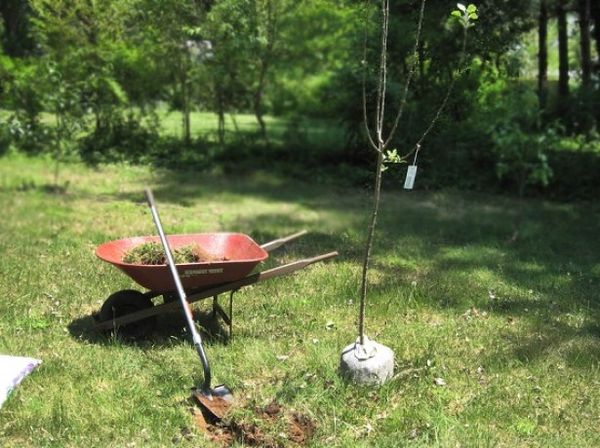
How to plant an apple tree in the fall? First, choose a suitable site. It is recommended to plant apple trees in bright, open spaces. Clay and waterlogged soils are absolutely unsuitable for these trees. It's best to choose a site on a slightly elevated surface or provide good drainage to remove excess moisture. Excess water creates a favorable environment for the infection of the seedling's peri- and root system by a wide range of aggressive phytopathogens, which cause rot and drying out.
However, it is important to ensure that the area is not too open – in completely steppe areas, the wind blows strongly on the apple tree, causing the roots to become exposed within two or three growing seasons.
The apple tree needs a well-lit place with sufficient iron content in the soil.
When preparing a site for a tree, dig a hole approximately half a meter by half a meter and at least 70 centimeters deep. Place drainage at the bottom of the hole, often adding empty tin cans or nails to balance the mineral content.
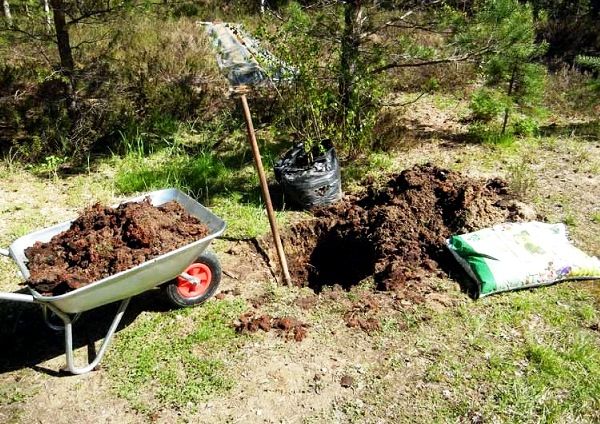
Equip your hole with a long stake that extends at least half a meter above the soil. To properly plant the apple tree seedling and provide it with the best conditions for overwintering, add a fertilizer mixture to the hole. To prepare it, use 100 parts peat, 1 part wood ash, superphosphate, and 0.5 parts potassium sulfate.
Selecting a seedling
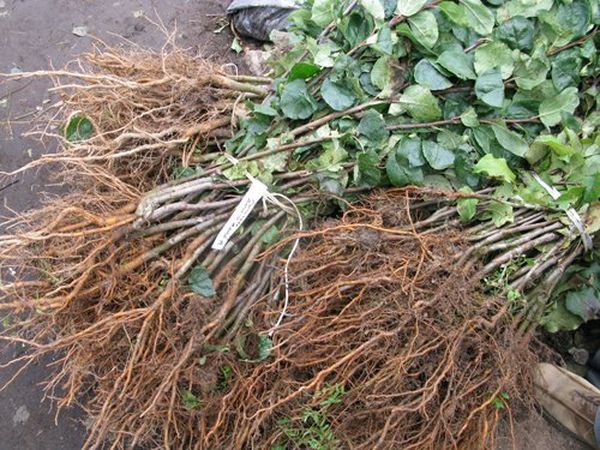
Planting an apple tree in the fall requires a healthy sapling. When choosing a plant, pay attention to the condition of its roots. They should be free of mechanical damage, rot, or severe necrosis. The bark should match the variety's description.
A healthy plant typically has 4-5 healthy shoots. The entire plant should be free of pests or signs of disease, such as rot, damaged skin, or visible sporulation. It's best to purchase apple trees from specialized nurseries, entrusting the propagation of the trees to professionals.
Landing
To more fully answer the question of how to plant an apple tree in the fall, we will illustrate it in the form of a step-by-step guide:
- Step one: prepare the site for the apple tree. Remove weeds and last year's leaves, dig a hole of the desired size, and fill it with drainage material. Add fertilizer to the soil.
- Step two: Place the seedling in a container of water for 24 hours, allowing it to absorb the moisture. This ensures better anchorage of the plant in the soil.
- Step three: Place the tree in the hole up to the dark groove on the trunk—the previous planting site. It's important not to cover it too deeply with soil. Raise the grafting site 10 centimeters above the ground. Avoid trampling the soil around the tree to avoid interfering with proper gas exchange.
- Step four: tie the tree to the pre-driven stakes. Do this with a cloth or plastic sheeting, avoiding twine. The bark of a young tree is very thin, and such rope can damage it.
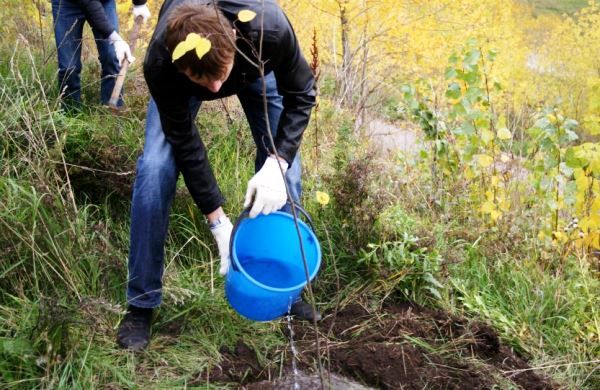
- Step five: water the tree with plenty of water.
Further Care
Even if you plant an apple tree correctly in the fall, there's no guarantee it will thrive. Proper care is essential. Timely watering and proper pruning will accelerate growth and improve frost resistance. It's recommended to water very young trees in their first year up to four times during the summer, more frequently in dry weather. Each watering typically requires about 30–40 liters of water per tree.
The soil under the seedling must be kept loose, weeds must be removed in a timely manner, and fertilizer must be applied according to the needs of the selected variety.
Preparing seedlings for winter
We've answered the question: "How to properly plant an apple tree in the fall?" But it's definitely worth mentioning how to best help the tree survive the winter. When steady frosts arrive (November), cover the ground around the tree with a deep layer of mulch (up to 20 cm). For cold-sensitive trees, as well as in regions with cold winters, use moisture wrapping using iron structures and polyethylene. This system will protect your tree from freezing and sunburn.
Video: "Apple Tree Planting Guidelines"
This video will teach you how to plant an apple tree correctly.