
How to properly plant an apple tree in the garden
Content
How to choose the best time to plant
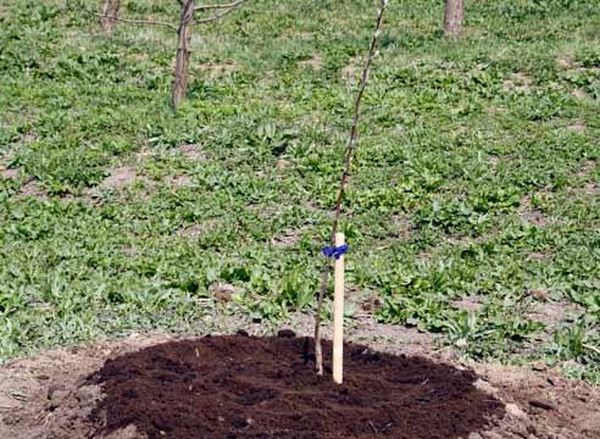
Proper apple tree planting should be done before the trees begin to bud. Otherwise, if you plant the trees later, the sudden increase in temperature may adversely affect the seedlings, causing them to rapidly lose their quality. You can determine how ready the soil is for planting an apple tree using a regular garden shovel: if the spade goes into the ground without too much effort, then the time has come.Once the soil has completely thawed, it will be too late to plant apple tree seedlings: the trees will now lack moisture, increasing the risk of disease. Furthermore, the scorching spring sun will mercilessly scorch the young leaves.
Selecting a variety for your region
When planning to plant an apple orchard yourself and choosing varieties based on your preferences, it's important to consider several factors. First, how well the variety you choose is adapted to your region, and second, what are its productivity indicators in your climate. Another important consideration when choosing fruit trees is the ripening time of the fruit.
Gardeners distinguish several groups:
- summer or early apple trees – those that bear fruit in August and do not last long (for example, the widely known White filling);
- Autumn apples – peak fruiting occurs in September. These apples can be stored for about a month;
- Winter - the harvest is collected from the end of September, and such fruits are stored for almost six months.
Additionally, there are vigorous and semi-dwarf trees, the difference between which is height and spread. Knowing the different varieties will help you choose the best option. For example, winter varieties are not suitable for northern regions (they won't have time to ripen before the cold weather sets in).
How to select the ideal seedling
Before planting an apple tree (or several apple trees) of your chosen variety, you need to select a high-quality seedling. To ensure the planting material takes root and lives up to your expectations, consider several points:
- Try to buy fruit tree seedlings from specialized farms or stores - this way you have a better chance of getting a high-quality tree that belongs to the desired variety;
- The seedling should be about 1.5 m tall, have no visible damage on the bark, have several branches and a well-developed root system.
Processing seedlings before planting
To ensure that planting apple tree seedlings at home is done correctly, it's important to know how to prepare them for the process and not skip pruning.
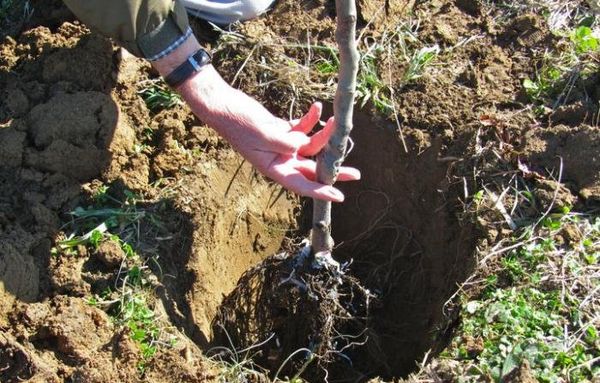
It's important to completely prune the top of the sapling, leaving a few buds that will give life to the side branches. Pruning should also include upward-facing buds, otherwise they will grow vertical branches that will compete with the main trunk. Before planting an apple tree, be sure to find out the maximum height the tree can reach. This will allow you to prune the sapling correctly and choose the right location for it in the orchard so that future care at home is easy.
Soil preparation
To know how to plant an apple tree correctly, it's important to follow all the preparatory steps correctly. Preparing a hole for planting an apple tree at home is a procedure that should be completed two weeks before planting. The size of the planting hole will depend directly on the variety: if you've chosen a tall tree, prepare a hole approximately 1 m in diameter and at least 0.7 m deep.
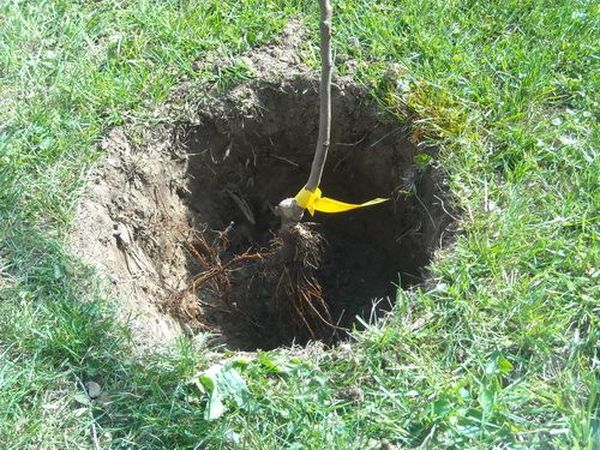
The planting depth for a medium-sized apple tree is only 60 cm, with a hole diameter of 1 m. For dwarf trees, however, a planting hole measuring 50 x 90 cm is sufficient. When preparing the apple tree planting hole, try not to mix the different layers of soil: place the top, more fertile soil in one direction, and the deeper layers in the other. The bottom of the dug hole should be loosened and lined with a drainage layer, such as broken brick. This will prevent the soil from washing out, preserving nutrients and minerals.
Step-by-step planting instructions
Want to know how to properly plant an apple tree at home, following the optimal planting pattern? We'll provide a detailed guide covering the key steps:
- The bottom of the planting hole, previously dug and prepared, is sprinkled with a thin layer of fertile soil - this will provide the apple tree with the necessary nutrients.
- The remaining fertile soil is mixed with mineral fertilizers (potassium sulfate and superphosphate) and the hole is completely filled with the resulting mixture so that a small mound is formed.
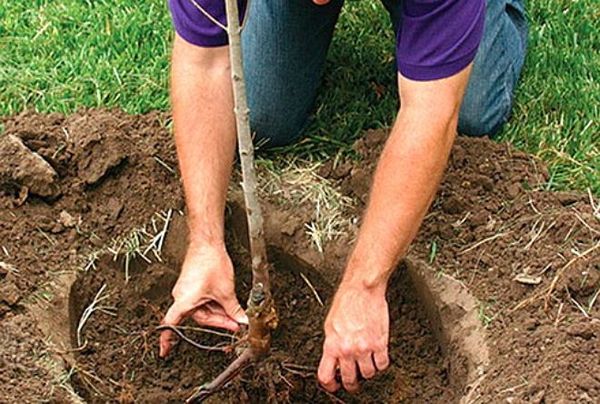
- In the very center of the resulting small hill, we install a peg to support the seedling, and place the tree itself, carefully straightening the roots.
- Now it's time to cover the roots with soil, pressing it down lightly. It's important to ensure that the root collar protrudes a few centimeters above the soil surface.
- That's it, the tree is planted, all that remains is to strengthen it by fixing it near the support and water it thoroughly.
Tips from an experienced gardener
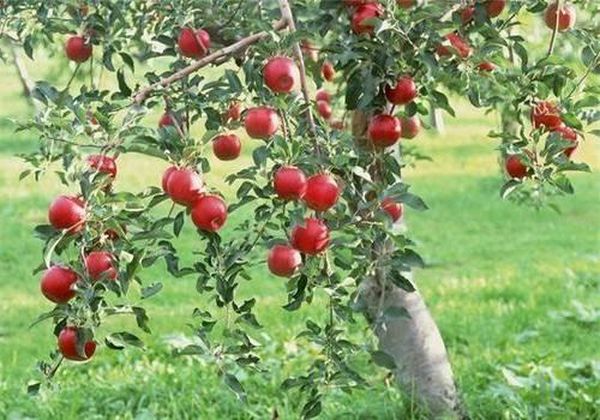
The apple tree is a relatively easy-to-care-for tree; planting and subsequent care don't require much effort from the gardener. Therefore, even a novice can easily handle the task, provided they keep in mind a few tips for planting garden apple trees with closed root systems:
- To ensure planted trees grow straight, they need to be securely anchored. To do this, install three support stakes near the apple tree's planting site, tie the tree to them, and leave it there for the entire summer or even longer.
- It's not enough to know how to properly plant young apple trees; they also need to be cared for properly. For example, avoid fertilizing trees with fresh compost (or manure)—this increases the risk of disease;
- Before planting the tree, feed the root system with a weak solution of mullein and clay - this “cocktail” will prevent the roots from drying out;
- You shouldn't plant fruit trees mixed together;
- When choosing a planting site, consider the characteristics of the apple tree you've chosen: you may need extra space to support overly spreading branches on a trellis.
And another thing: sometimes novice gardeners, seeking to rejuvenate their orchard, replace old trees with new seedlings. However, experienced gardeners don't do this. So, is it possible to plant an apple tree in place of an old one?
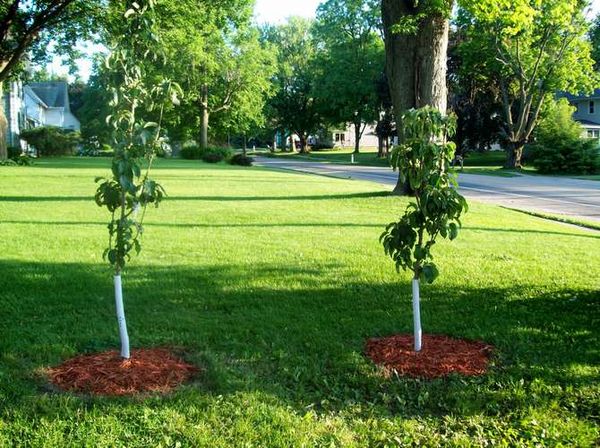
The answer is clear: you shouldn't do this. Crop rotation rules must be followed, and you shouldn't plant stone fruits after stone fruits (or pome fruits after pome fruits). Besides, over the years, the previous tree has not only depleted the soil but also supplied it with a significant amount of inhibitors that won't benefit the young plant.
Video: Planting an Apple Tree
This video will show you how to plant an apple tree correctly.