
How to prune and treat apple tree cuts in spring
Content
The Importance of Pruning
Garden trees require constant care. Spring pruning of apple trees not only removes dead and old branches, but also helps them produce better fruit.
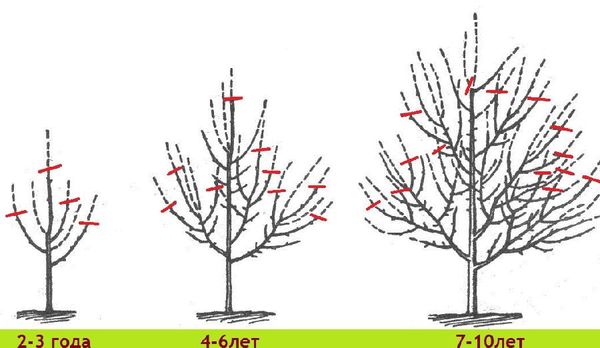
Pruning apple trees in spring rejuvenates them and creates conditions for new growth and abundant flowering. Furthermore, novice apple tree growers should know that pruning old apple trees in spring helps eliminate pests from the bark, identify areas of infection, and treat the tree promptly.
By pruning young apple trees in the spring, gardeners help the fruit-bearing branches to remain in the sun. And this significantly affects the harvest you get – the fruits will be larger and juicier.
So what goals do gardeners pursue when pruning trees?
- Pruning an apple tree in spring is necessary to shape the crown and increase its success in survival.
- Pruning can have a positive effect on flowering.
- Pruning an old apple tree in spring will allow you to get new growth and a higher yield.
Why in the spring?
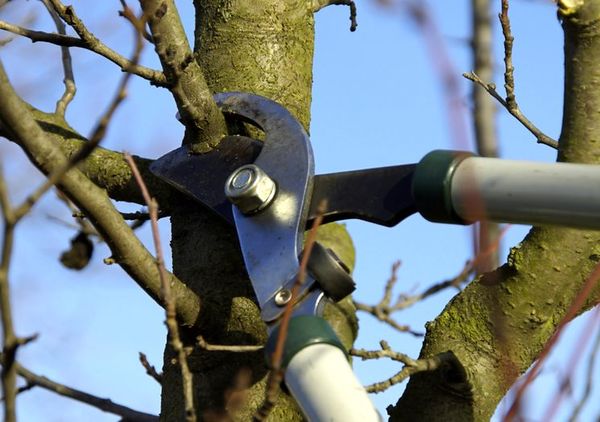
Whether it's better to prune an apple tree—spring or fall—is a serious question for every gardener. Some prefer spring pruning, but other experts advocate fall.
If you're unsure about the best time to prune your tree, first determine your goals. Then the question of when to prune apple trees will be clear. In early spring, before the sap begins to flow, you can remove frozen branches and shape the crown. Spring pruning ensures excellent flowering. By pruning apple trees in spring, gardeners can expect the tree to produce juicy, large apples.
Summer pruning of an old apple tree is necessary in order to provide the best possible light to new and fruit-bearing branches. This type of pruning is done not only in southern regions but also in areas with very cold winters. For example, in the Urals, overgrown trees can be trimmed at the onset of summer.
In the Leningrad Region, pruning is often done at the end of leaf fall, removing old, broken, and dead branches. Needless to say, caring for plants in the fall is safer for beginning gardeners. After all, during this period, you can easily remove all diseased and damaged areas without damaging the buds. It's also worth remembering that pruning older apple trees in the fall is more appropriate, as many dead branches and damaged areas are best removed after the fruit is harvested.
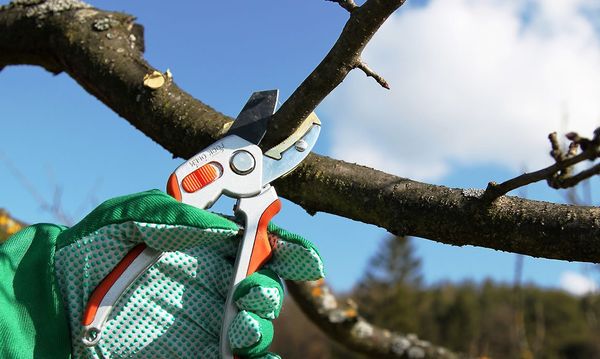
Pruning apple trees in winter is only possible in regions where temperatures do not drop below 5°C. This way, the gardener won't harm the plant and will be able to rejuvenate it even during the winter. Winter pruning allows you to easily remove unwanted growth and shape the plant, which will delight you with ripe fruit.
So, if you need to know when to prune an apple tree in the fall or spring, first decide what you want to achieve.
General principles of pruning
Regardless of when and how you plan to prune your tree, it's important to follow the rules and adhere to tree care principles. This will make it entirely possible to prune young apple trees properly in the fall or any other time of year, without the gardener having to worry about the consequences of their actions.
Time tracking
Use the lunar calendar to plan tree pruning. This allows you to choose the right month for tree care.
Don't overdo it
It's crucial not to damage the branches—improper pruning can kill trees. Therefore, one or two large pruning wounds should be made per year, no more. Dense crowns are best pruned significantly over several years; apple trees can be pruned in the fall.
Thinning
Old apple trees especially require this. When doing this, remove not just small branches, but one or two large ones. Otherwise, pruning may prevent the tree from bearing fruit.
Get rid of dry branches
Caring for apple trees requires this. Dried branches are pruned back to healthy wood, allowing wounds to heal quickly. However, be extremely careful, as removing multiple branches at once can damage even a healthy apple tree.
Pay attention to the top
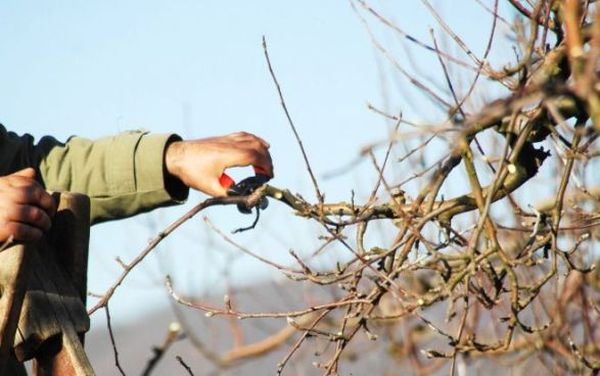
To ensure sunlight reaches the entire tree, thin out the crown. Prune so as to leave the lower layer of foliage as close to intact as possible. It's also a good idea to remove some central branches that are overgrown and block sunlight.
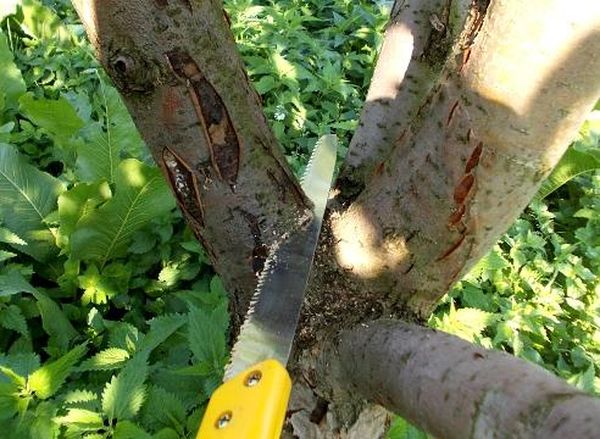
Treat large wounds
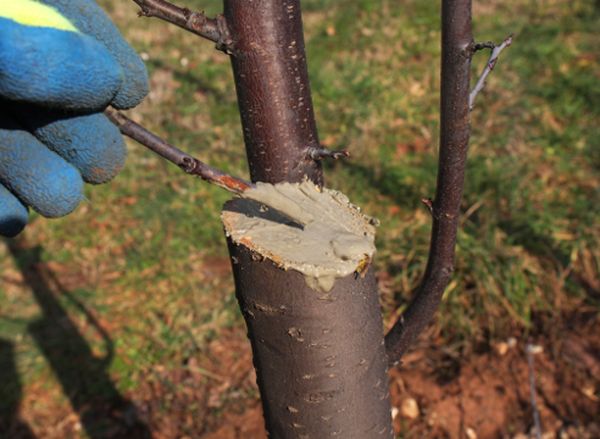
After pruning your apple trees, have you developed large wounds, over one centimeter in diameter? This is quite common, even among experienced gardeners. After cutting all the branches, these wounds are treated with clay mixed with mullein or garden pitch.
Pruning should be done very carefully, as improper pruning can delay fruiting or harm the plant.
Apple tree pruning diagram
If you're wondering how to prune an apple tree properly in the spring, we offer a universal guide. Care should begin in May, when the weather is already warm and the tree hasn't yet produced fruit. The timing is entirely up to you.
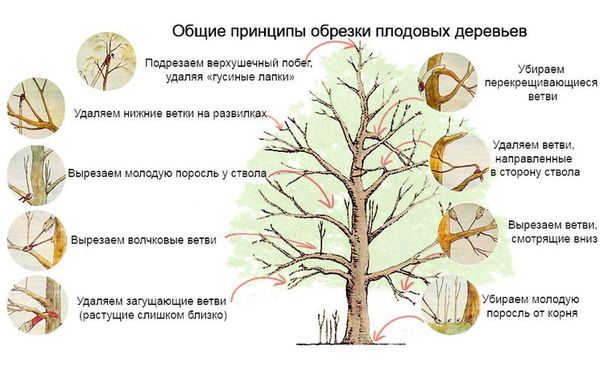
They operate according to the following principles:
- Large broken branches and dry branches are cut out.
- After this, they begin to remove the weakest branches that are located at a close distance from each other.
- Next, get rid of those branches that grow at an acute angle.
- At the top, the shoots - "goose feet" - should be removed.
- All crossing branches are cut off.
- Branches facing downwards are cut out completely.
- Then the thickening zones are thinned out.
- At the end, the shoots near the roots are removed.
When performing spring pruning of an apple tree, it's important to keep a few rules in mind. Branches should be removed "at the ring," without stumps, otherwise the tree will become sick and take a long time to heal.
It's important to limit the crown's height. To thin it out and increase its width, prune branches to an outer bud, while to strengthen the center of the crown and raise a low-growing branch, prune to an inner bud. All pruning is done at a 45° angle, leaving 2–3 mm above the bud.
Caring for a young tree
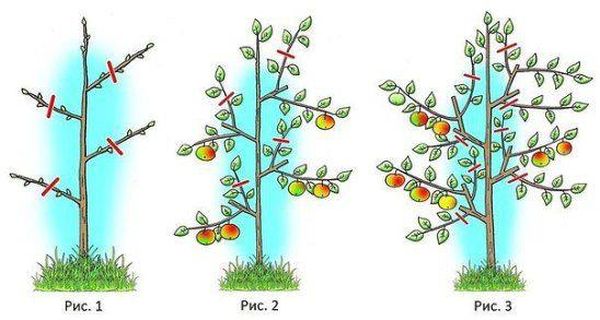
How do you properly prune young branches? This should begin in May. The gardener's main goal is to create a sparse, multi-tiered crown. Read below to learn how to prune a young apple tree properly:
- First, the central conductor is cut off.
- Next, measure the trunk's height at 60 cm and count off four buds. The next two are buried, then the remaining two are left and the shoot is pruned back to a thorn.
- Leave the strong shoots and prune the weak ones. This will give your apple tree a chance to bear more fruit.
- Form skeletal branches from the buds. These should then be shortened to produce shoots. The tree will grow and delight with abundant blooms.
Fruit-bearing plants require especially careful care. It's best to prune them in November. It's worth noting that the autumn pruning schedule for apple trees is similar to the spring pruning schedule. The only thing to consider is the time of year when choosing your plant care options.
Caring for an old tree
The question often arises: how to prune an old apple tree, and, in general, when should it be pruned? Let's be clear: rejuvenation pruning is necessary in any case.
You can rejuvenate an old apple tree at any time of year, but spring is the best time to shorten the plant's height. There are two ways to prune an apple tree: trim all branches to the same length or trim only the longest scaffold branches.
To rejuvenate the plant, remove old branches and replace them with fruiting shoots. But remember: remove them gradually, otherwise the plant may become diseased.
Processing of cuts
After pruning, the tree should be properly treated. This allows the cuts to heal faster. Treatment also protects against pests.
For treatment, use oil paint or a solution of copper sulfate and lime in a 1:10 ratio. This solution can be used to disinfect the wound.
Cuts on older trees are sealed with tar or paint immediately after cutting. Young trees should be treated after 24 hours.
Gardener's Tips
Is it possible to achieve perfect results? To ensure the job is done correctly, be sure to heed the advice of professional gardeners. Then your work will begin to bear fruit. Yulia Minyaeva's planting guidelines will help you avoid common mistakes when pruning apple trees.
Experienced gardeners recommend paying attention to the following:
- The crown of a pruned tree can be correctly formed from skeletal branches located in a circle at an angle of 45° from the trunk.
- Skeletal branches should be uniform in length. Stronger branches are shortened to ensure the plant doesn't look chaotic, but rather looks neat.
- The upper tiers of mature apple trees are pruned so that they don't extend beyond the lower tiers. This ensures that each leaf and fruit receives sufficient sunlight.
All these rules will help you properly care for your apple tree. Plants thrive on attention, and proper pruning will promote growth and fruiting.
Video: "All About Spring Apple Tree Pruning"
This video will show you how to properly prune an apple tree in the spring.