
Growing and caring for the Gloucester apple tree
Content
Description of the variety
This magnificent variety was developed by German specialists in 1951. It was the result of fruitful hybridization between the Richard Delicious and Glockenapfel varieties. A variant of this variety is the Gloucester York.
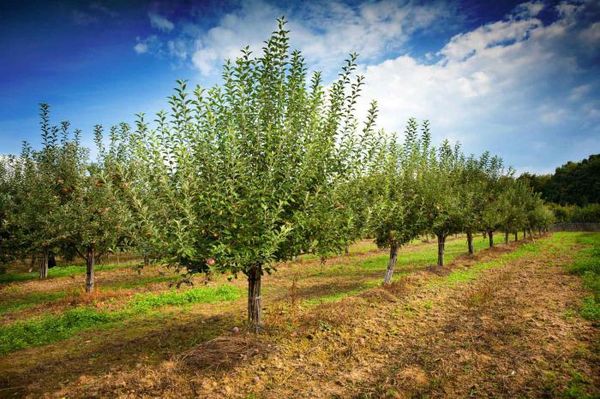
A description of the variety can begin with the tree's appearance. It has a high oval or pyramidal shape. The tree can rightfully be called a fast-growing plant. The branches are arranged at an angle of up to 60 degrees relative to the trunk, growing straight upward. The crop has a mixed type of fruiting, since fruits are formed not only on fruiting branches, but also in fruiting bags, on spears and rings.
The crop blooms over a long period and in mid-late season. An inflorescence never contains more than four flowers. Pollen viability ranges from 32–80%. Pollination with recommended pollinators such as Spartan, James Grieve, Gala, Idared, and Jonathan varieties can achieve a pollination yield of up to 26%. Open pollination results in fruit set at up to 18%.
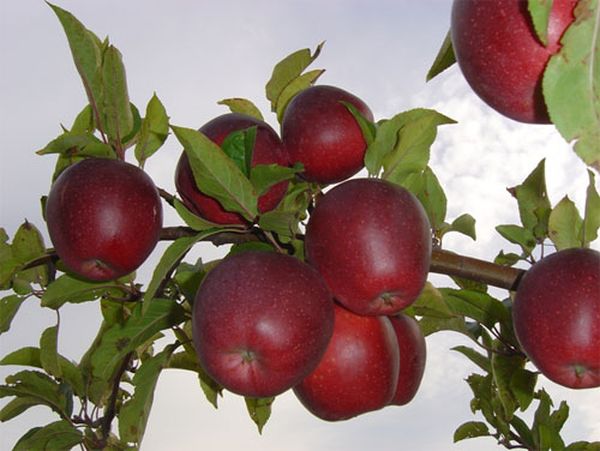
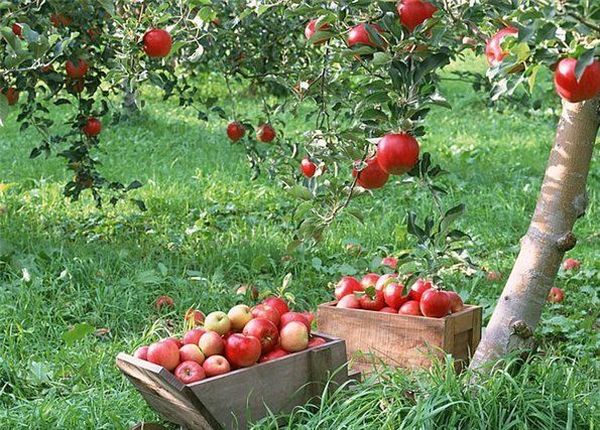
The fruit's characteristics deserve special attention. They are quite large, weighing no more than 180 grams each. Individual fruits weigh around 200 grams. They are round and ribbed at the very top. The fruits are light yellow with a characteristic raspberry-red blush. The skin is thin and smooth to the touch.
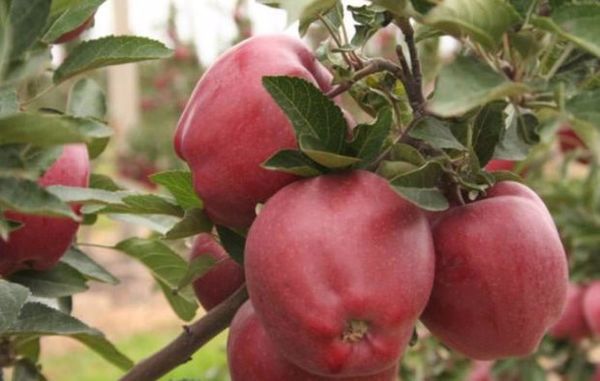
Inside, the flesh is light and creamy. It is medium-firm and juicy. Ripe fruits have a characteristic sweet and sour flavor. Harvesting begins in late September. Fruiting is expected four years after planting. The harvest keeps well in a cool place for four months. The fruits are easy to transport.
Beneficial properties
Regarding the Gloucester apple variety, regular consumption of its fruits can provide any body with micronutrients such as zinc, magnesium, calcium, iron, and sodium. Apples are also rich in vitamins, such as ascorbic acid, which boosts immunity and activates the body's defenses.
Each fruit contains a high content of vitamins such as B, C, E, and K. Apples also contain a lot of fiber, pectin, and cellulose. Every body needs them to speed up metabolism and cleanse the intestines of toxins. This variety has excellent antioxidant properties. Regular consumption of fresh apples can normalize blood pressure and improve heart function.
Growing and care
Apple trees of this variety don't require any special care. For planting, select a two-year-old sapling with up to three shoots. Before planting, soak it in a growth stimulant for a couple of hours. Choose a site protected from north winds and with adequate light. Choose loamy or sandy loam soil. The planting hole should be 1 meter in diameter and up to 60 cm deep.
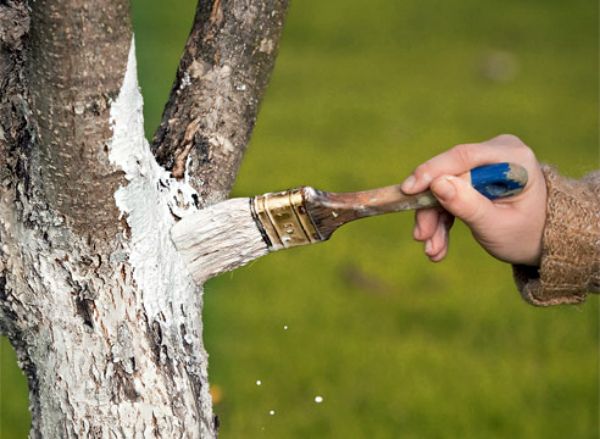
Care includes timely watering, weeding and loosening the soil around the trunk, fertilizing, and treating with chemicals. In early spring, whitewashing the trunk is recommended to protect the tree from insects, rodents, and possible sunburn.
The first watering is recommended when the buds open, the second about 20 days after flowering, and the third a couple of weeks before harvest. If there was no rainfall in October, another watering should be done. Water consumption is up to 3 buckets for a seedling, up to 8 buckets for a 3-5 year old tree, and up to 15 buckets for a 6 year old plant.
Weeding and loosening the soil after each watering are recommended. Beforehand, the soil around the tree should be cleared of weeds and other debris.
The first fertilization should be done one year after planting. This should be done in the spring. Add 40 grams of ammonium nitrate and nitroammophoska, as well as 0.5 kg of urea. When digging, be sure to add about 5 buckets of high-quality humus. The second fertilization should be done during the flowering period. You will need about 300 grams of urea diluted in 1 bucket of water, 100 grams of superphosphate, 70 grams of potassium sulfate, 2 buckets of aged chicken manure, and 5 liters of liquid manure.
A third feeding is needed in the summer, during fruit formation. For this, dilute 50 grams of nitrophoska and 1 gram of sodium humate in a bucket of water. It is also recommended to apply potassium, phosphorus, and nitrogen fertilizers twice a month.
Before winter, complex fertilizers and compost are added during digging. During pruning, frozen, dry, overgrown, and damaged branches are removed. The crown is typically formed using a sparsely layered system. In early spring, trees are treated preventatively against diseases using Bordeaux mixture.
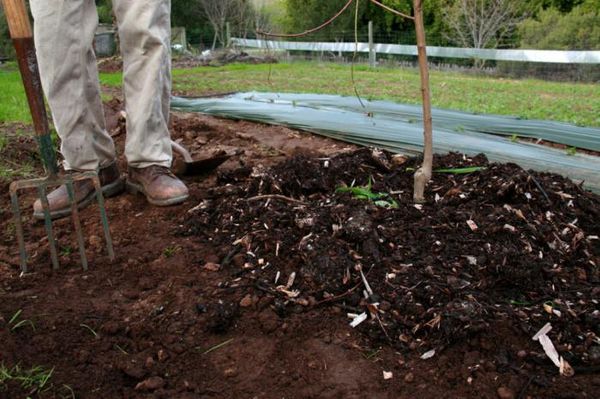
When digging, use both bleach and Nitrafen. Once buds appear and the plant stops blooming, you can use potassium humate or copper oxychloride. You can also use Bordeaux mixture. Last year's mulch and fallen leaves should be removed.
How to increase crop yields
Since apple trees tend to grow vigorously and continuously, to achieve a bountiful harvest, gardeners need to slow down the growth. To achieve this, the tree can be treated with agrochemicals that inhibit shoot growth and improve yield. It is also recommended to bend branches downwards to encourage the tree to form rings.
Summer pruning is also essential. Nitrogen-free fertilizers should be applied. Experience has shown that the best pollinators for this variety are the Idared and Jonathan apple varieties. Following these simple recommendations can effectively solve the problem of a large and rather spreading crown.
Advantages and disadvantages
What are the obvious benefits of this variety that make it so beloved by gardeners? The fruits are not only beautiful to look at, but also delicious. They are versatile in terms of use – they can be eaten fresh, used in cooking, and preserved. They are rich in vitamins and microelements. They are beneficial for boosting immunity, removing cholesterol from the blood, detoxifying, normalizing metabolism, preventing atherosclerosis, and helping with weight loss.
This variety is frost-resistant and tolerates temperatures down to -25°C. It has good immunity to powdery mildew and average resistance to scab. The fruit keeps well and for a long time, maintaining its marketable appearance and flavor even when transported over long distances.
Video "Large-sized apple tree 'Gloucester'"
This video will tell you more about the popular apple variety, Gloucester.