
The world leader in apple production is the Gala apple tree.
Content
Description of the variety
Gala apples have a long history. A description of the variety should perhaps begin with the fact that it was developed in the 1960s in New Zealand by breeder J. Kidd. Two highly regarded varieties were selected to create these apples: Kids Orange and Golden Delicious. From these two, Gala inherited all the best qualities, thanks to which it quickly spread throughout horticulture worldwide, becoming one of the best commercial varieties.
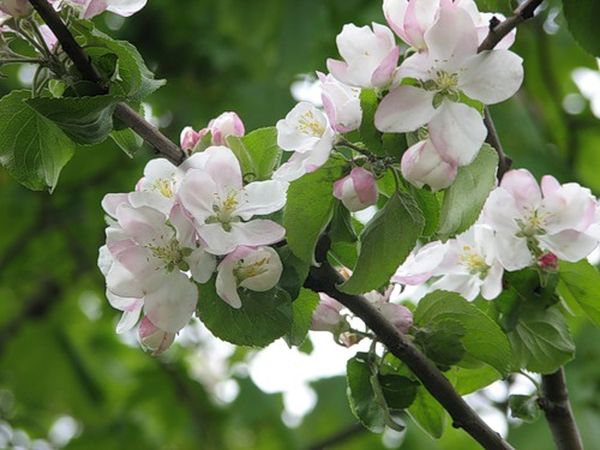
The apple trees of this variety are medium-sized. Branches are sparsely spaced, extending from the trunk at an acute angle (50–80°), forming a fluffy, broadly oval crown. Flowering begins late—in late spring—as the apples are late-ripening. Fruiting times vary depending on the rootstock: on tall rootstocks, after 6–7 years; on dwarf rootstocks, after 3–4 years. Fruiting is annual and regular, as the fruit forms on old branches and one-year-old growth.
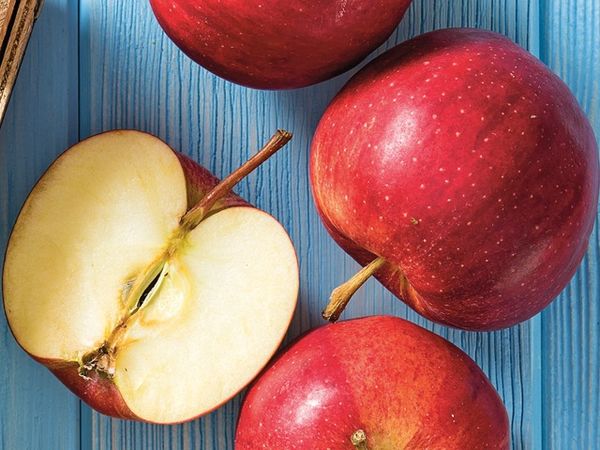
The fruits are very tasty and attractive. They are uniform, round or round-elongated, with light, barely noticeable ribbing. All are uniform in size, weighing around 150 g, but some weigh as much as 170 g. The skin is dense and smooth, an intense yellow color with a bright striped or solid blush, through which subcutaneous dots are visible.
The apple flesh is crisp, very juicy, creamy in color, and has a delightful dessert flavor with a pleasant caramel aroma. The fruits reach harvesting maturity in late September but are ready for consumption only in November. Thanks to their strong stems, they remain on the tree for a long time without falling off. These apples transport well and have a long shelf life—they can be refrigerated for over six months, retaining all their nutritional and flavor properties.
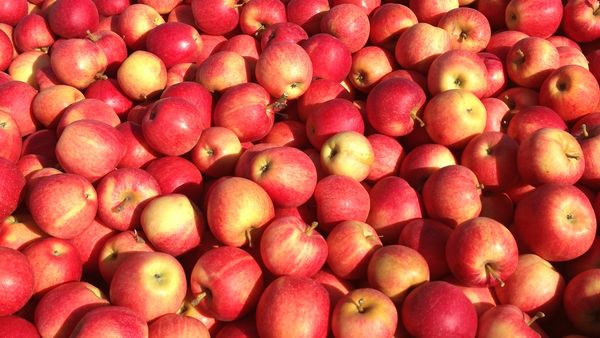
The Gala variety is considered high-yielding – each mature tree can regularly produce 50–80 kg of fruit, making it very profitable for commercial cultivation. The trees have average frost resistance. They can tolerate short-term temperature drops to -30°C, but cannot withstand long, freezing winters. They have high immunity to scab and powdery mildew, but are highly susceptible to moniliosis (fruit rot) and are regularly attacked by codling moths.
Types
The variety's exceptional commercial and flavor qualities have led breeders worldwide to use it as a basis for developing new hybrid varieties. Currently, there are over two dozen subvarieties (clones) of the Gala apple, each superior in appearance to its parent—brighter and larger. According to the specialists who developed these hybrids, it is the colorful fruit that offers greater commercial value and attracts consumer interest.
In recent years, brightly colored clones have been created: Scarlet Gala, Red Gala, Ultrared Gala, Royal Gala, Cooper Gala, Gala Rouge, Big Red Gala, Super Red Gala, Gala Brookfield, and many others. However, the most famous varieties remain those that were among the first to be bred.
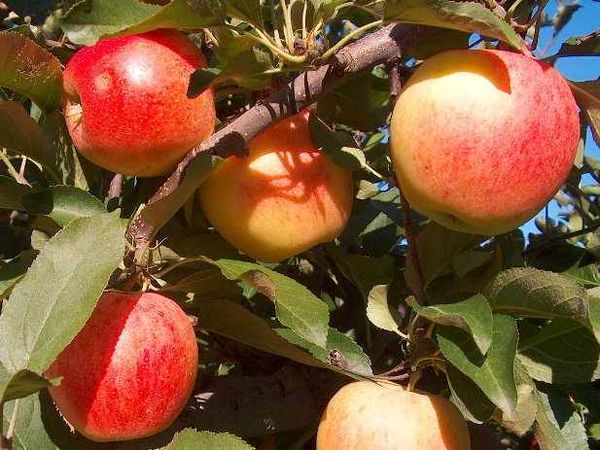
Royal Gala is the very first hybrid to be widely cultivated in orchards and industrial fields in Europe and America. It differs from the parent variety only in its elongated conical shape and brighter skin and flesh color. Gala Mast is the largest-fruited variety in this line. Apples weigh 170–180 g, and are more elongated, and the red blush is solid and more intense. The Gala Mast apple tree produces very abundantly blooms and bears fruit, resistant to powdery mildew.
Imperial Gala. This variety has an alternative name, Montial. It was developed in New Zealand. more in 1978 exclusively for commercial purposes, so the fruits of the hybrid have an excellent marketable appearance: bright, large and very sweet.
Growing and care
The Gala apple tree is only partially self-pollinating. To achieve a high yield, it must be planted next to varieties that can pollinate it without altering the fruit's flavor, such as James Grieve, Red Delicious, Melrose, and Elstar.
Any Gala apple variety is prone to overloading with fruit, causing them to become smaller and lose their commercial appeal. To avoid this, it's necessary to perform formative pruning every spring, and in particularly fruitful years, control the number of ovaries by pinching out the blossoms. When tending to your orchard, remember to treat your apple trees with insecticides prophylactically.
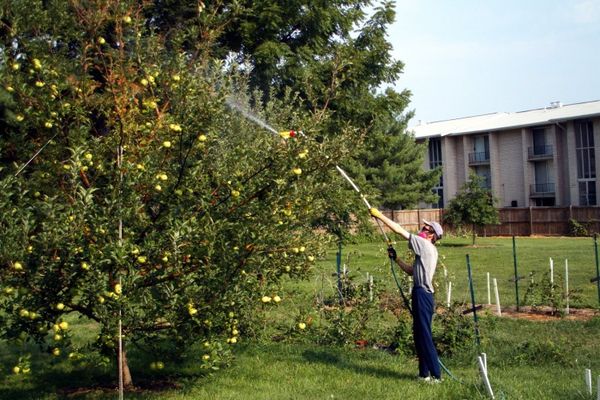
This is due to the trees' high susceptibility to codling moth infestations, which can destroy the entire crop. Five to six treatments are required per season. Additionally, apple trees need to be fertilized twice a year, the tree trunks should be loosened, watered as needed, and the roots should be covered for the winter if climate conditions require it.
Advantages and disadvantages
When describing the advantages of Gala apples, I'd first and foremost like to highlight the superb dessert flavor and caramel aroma for which consumers value this variety. Other advantages include:
- high level of productivity;
- regular and abundant fruiting;
- good winter hardiness;
- good preservation and excellent presentation of fruits;
- the fruits are firmly attached to the branches, preventing them from falling off;
- immunity to many diseases.
The only disadvantages of this variety include a decrease in fruit size as the apple tree ages and susceptibility to attack by codling moths, but these drawbacks are easily corrected with proper care.
Video: "Presentation of the Gala apple variety"
In this video you can see the appearance of the fruits and the tree.