
Description and characteristics of the Dolgo apple tree variety
Content
Description
The Dolgo apple variety is an American creation. It was developed by a certain biologist named Hansen, who, at the very end of the 19th century (presumably between 1897 and 1899), brought Sibirka apple tree seeds from Russia and then crossed the seedlings with an unknown variety. The apple tree soon returned to its native land and was even localized in several regions of Siberia, thanks to its high frost resistance, apparently inherited from the Sibirka.
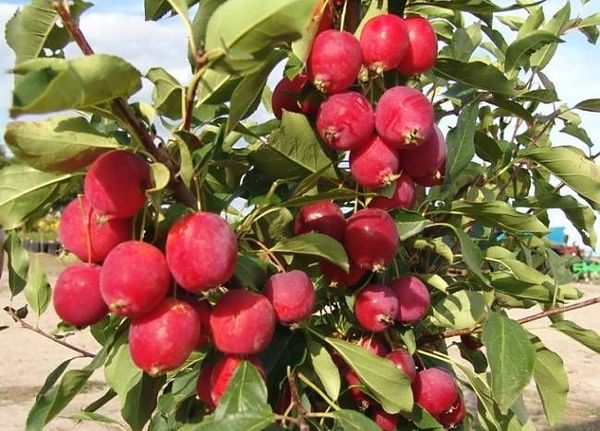
Apple trees are small varieties of medium height (4–6 m, depending on the soil and climate), sometimes growing in the form of a bush. The crown is pyramidal, fairly compact, and densely foliated. The bark of the trunk and skeletal branches is grayish-brown, while young shoots are dark purple and slightly pubescent. The leaves, as befits a plum-leaved apple tree, are oblong, elliptical, light green, and not pubescent.
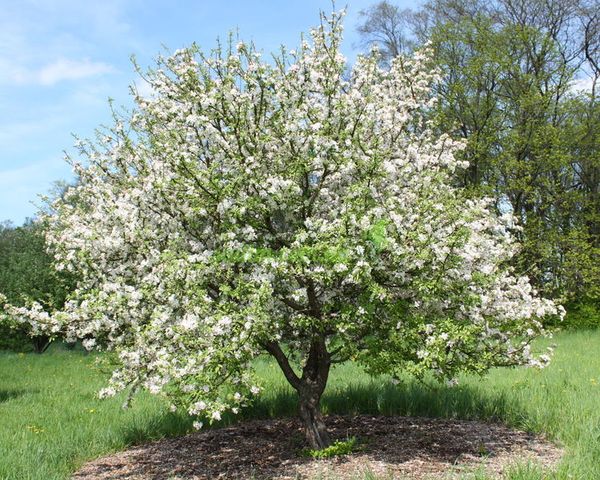
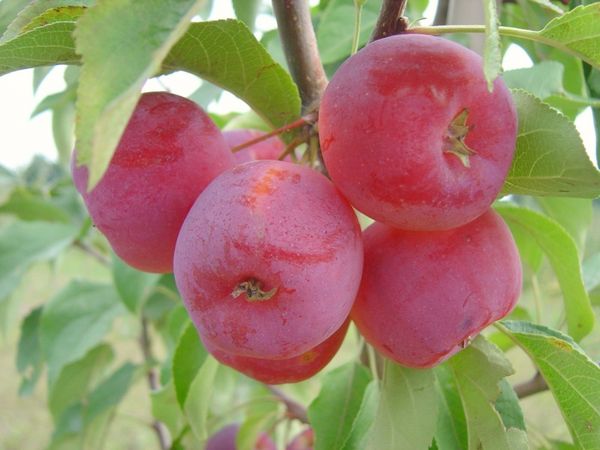
It's worth noting that the apple tree has a very decorative appearance throughout its growing season. During flowering, its branches are densely covered with white flowers with a pinkish tint, and sometimes completely pink. In the fall, numerous clusters of red fruits appear in place of the flowers, which, unfortunately, are not particularly large or sweet. The apples average 15–20 g in weight; they are ovoid and have an elongated stalk that firmly attaches them to the branches. The flesh is slightly firm, moderately juicy, and has a slightly tart, wine-like flavor.
Main characteristics
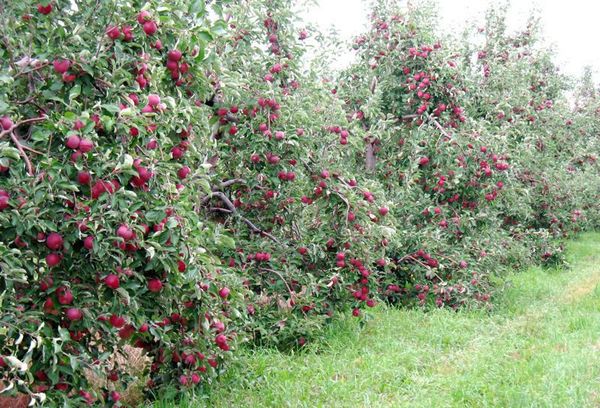
Apples take a long time to reach harvest maturity, reaching early September, but this is an average time. In southern regions, the harvest can be picked as early as mid-August; in cold summers, ripening can take until late September. The fruits do not fall off, so they must be picked by hand. Apples have a short shelf life (3–4 weeks); in the refrigerator, they can be stored for no more than 2 months, after which the flesh becomes soft and crumbly.
Like all Chinese apple trees, the Dolgo variety has amazing winter hardiness and, judging by gardeners' reviews, is extremely rarely affected by scab.
It is pollinated by insects, which are easily attracted by the bright, fragrant flowers. The variety also produces a high yield, reaching 150–170 kg per mature tree. It should be noted that the trees begin bearing fruit early, in the third or fourth year, but blooming is not uncommon in the second year. Although the apples can be eaten fresh, the Dolgo variety is considered a commercial variety and is intended for processing (jams, compotes, alcoholic beverages).
Planting and care
The Kitayka apple tree, a member of the Dolgo variety, is completely easy to grow. It can grow in any soil, even in the shade, and tolerates any weather conditions, though it does not tolerate high groundwater levels. However, it's important to remember that improved conditions improve the harvest—if you plant the apple tree in a sunny spot with fertile, loose soil, the fruit will grow larger and sweeter.
Apple tree care is standard and consists of the following activities:
- watering - seedlings are watered frequently, adult trees only in case of extreme heat, since apple trees tolerate drought better than over-watering;
- mulching the tree trunk area;
- if there is no mulch in the tree trunk circle, you need to regularly loosen the soil and remove weeds;
- pruning - sanitary in spring, and formative in autumn;
- fertilizing: nitrogen in spring, potassium and phosphorus during the fruiting period and before wintering
- whitewashing tree trunks in spring and autumn - spring whitewashing will protect the bark from burns, autumn whitewashing - from rodents;
- preventive treatment of the crown with fungicides and insecticides.
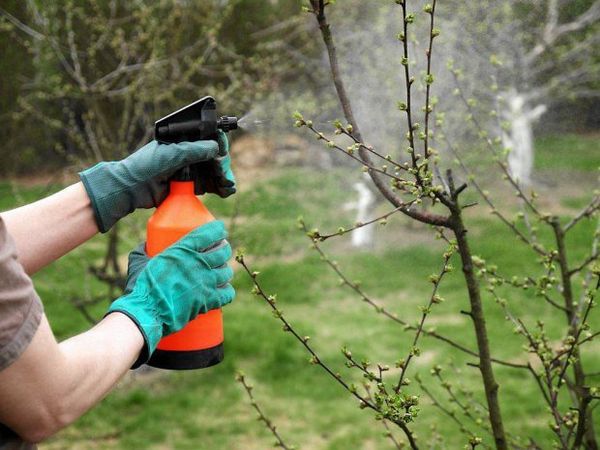
Although highly resistant to most common diseases, apple trees can be affected by cytosporosis, a very dangerous fungal disease that can seriously damage the tree's ornamental appearance. To prevent this, apple trees are treated with copper-containing fungicides (Hom, copper sulfate) before bud break and again before flowering.
The fruits of this apple tree are rarely attacked by pests, but the leaves are sometimes attacked by flea beetles, aphids, and moths. Flea beetles can be controlled by fumigating the leaves with tobacco smoke, aphids can be eliminated by spraying the crown with a solution of soap and tobacco, and codling moths require insecticides (such as Karbofos and Chlorophos).
Throughout the season, monitor the condition of the branches, promptly remove diseased and damaged ones, and disinfect the cut areas or treat them with garden pitch. Trees don't require winter shelter, but in regions with very harsh climates, the area around the trunk can be covered with humus or peat.
Pros and cons
If you don't focus on the quality of the fruit, the Dolgo apple tree has many advantages:
- excellent winter hardiness;
- regular high yields;
- early fruiting;
- resistance to major diseases (scab, powdery mildew);
- suitability of fruits for processing;
- no shedding;
- high decorative qualities of trees.
All the variety's shortcomings are related to the quality of the fruit: they are too small, do not have a good taste, and do not store well. But don't be upset, because with good care, an apple tree can look very decorative and become an adornment of your garden.
Video "Apple Variety Dolgo"
This video will tell you more about the popular Dolgo apple variety.