
What can be planted in the shade under an apple tree in the garden?
Content
The climate being created
In gardening, there's a concept called "tree canopy climate," which implies that each tree creates specific conditions for other living organisms to thrive under its canopy. For example, if you have an apple orchard at home, it has a unique climate that may be favorable for some plants but not for others.
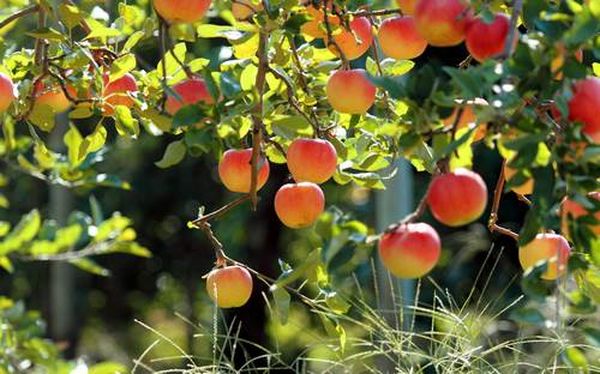
A typical apple tree with a moderately dense crown creates dappled shade that perfectly protects the lower tiers of plants from the scorching sun, while leaving enough light for normal growth. It's also worth considering that some trees may have a spreading, dense crown, while others are upright or columnar. In this case, the scope for development is much wider, as a variety of shade-tolerant and sun-loving plants can be planted within the same tree trunk circle.
Use of the tree trunk area
There are countless variations on the theme of what plants can be planted under an apple tree. First, you need to decide what's more important to you: saving space or enhancing the overall style of the property. If the former, it's best to convert the area around the tree trunk into a small garden bed for herbs and vegetables. If the latter, there are several options: sowing lawn grass, creating a flower bed, or creating a combination flowerbed. Each of these decorative options will be discussed below.
Lawn
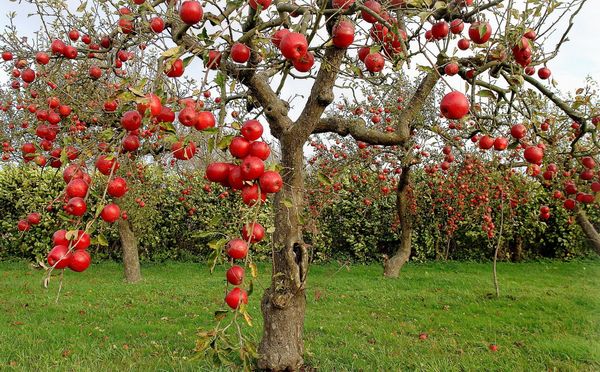
Seeding grass, or sowing grass, is a very popular and cost-effective way to improve the tree trunk area. It's ideal not only from an aesthetic standpoint—a well-maintained green lawn looks magnificent—but also serves the following useful functions:
- reduces soil salinity;
- significantly improves the general condition of the soil;
- protects fruits from rot, and the tree from parasites and diseases, in particular chlorosis;
- eliminates mechanical damage to the roots;
- retains moisture in the soil;
- In winter, plant residues serve as fertilizer.
Moreover, a lawn offers aesthetic pleasure: you can lie on it, walk barefoot on the soft grass, or even have a picnic under the shade of a tree. Moreover, it's the only option for decorating the space under the small apple trees.
What grasses are suitable for sowing in the tree trunk circle? The easiest way is to purchase a universal lawn mixture consisting of several species with different tillering patterns. These typically include perennial grass seeds: bluegrass, red fescue, bentgrass, and ryegrass. If the lawn won't be used for picnics, it can be seeded with clover.
Flower beds
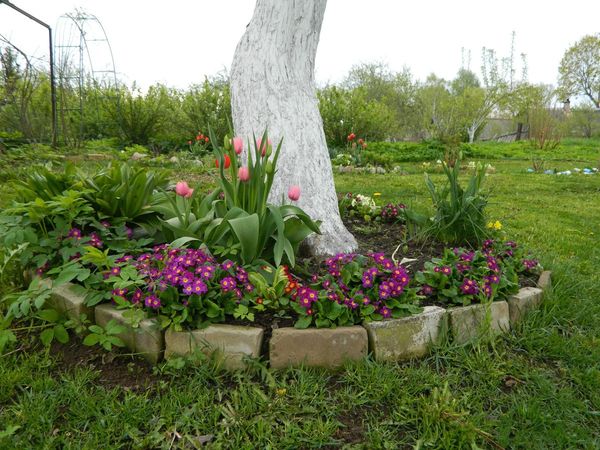
The most spectacular use of the tree's trunk area is a flower bed. This can be a simple monochromatic flower bed or a beautiful composition consisting of several tiers of plants combined with rocks. The choice of flowers for the bed depends, again, on the climate beneath the tree. If the tree's crown is spreading and dense, choose easy-to-grow shade-tolerant flowers: bellflowers, forget-me-nots, periwinkle, impatiens, and ferns. If the crown is upright and receives plenty of light, more sun-loving nasturtiums, pansies, daylilies, or daisies can be planted underneath.
A beautiful flower arrangement can be created using perennial primroses: snowdrops, muscari, crocuses, daffodils, and early tulips. These plants bloom early, while the apple tree is still in bloom, and since they bloom at slightly different times, the spring garden becomes a flower paradise, especially when surrounded by a contrasting emerald lawn. Experienced gardeners recommend planting celandine under fruit trees—it provides the best protection against ants and aphids.
Shrubs
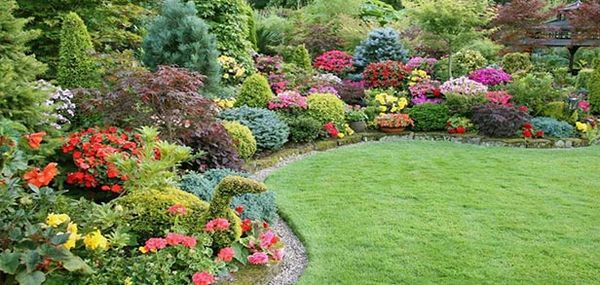
Shrubs aren't the best way to decorate the tree's trunk area, as most have fairly extensive and deep-growing roots. Such a tree will compete with the apple tree for moisture and nutrients, causing significant problems for both plants. For this reason, stone fruit shrubs shouldn't be planted under apple trees, but they thrive alongside them.
Raspberries are an exception—they don't compete with apple trees, but this is only possible with regular pruning and until the raspberry patch has grown too large. Later, it will need to be moved to another location. Ideal options for the tree trunk area are ornamental low-growing shrubs, such as colorful euonymus or miniature conifers. Flowering euonymus harmonizes beautifully with green grass and small flowers.
Garden crops
Many gardeners try to grow vegetables and herbs in the tree trunks. In a small plot where every inch of land needs to be conserved, this is an ideal solution. However, since apple trees must be treated with various pesticides and insecticides repeatedly throughout the season, all these chemicals will inevitably end up on the produce. What should you do? If you plan to plant a vegetable garden under your apple tree, you should try to complete all treatments before the seedlings emerge, or, even better, before planting the seeds.
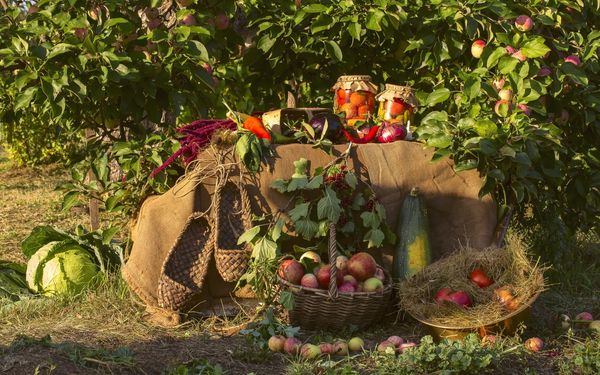
What vegetables are recommended for planting under an apple tree? Cucumbers, zucchini, and squash thrive in the shade of the tree's canopy and won't turn yellow in the sun—these crops have shallow roots and won't rob the apple tree of its nutrients.
This zone is ideal for sowing salad greens—the lack of bright sun will prevent them from blooming quickly and prolong the harvest period. While the canopy is sparse, early radishes can be grown. It is not recommended to plant vegetables with deep root systems under apple trees, such as cabbage, carrots, daikon, and mint.
Whatever you decide to plant around your apple tree, consider your tastes and needs. With the right approach, any flowering or vegetable plants can blend beautifully into the overall landscape and provide practical benefits.
Video: "What can you plant in a shady area?"
This video will tell you which plants can be planted in shady areas.